Emotions in Learning: What AI and Psychology Tell Us About the Classroom
Introduction: Why Emotions Matter in the Classroom
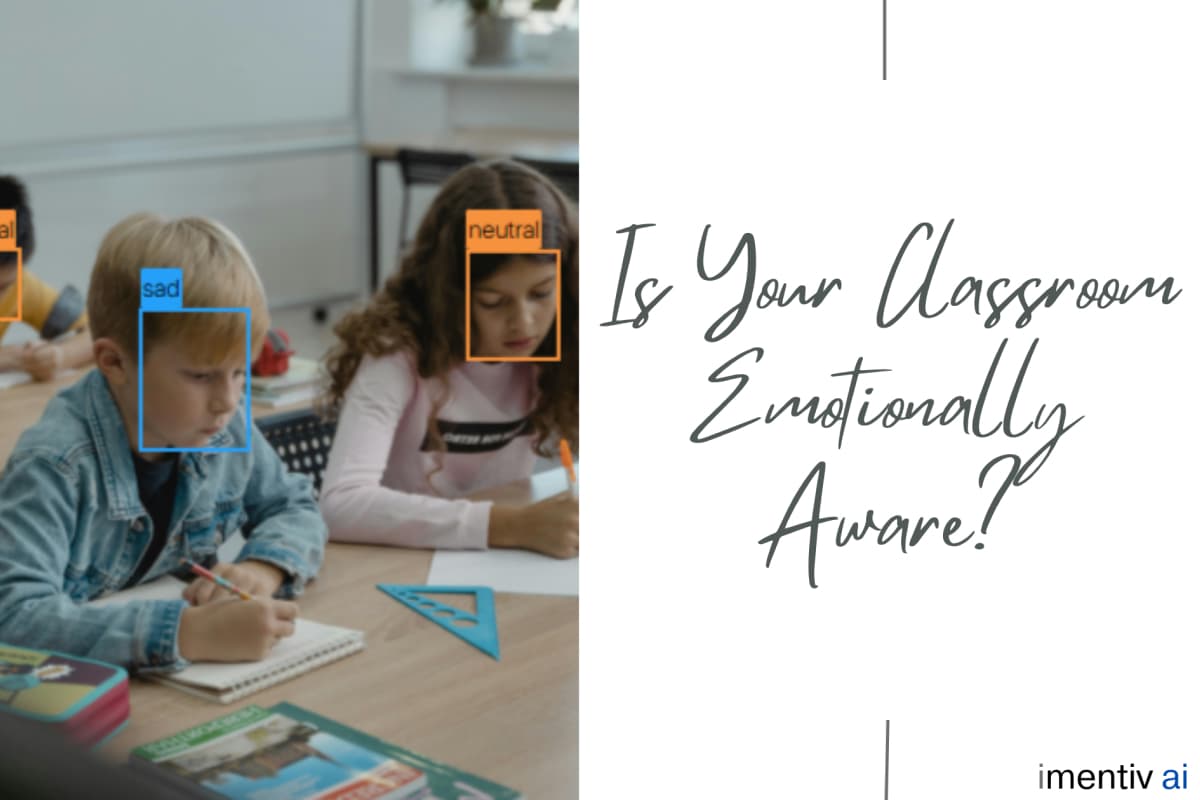
Emotions are the silent drivers of student engagement, motivation, and learning outcomes. In a traditional classroom, a teacher might recognize when a student looks confused or disengaged, but subtle signs of emotional distress, anxiety, or boredom often go unnoticed. With the rise of Emotion AI (Affective Computing) , educators now have a powerful ally in understanding and responding to students’ emotional states in real-time.
This blog delves into the role of student emotions in learning , the psychological science behind classroom emotions , and how Emotion AI technology is transforming education . Backed by research and real-world applications, we explore how this technology can create emotionally intelligent classrooms.
What is Emotion AI in Education?
Emotion AI refers to artificial intelligence systems that can detect, analyze, and respond to human emotions using data from facial expressions, voice tone, body language, and textual inputs. In education, Emotion AI helps decode student emotions during lessons , assessments, or even online learning sessions.
It uses multimodal inputs such as:
- Facial expressions (e.g., frowns, smiles, eye movements)
- Vocal tone and pitch (e.g., frustrated tone, excited pitch)
- Textual responses (e.g., emotional language in essays or chats)
- Physiological data (e.g., heart rate, via wearable devices in some cases)
These cues help create an emotionally responsive learning environment where teachers and platforms can tailor their interventions accordingly.
The Psychology of Emotions in Learning
Psychological research consistently shows that emotions significantly influence:
- Attention (Pekrun, 2006)
- Memory encoding and retrieval
- Cognitive processing capacity
- Motivation to learn
- Self-regulation and persistence
For example , positive emotions like joy, curiosity, and pride enhance motivation and long-term retention. Conversely, negative emotions such as anxiety, confusion, or boredom can hinder concentration and lead to disengagement (Pekrun & Linnenbrink-Garcia, 2014).
Psychologist Reinhard Pekrun’s Control-Value Theory (2006) posits that emotions stem from students’ perception of control over learning outcomes and the value they place on the task. Emotion AI can detect these psychological states and offer actionable insights to educators.
Real-World Example: Emotion AI in Action in a Live Classroom
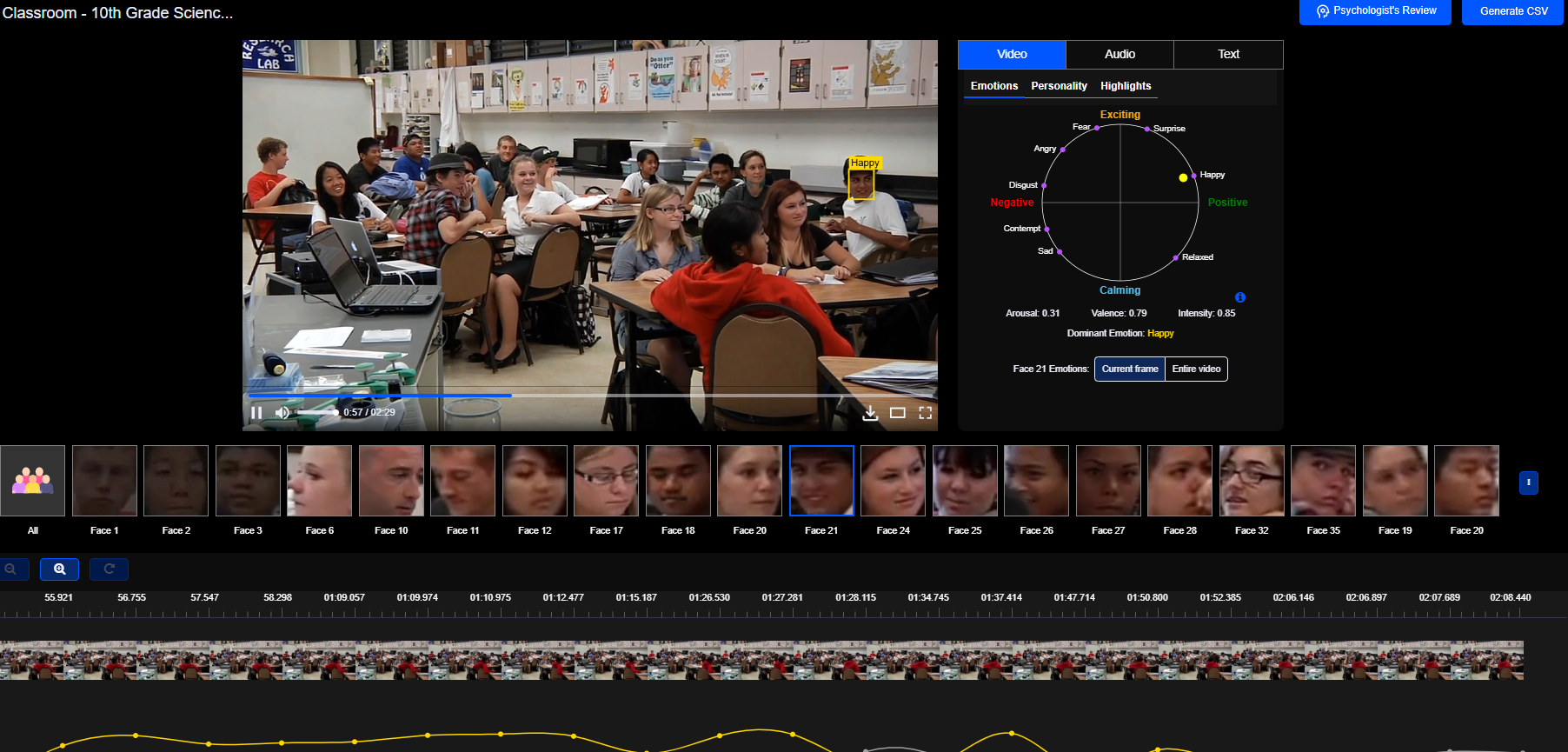
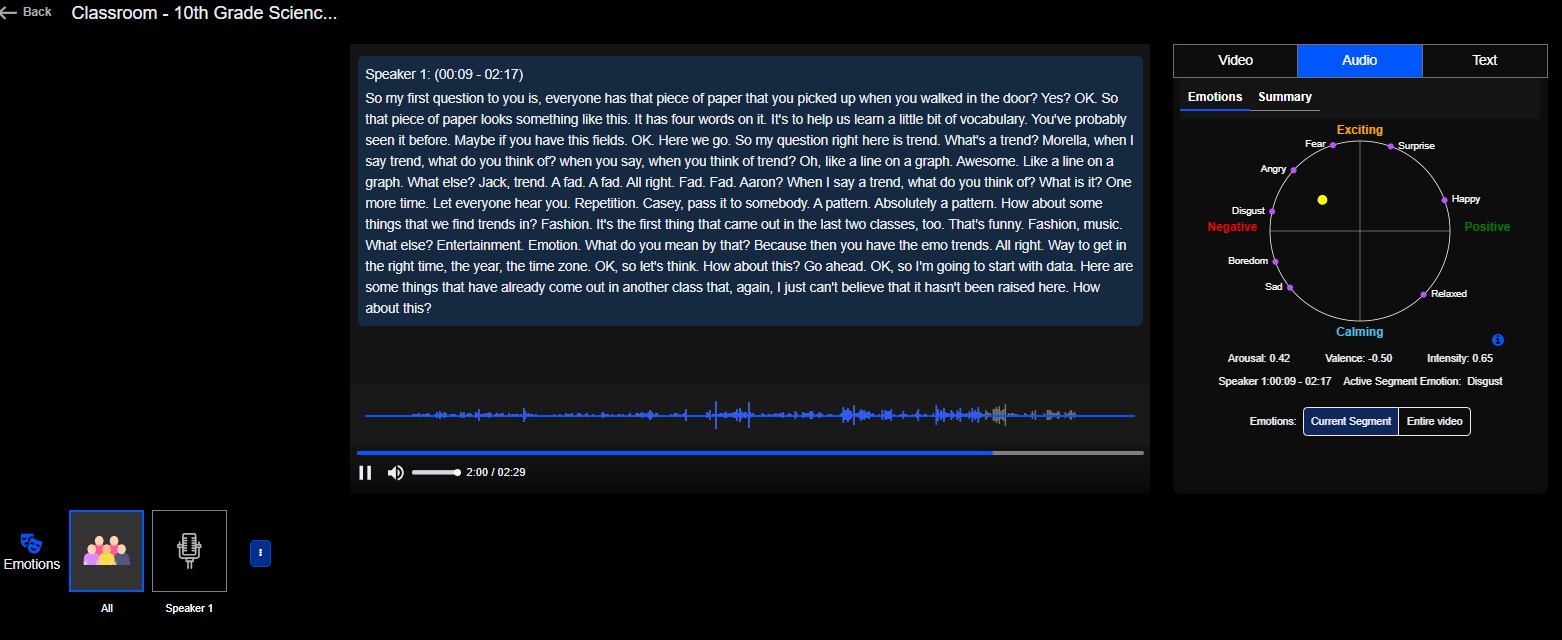
Let’s take a look at how Emotion AI analyzes a real classroom moment using Imentiv’s multimodal emotion detection platform:
Video Context:
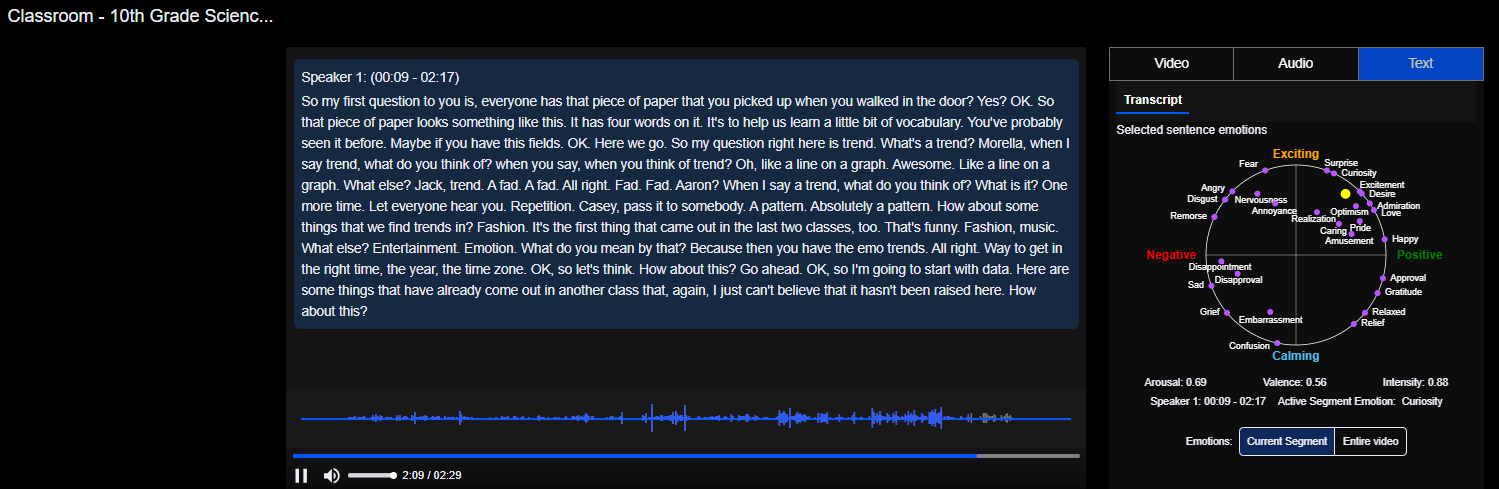
A teacher asks students to define the word “trend,” encouraging open dialogue and collaborative participation. The tone is casual, inquisitive, and light-hearted.
Emotion AI Analysis:
- Facial Emotions : Mostly neutral expressions, punctuated with happiness and a few instances of sadness . This indicates focused attention with moments of enjoyment and brief discomfort.
- Audio Emotion: Happiness during peer interaction and disgust possibly tied to hesitation or social anxiety.
- Textual Emotion: Curiosity and excitement identified in responses like “fashion,” “entertainment,” and “emo trends.”
Psychological Interpretation:
- The teacher’s use of open-ended questions fosters psychological safety , encouraging students to share freely.
- The curiosity seen in textual analysis supports constructivist learning , where knowledge is built through contextual relevance.
- The emotional variance, including brief disgust and sadness, highlights the importance of emotional insight to better support students who may be silently struggling.
Takeaway : Emotion AI unveils the invisible emotional layer of classroom dynamics, offering educators a chance to respond empathetically and adjust their methods in real time.
Research-Backed Benefits of Tracking Student Emotions
1. Improved Academic Outcomes
A study by D’Mello and Graesser (2012) showed that students who received emotionally adaptive feedback performed significantly better in learning tasks than those who received neutral responses. Emotion AI can replicate such interventions at scale.
2. Early Identification of At-Risk Students
According to research from the University of Cambridge (2021), monitoring emotional distress in students can help detect early signs of academic burnout, mental health issues, or learning difficulties. Emotion AI can provide real-time alerts to teachers or counselors, enabling timely support.
3. Enhanced Teacher Awareness
Research from MIT Media Lab (Picard et al., 2016) found that teachers who used Emotion AI tools could better gauge collective classroom emotion , leading to more dynamic and responsive teaching styles.
4. Boosting Online Learning Engagement
With remote learning, emotions are harder to read. A 2020 study in Educational Technology Research and Development found that students in AI-enhanced virtual classrooms showed 25% greater engagement and lower dropout rates .
Real-World Applications of Emotion AI in Classrooms
1. Emotion Dashboards
Emotion AI tools can display classroom emotional states, showing how many students are confused, bored, or engaged, helping educators adjust pace or teaching methods instantly.
2. Emotion-Driven Personalized Learning
Adaptive learning platforms like Imentiv , integrate Emotion AI to alter content difficulty or mode of instruction based on the learner’s emotional state.
3. Emotion Feedback in Online Assessments
AI can detect signs of anxiety or stress during online exams and provide calming feedback or flag the case for human follow-up, fostering a more humane digital assessment experience.
4. Special Education Support
Emotion AI is particularly valuable for neurodivers learners (e.g., children with autism or ADHD) who may struggle to express emotions verbally. AI tools can help caregivers and educators understand their nonverbal cues better.
Ethical and Privacy Considerations
Emotion AI in education must navigate critical concerns:
- Consent and data privacy : Students and parents must be informed and opt-in.
- Bias and inclusivity : Algorithms should be trained on diverse emotional expressions across cultures and demographics.
- Teacher training : Educators must be equipped to interpret and use emotion insights responsibly.
Balancing ethical use with innovation is key to ensuring Emotion AI becomes a tool for empowerment, not surveillance.
Future of Emotion AI in Education
The future points toward Emotionally Aware Classrooms , where:
- Digital tutors adapt in real-time
- Group emotional dynamics are mapped and addressed
- Teachers receive real-time coaching on emotional climate
- Mental health flags are automatically generated through emotion trends
With advancements in multimodal Emotion AI , including integration of facial, voice, and textual data, classrooms may soon become emotionally intelligent ecosystems.
Conclusion: Emotion AI as the Emotional Bridge in Learning
In an age where student well-being is as important as academic success , understanding and responding to student emotions is no longer a luxury, it’s a necessity. Emotion AI bridges the gap between data-driven instruction and human-centric education, offering a more empathetic, responsive, and effective learning environment.
By combining psychological science , AI innovation , and educator empathy , we stand at the threshold of a revolution in learning: one where every emotion is seen, every student heard, and every mind nurtured .