Unlocking New Possibilities: Integrating Emotion AI SDK in Robotics
In today’s world, the value of emotional intelligence in robotics is increasingly being recognized, as it holds the potential to revolutionize human-machine interactions. By integrating Emotion AI, robots can better understand and respond to emotions in real-time, enabling more natural and engaging experiences.
With Imentiv AI's Emotion SDK, developers can create robots capable of analyzing facial expressions, voice tones, and text inputs to interpret emotions. These capabilities extend to assistive and social robots, adaptive companions, learning tools, and entertainment experiences, fostering deeper human-machine connections.
Why Emotion AI in Robotics?
Traditional robots rely on pre-programmed behaviors or reactive mechanisms.
However, integrating Emotion AI, enables robots to:
Understand human emotions: Detecting emotions through facial expressions and voice analysis.
Respond empathetically: Adapt tone and behavior for enhanced human-robot interaction.
Provide actionable insights: Offer metrics like valence and arousal for deeper emotional understanding.
Emotion AI adds a human touch to robotics, making them suitable for use cases requiring empathy and adaptability.
Multimodal Emotion Recognition Integration
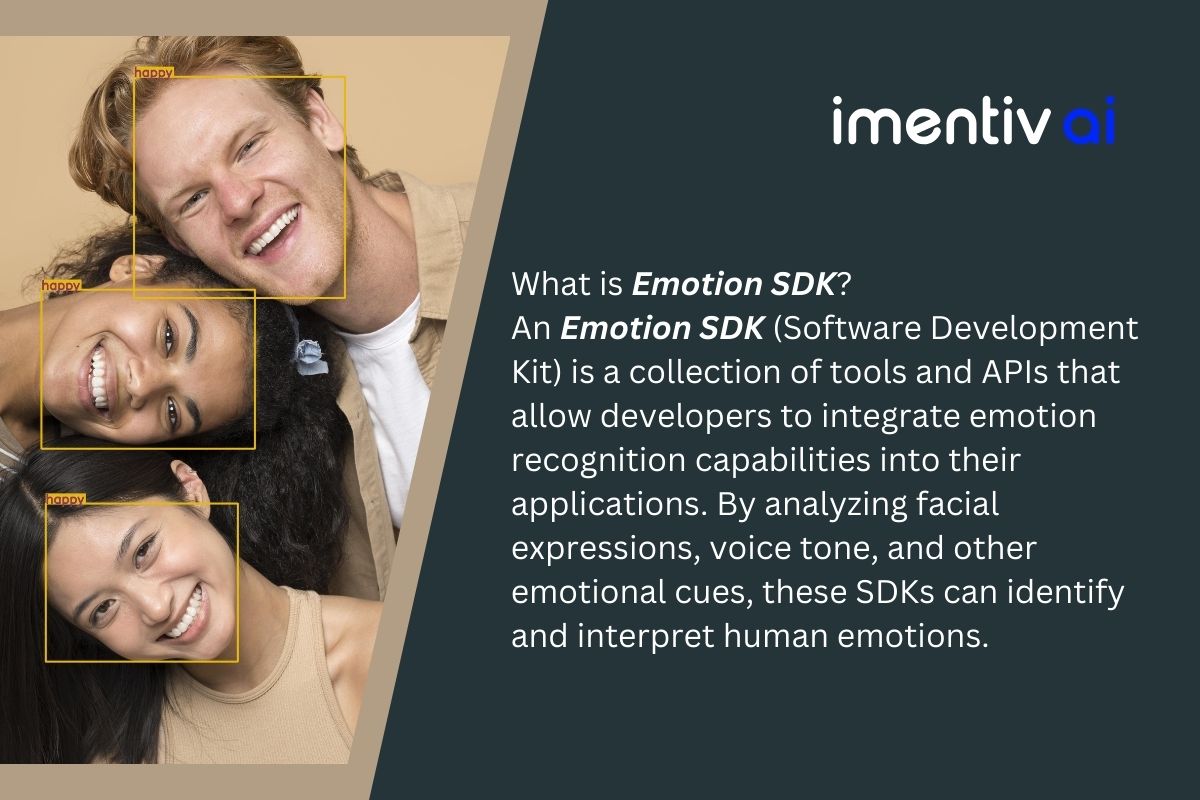
Emotion AI's multimodal capabilities allow robots to perceive emotions through multiple channels, making interactions more intuitive and meaningful.
These capabilities include:
Facial Expression Analysis
By analyzing micro-expressions and subtle changes in facial features, robots can accurately gauge the emotional state of the user, such as happiness, surprise, or frustration.
Voice Tone Analysis
By detecting variations in pitch, volume, and speech rhythm, robots can interpret emotions like excitement, calmness, or irritation, enhancing conversational engagement.
Transcript Analysis
Robots equipped with Emotion AI can analyze spoken word content through transcripts, identifying emotional cues embedded in language. This includes detecting sentiment, emotional intensity, and context from words and phrases, allowing robots to better interpret and respond to human speech.
How Emotion Tech is Revolutionizing Robotics
- Empathetic Robots: Emotion recognition empowers robots to detect and respond to human emotions like joy, sadness, or anger, fostering trust and meaningful connections through empathetic interactions.
- Personalized Experiences: Robots adapt their tone, speech, and behavior based on emotional feedback, offering tailored, intuitive experiences that enhance user satisfaction and engagement.
- Improved Accessibility: Emotion-aware robots assist individuals with disabilities, monitor emotional well-being in elderly care, and support mental health by managing stress and anxiety.
Applications of Emotion AI in Robotics
- Healthcare Robots: Elderly care robots monitor emotional states like anxiety; therapeutic robots provide emotional support.
- Education Robots: Gauge student emotions and adapt teaching methods.
- Customer Service Robots: Enhance user satisfaction with emotion-based responses.
- Entertainment Robots: Adjust storytelling or gaming based on audience emotions.
- Security Robots: Detect stress or fear to prevent incidents.
Robotics is no longer just about functionality—it’s about empathy and engagement. As technology continues to advance, we can expect to see even more sophisticated and empathetic robots that will transform the way we interact with machines.
Key Advantages of Our Emotion AI SDK in Robotics
1. Multi-Modal Emotion Detection: Combines facial expression, voice tone, and transcript analysis for comprehensive insights.
2. Advanced Metrics: Offers valence and arousal analysis to quantify emotional intensity and stability.
3. Real-Time Processing: Enables robots to respond immediately to human emotions.
Understanding the Emotion Wheel with Valence-Arousal
Using our Emotion Wheel model with the valence-arousal framework, our AI identifies emotions based on the core eight emotions—joy, sadness, anger, fear, trust, surprise, anticipation, and disgust—while factoring in valence (positivity or negativity) and arousal (emotion intensity).
This dual-layered approach provides robots with a nuanced understanding of human emotions.
Read the blog to learn how emotion insights are shaped by the Valence-Arousal Model
Emotion-Aware Robotics: Real-World Examples
Chinese scientists have recently advanced humanoid robotics by designing robots capable of expressing emotions more naturally and accurately. Using an AI system that generates detailed facial expression examples, they developed robots with multiple degrees of freedom for facial movements, enabling lifelike emotional displays.
By learning to perform expressions based on the Facial Action Coding System (FACS), these robots showcase the role of emotion-aware properties in enhancing human-robot interaction. This example highlights how robotics can achieve nuanced emotional communication, paving the way for more intuitive and engaging machines.
Another notable example of emotion-aware robotics is Moflin, an AI-powered pet robot designed to foster lifelike emotional connections with its users. With soft fur, soothing sounds, and realistic movements, Moflin uses AI to sense the user’s mood, respond appropriately, and evolve autonomous emotions over time. Its ability to develop a unique personality sets it apart, creating a deep attachment through emotion-driven interactions. This demonstrates how integrating emotion-aware properties into robotics can enhance user engagement and mimic natural relationships.
There are also other examples like Sophia, Pepper, Kismet, Milo, and Jibo, highlighting the expanding potential for emotion-aware robotics across various applications.
These developments underline the growing potential of integrating Emotion AI into robotics. By enabling machines to sense and react to emotions, this technology paves the way for more intuitive, personalized, and engaging human-robot interactions across diverse applications.
Emotion recognition technology is transforming human-robot interaction, enabling robots to understand and respond to emotions in helpful and meaningful ways. This advancement fosters collaboration and empathy, making robots valuable partners in areas such as healthcare, education, customer service, and more.
Are you ready to build the next generation of emotionally intelligent robots?
Contact us today to explore the possibilities with our Emotion AI SDK.