Exploring the Valence-Arousal Model in Video Analysis with Emotion AI
As an AI technology company specializing in emotion recognition, Imentiv AI utilizes the Valence-Arousal Model to provide deeper insights into viewer reactions.When we assess emotional reactions in videos, two critical factors guide our analysis: valence and arousal. These two dimensions help us decode the emotional quality and intensity of content. By leveraging this Valence-Arousal model, Emotion AI systems enable a more nuanced understanding of how viewers respond to video content and how emotions evolve.
What is a Valence-Arousal Model?
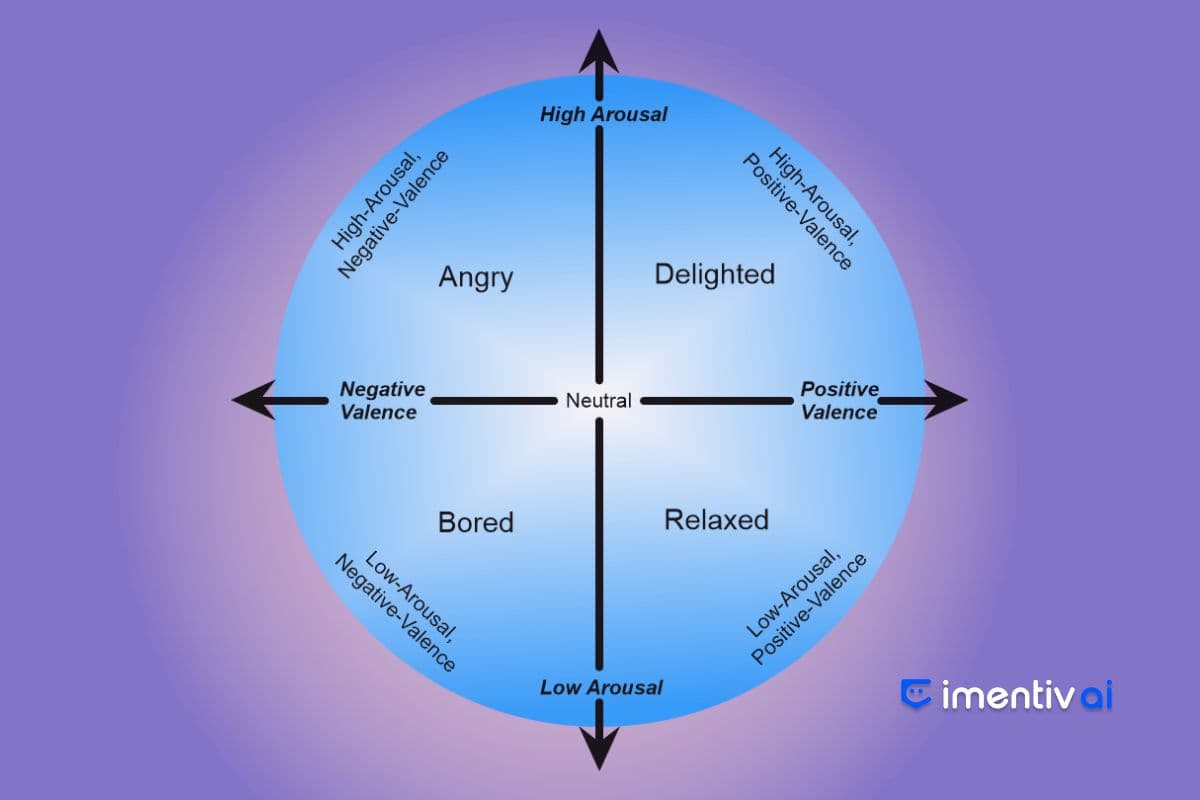
The Valence-Arousal Model is a foundational framework used to classify emotions. In the context of video analysis with Emotion AI, this model helps break down emotional responses to video stimuli into two primary dimensions:

Valence : This measures the positivity or negativity of the emotion. For example, viewers might experience positive emotions such as joy or amusement, or negative emotions like sadness or anger while watching a video.
Studies reveal that emotions—whether positive or negative—significantly improve memory recall. For example, people tend to remember emotional words more vividly than neutral ones.

Arousal : This measures the intensity or energy level of the emotion. Some emotions, like excitement or fear , are highly arousing and activate physiological responses, while others, like calmness or boredom, are lower in arousal and more subdued.
This two-dimensional model allows the Emotion AI system to plot emotions in a valence-arousal space, showing not only what emotions are felt but also how intensely they are experienced.
U ncover how our AI improves emotion detection with teacher-student models
How Does the Valence-Arousal Model Work in AI-Powered Video Analysis?
In AI-powered video analysis, the Valence-Arousal Model enhances the understanding of emotional engagement by mapping viewers' emotional reactions in real time or across different segments of the video.
Here's how this works:
Frame-by-Frame Emotion Mapping
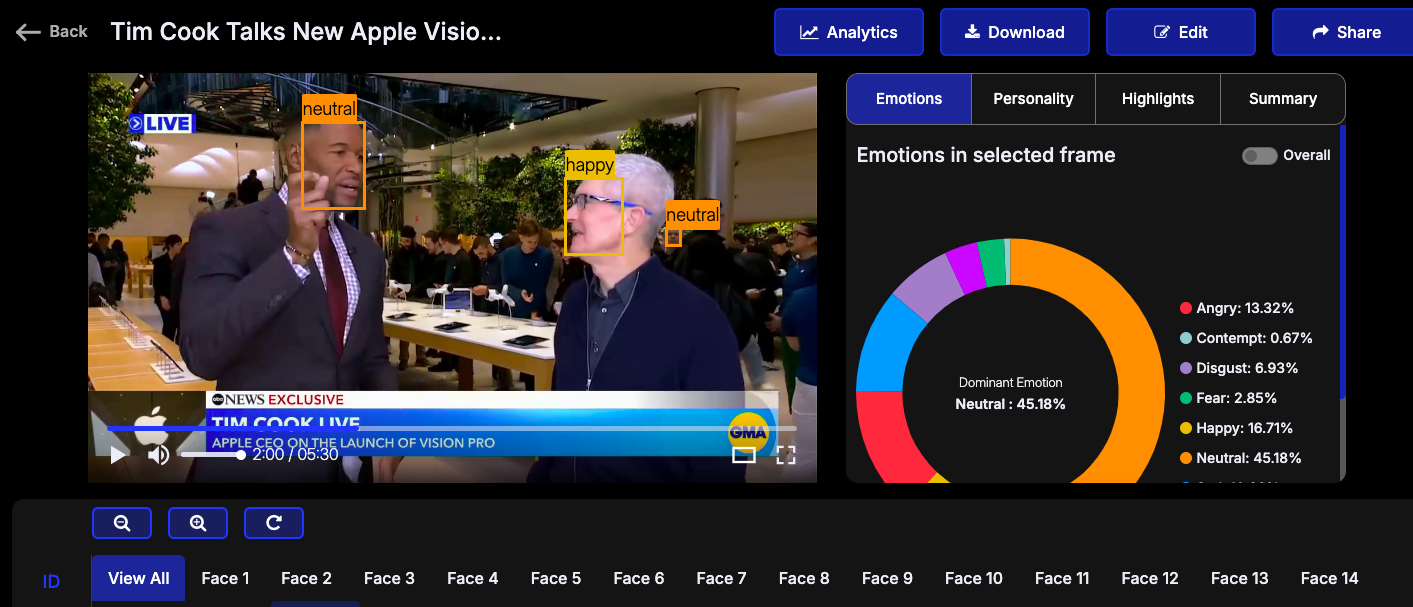
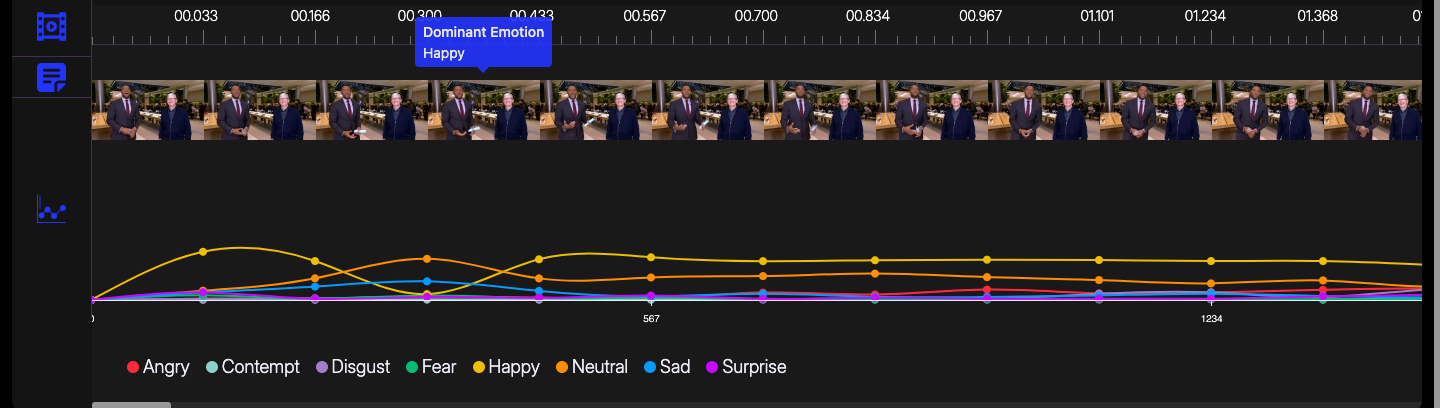
Emotion AI analyzes facial expressions, body language, audio cues, and text from videos using advanced technologies like Face emotion Recognition (FER), Speech Emotion Recognition (SER), and Text Emotion Recognition (TER). These emotions are then classified based on their valence and arousal levels, creating a dynamic frame-by-frame visual representation of emotional states throughout the video.
Emotion Intensity Tracking
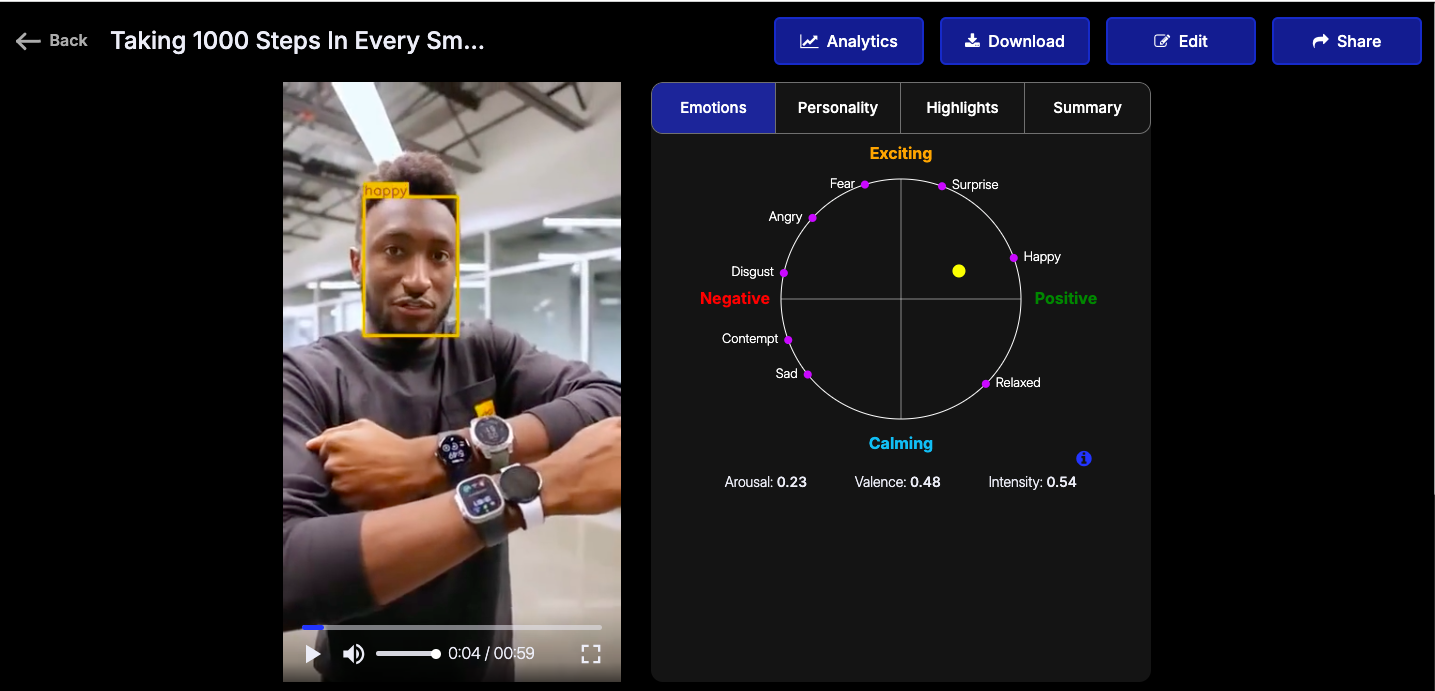
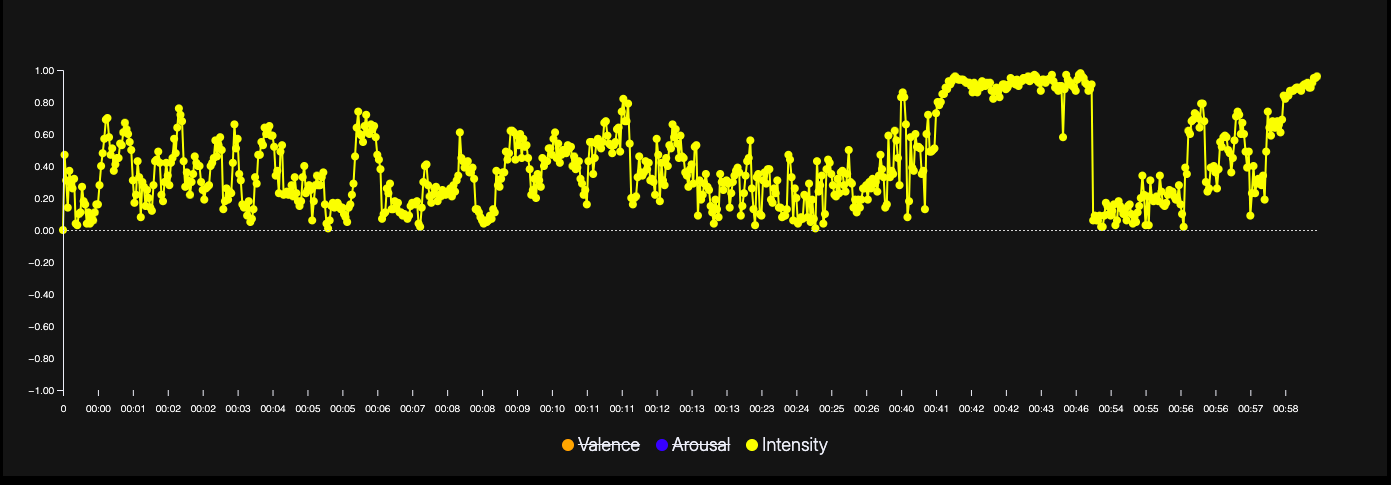
The system continuously tracks the intensity of emotions, drawing on the balance between arousal (the level of emotional activation) and valence (whether emotions are positive or negative). High emotional intensity emerges when high arousal combines with strong positive or negative valence, such as excitement or tension during climactic moments. Lower intensity reflects calmer emotional responses, where both arousal and valence are more neutral.
By capturing these emotional shifts Imentiv AI offers valuable insights into how different scenes resonate with the audience.
Aggregate Emotion Data

Our Emotion AI aggregates emotion data to offer a detailed understanding of how the video resonates with its audience, by averaging emotional responses from multiple viewers. This collective data reveals patterns in emotional reactions, highlighting moments that evoke consistent responses, whether they are positive or negative.
For pre-launch video ads, this aggregated emotional insight allows advertisers to identify which segments of the audience react most strongly, and whether the emotional tone aligns with the intended impact. This information is invaluable for fine-tuning content before its release, ensuring that the final version of the ad maximizes engagement and emotional connection .
Enhance your video analysis with a focus on emotional quality and intensity
Examples of Emotions within the Valence-Arousal Model for Video Content
Here's how different emotional reactions to video content might be categorized:
High Valence, High Arousa l
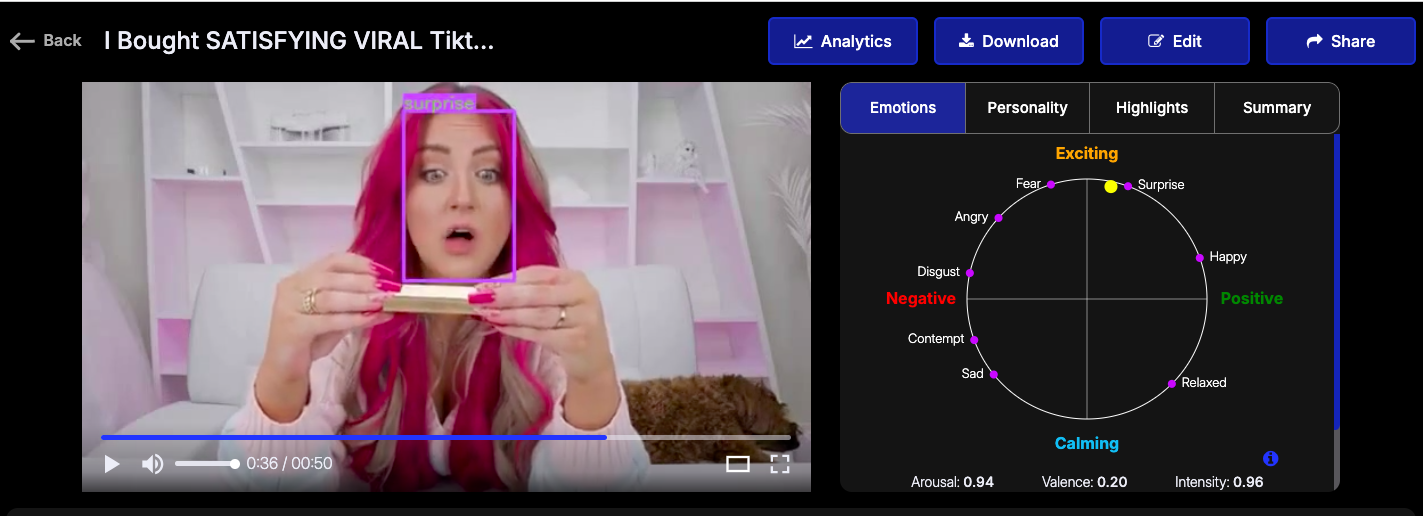
Excitement and joy are common emotions in action scenes, dramatic reveals, or humorous moments in advertisements. These emotional peaks indicate strong positive engagement.
High Valence, Low Arousal
Satisfaction and calmness might be observed in scenes that are peaceful or emotionally rewarding, such as heartfelt moments in a narrative or inspirational closing remarks in a promotional video.
Low Valence, High Arousal
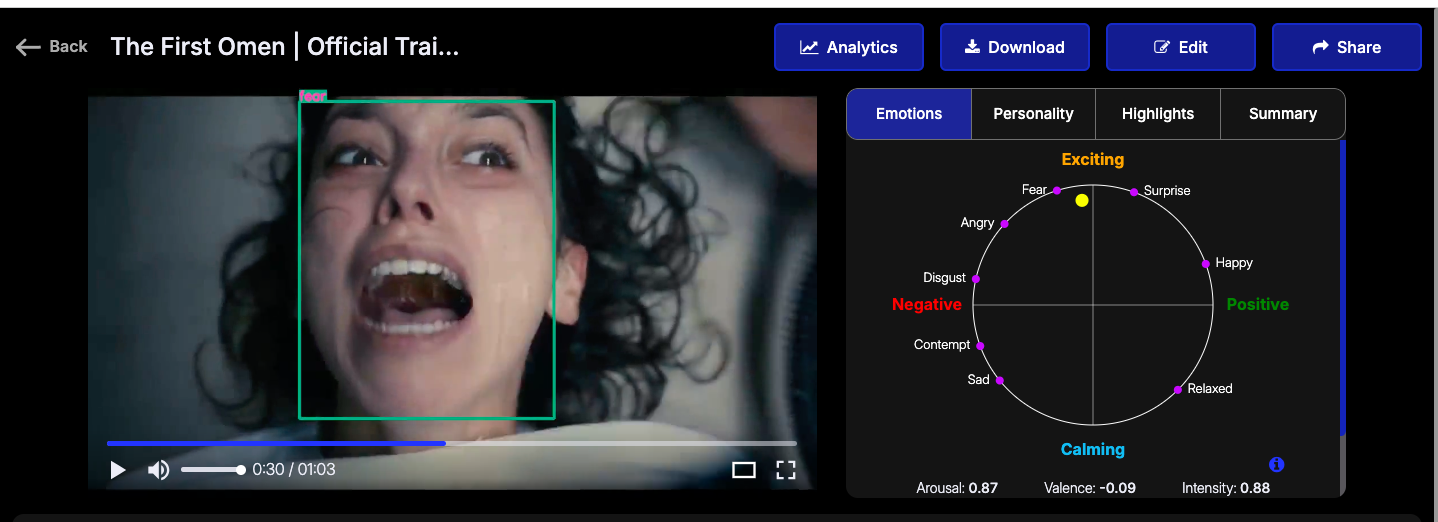
Fear, anxiety, or anger can appear during suspenseful moments, plot twists, or intense conflicts. High arousal and low valence indicate that viewers are negatively affected but are still highly engaged.
Low Valence, Low Arousal
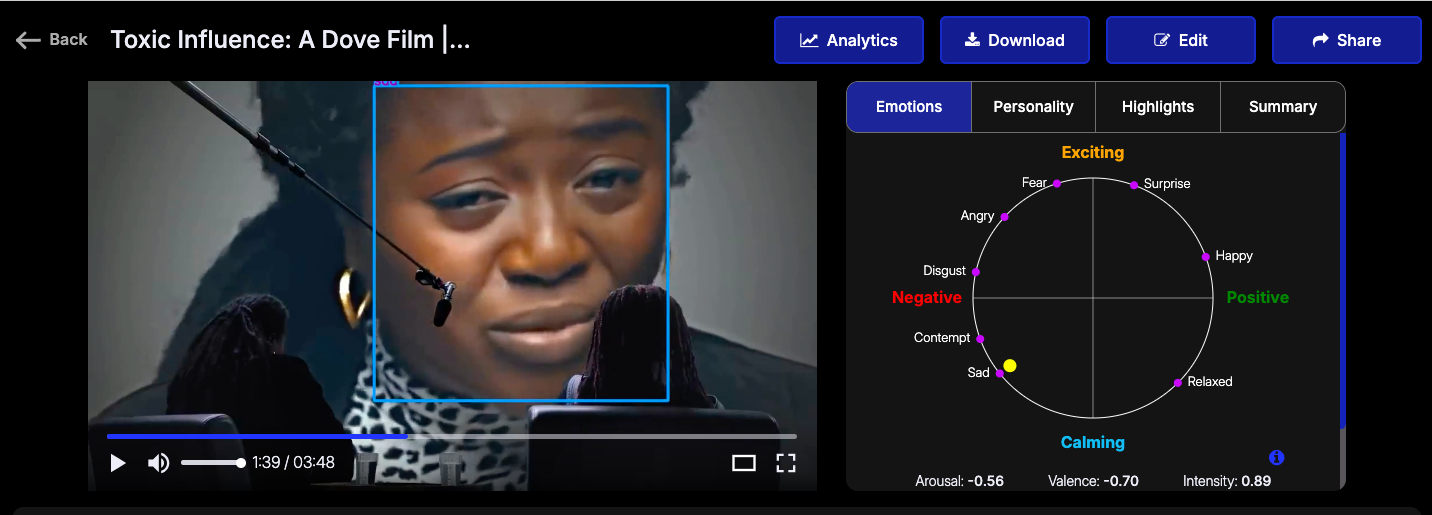
Sadness or disappointment may be observed in reflective scenes or emotional downturns, indicating low-energy emotional responses that can leave lasting impressions.
The Valence-Arousal Model, a key feature of our Emotion AI, measures audience emotions in videos, optimizing content creation, advertising, and engagement.
Interested in a demo? Get in touch with us to book your session!
Advantages of Using the Valence-Arousal Model in Emotion AI Video Analysis
The Emotion AI video analysis with the Valence-Arousal Model offers several key benefits:
Granular Emotional Insight : By analyzing both valence and arousal, Emotion AI provides more nuanced emotional insights than traditional approaches. Instead of simply identifying whether a viewer liked or disliked content, the model shows how intensely they felt about it and tracks emotional changes over time .
Real-Time Emotion Monitoring : In live/pre-recorded video analysis, the valence-arousal model shows (in real-time emotion graphs) how emotions fluctuate across the video's timeline. This allows content creators to pinpoint emotional highlights and areas that may require adjustment.
Content Optimization : The valence-arousal feature of our Emotion AI provides detailed insights into emotional responses, offering data on both emotional direction (valence) and intensity (arousal). For instance, if a particular scene is intended to evoke excitement but falls flat in terms of arousal, it can be re-edited for greater emotional impact.
In summary, the Valence-Arousal Model feature of our Emotion AI offers valuable insights into emotional engagement within video content. By accurately mapping both the emotional quality and intensity of viewer reactions, this model equips content creators with the tools needed to enhance their videos for a more profound connection with their audience.
Features Overview
Our Video Emotion Recognition tool includes advanced features that enhance emotional analysis:
- Personality Trait Analysis - assesses based on the Big Five model to provide insights into the emotional engagement
- Emotion Highlights - generates highlights of key emotional moments or users can select a specific frame length for generating custom highlights
- Video Summary - offers a concise overview of the video, capturing essential emotional insights
Our Other Emotion AI Tools
In addition to our Video Emotion Recognition tool, we also offer:
Image Emotion Recognition : Analyze emotions in images for impactful visual storytelling.
Audio Emotion Recognition : Assess emotional tone in audio content to enhance engagement.
Text Emotion Recognition : Understand the emotional context in written content for better communication.