Nervousness
Nervousness is the feeling of unease or tension we experience before something important or uncertain happens. It often shows up before a job interview, a big presentation, a sales pitch, or an important meeting. In small amounts, nervousness can be helpful—it keeps us alert and focused. But when it becomes too strong, it can affect how clearly we think and communicate.
Nervousness is part of the body’s natural stress response. When we anticipate being evaluated or judged, the brain prepares us to “perform.” This preparation creates physical and emotional changes. Unlike fear, which responds to immediate danger, nervousness is usually about what might happen.
Nervousness vs. Anxiety

People often use “nervousness” and “anxiety” as if they mean the same thing, but they are different.
Nervousness is usually short-term and connected to a specific event, like speaking on stage or answering a difficult question. Once the event is over, the feeling typically fades.
Anxiety is more persistent. It may last longer, feel stronger, and sometimes appear without a clear reason. Anxiety can affect daily life, sleep, and concentration over time. In professional settings, this distinction matters. Nervousness is a normal reaction to pressure. Anxiety may require deeper support.
Common Signs of Nervousness
Nervousness affects the body, voice, facial expressions, and even the words we choose.
Physical Signs
- Faster heartbeat
- Shallow breathing
- Sweaty palms
- Muscle tension
- Slight shaking or restlessness
These changes happen automatically. Even if they are not obvious to others, they often influence how someone speaks or behaves.
Vocal Cues
- A shaky or slightly trembling voice
- Speaking faster than usual
- Higher pitch
- Frequent filler words like “um” or “uh”
- Pausing often or losing track of thoughts
The voice is one of the clearest indicators of nervousness. Small changes in tone and pace can reveal emotional tension.
Verbal Patterns
- Over-explaining answers
- Repeating points
- Hesitating before responding
- Using uncertain language like “I think” or “maybe.”
In interviews or sales calls, this can make someone sound less confident—even if they are fully capable.
Facial and Body Language
- Tight or forced smiles
- Avoiding eye contact
- Frequent blinking
- Lip pressing
- Fidgeting or shifting posture
These signals are often subtle, but they can influence how others perceive confidence and credibility.
Why Nervousness Matters in Professional Settings
In the workplace, nervousness can shape important outcomes.
In Job Interviews Candidates may appear hesitant or less confident simply because they feel pressure. Recruiters might misinterpret nervousness as a lack of preparation, even when skills are strong.
In Presentations Speakers may rush through slides, avoid eye contact, or struggle with spontaneous questions. This can reduce engagement and impact.
In Sales Conversations Nervousness can weaken persuasion. A slight change in tone during pricing discussions, for example, may signal uncertainty to a client. On the other hand, recognizing nervousness in a prospect may reveal hidden objections or concerns.
Understanding nervousness helps organizations separate emotional state from true ability.
Nervousness and Emotion AI
Emotion AI helps identify patterns linked to nervousness by analyzing video, audio, and text. Instead of relying on guesswork, it looks at measurable signals such as changes in voice, facial expressions, and language.
For example:
- Faster speech and higher pitch may indicate heightened emotional arousal.
- Micro-expressions of tension can signal discomfort.
- Repeated hesitation or filler words may reflect performance pressure.
- In text, phrases like “I’m not sure,” “maybe,” or excessive qualifiers can show uncertainty.
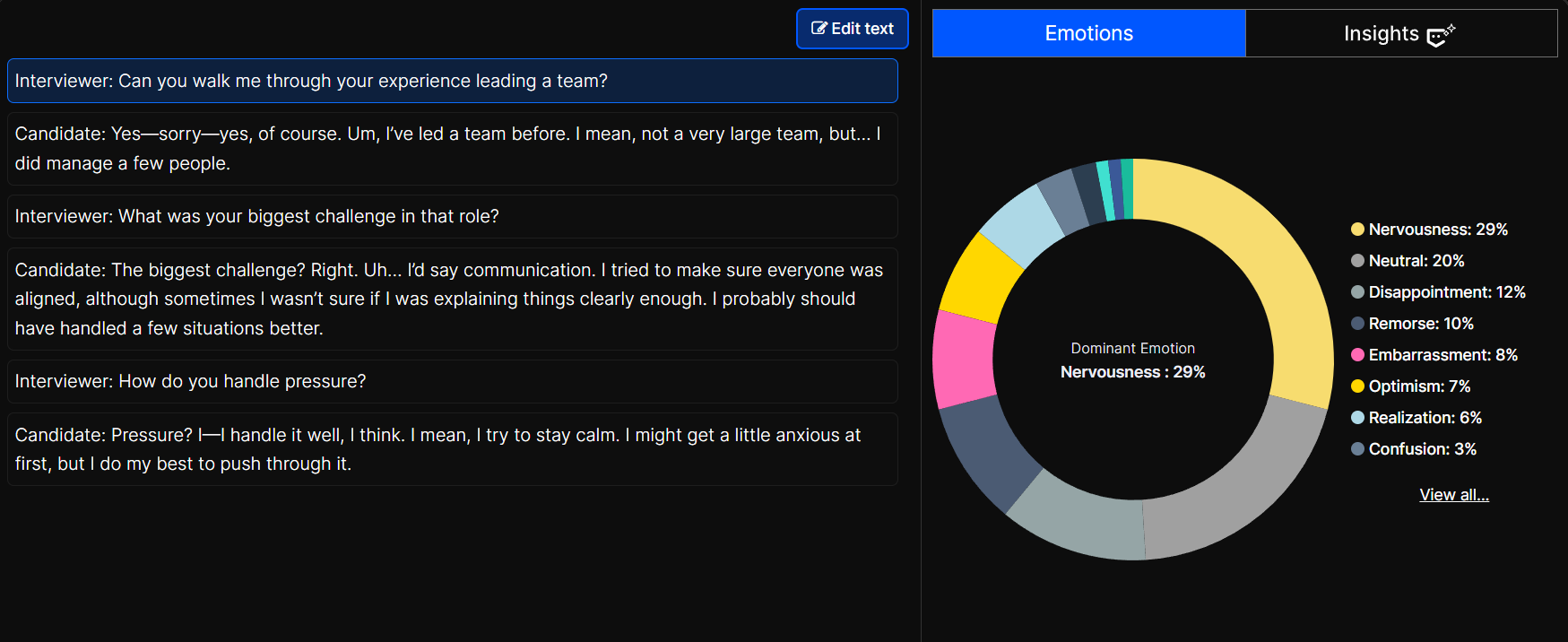
Platforms like Imentiv AI apply psychology-based models to recorded video, audio, and text conversations to detect these signals. Nervousness can be identified through text or transcript emotion analysis—by examining uncertainty markers, self-doubt phrases, and shifts in tone.
Importantly, the goal is not to label or judge individuals. Instead, emotion AI turns subtle emotional cues into structured insights. This allows organizations to make fairer decisions, provide better coaching, and better understand how nervousness shapes communication.