Neuroticism
Neuroticism is a core personality trait in the Five Factor Model, describing a person’s tendency to experience frequent negative emotions such as anxiety, sadness, irritability, and emotional instability. People high in neuroticism often perceive situations as more stressful and may struggle to regain emotional balance after challenges.
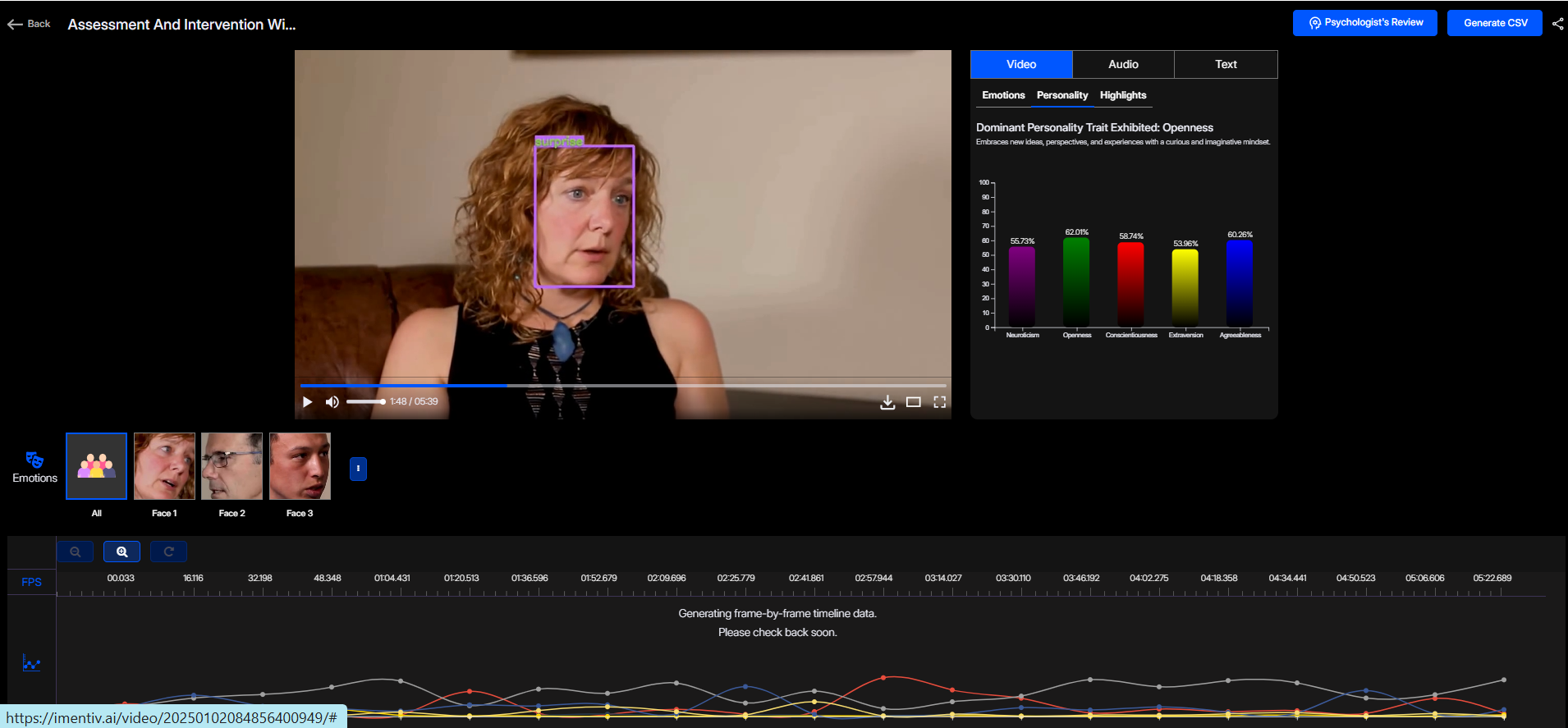
Imentiv AI helps identify personality patterns through personality feature through multimodal Emotion AI, offering deeper insights into emotional behavior, personality traits, and stress responses.
What Neuroticism Reflects
Neuroticism is not a single emotion but a cluster of interrelated emotional tendencies that influence thought, behavior, and well-being across contexts.
Emotional Reactivity
Individuals high in neuroticism tend to react more strongly and more quickly to stressors, experiencing emotional responses that are disproportionate to the triggering situation and slower to subside.
Negative Affect Proneness
Neuroticism is closely associated with a predisposition toward negative emotional states including anxiety, depression, anger, envy, guilt, and emotional vulnerability, even in the absence of external stressors.
Cognitive Distortions
High neuroticism often correlates with patterns of rumination, catastrophizing, and self-critical thinking, where individuals repeatedly revisit negative experiences or anticipate unfavorable outcomes.
Interpersonal Sensitivity
People high in neuroticism may be more attuned to perceived criticism, rejection, or social disapproval, leading to heightened emotional responses in interpersonal settings and greater difficulty in conflict resolution.
Impulse Dysregulation
Neuroticism is also linked to challenges in managing impulses under emotional distress, contributing to behaviors such as emotional outbursts, avoidance, or difficulty maintaining stable routines during periods of stress.
Psychological Significance
As one of the Big Five personality dimensions, neuroticism has been extensively studied in relation to mental health outcomes. High neuroticism is consistently identified as a risk factor for the development of mood disorders, anxiety disorders, and stress-related conditions. Longitudinal research indicates that individuals with elevated neuroticism scores report lower life satisfaction, greater occupational stress, and more frequent physical health complaints. However, neuroticism is not deterministic. Environmental factors, therapeutic intervention, and emotional regulation practices can meaningfully reduce its impact on daily functioning. Importantly, moderate levels of neuroticism may also confer adaptive advantages, including heightened vigilance, empathy, and conscientiousness in emotionally significant situations.
Understanding Neuroticism Through Emotion AI
When examined through Emotion AI, neuroticism moves from a self-reported personality construct to an observable emotional phenomenon. Emotion AI can identify neurotic emotional patterns by analyzing:
- Facial expressions reflecting heightened anxiety, sadness, fear, or emotional suppression across interactions
- Vocal tone patterns such as tension, hesitation, or rapid emotional shifts that signal underlying emotional reactivity
- Textual and verbal cues revealing rumination, self-critical language, or catastrophic thinking patterns
- Longitudinal emotional data that captures how frequently and intensely negative emotional states arise over time and across different contexts
Neuroticism in the Context of Imentiv AI
Within Imentiv AI, neuroticism represents a valuable area of study for personality research, clinical assessment, and behavioral analytics. By capturing multimodal emotional signals over time, the platform enables a deeper understanding of how neurotic traits manifest in real-world behavior, communication, and emotional regulation. Psychologist-reviewed frameworks ensure that observed patterns are interpreted with clinical sensitivity and ethical responsibility, avoiding stigmatizing or reductive conclusions about personality and mental health.
Neuroticism remains one of the most researched and clinically relevant dimensions of human personality. Understanding it is essential not only for mental health assessment but also for designing supportive environments, improving therapeutic outcomes, and building emotionally intelligent technologies. When paired with Emotion AI, the study of neuroticism gains a new dimension of precision and empathy, offering evidence-based pathways toward better emotional understanding and well-being.
---->To dive deeper into the fascinating world of emotion recognition AI and its applications, read more here.