Emotionless
What Does Being Emotionless Mean Psychologically?
From a psychological standpoint, emotionlessness is not a diagnosis but a descriptive pattern that can emerge from different emotional and cognitive processes. It often reflects how the mind and nervous system regulate emotional exposure rather than a lack of emotional capacity.
Several psychological mechanisms are commonly associated with emotionless presentation.
Emotional Numbing Emotional numbing is frequently seen in people who have experienced trauma, chronic stress, depression, or burnout. The nervous system reduces emotional intensity as a protective strategy, making both positive and negative emotions feel distant or blunted.
Alexithymia Some individuals struggle to identify, understand, or describe their emotions. In alexithymia, emotions may be present at a physiological level but remain inaccessible to conscious awareness or verbal expression, leading to an emotionless outward appearance.
Emotional Suppression Emotionlessness can also result from learned suppression. Cultural norms, upbringing, or high-pressure environments may reinforce the belief that emotional expression is unsafe or unprofessional, leading individuals to consciously or unconsciously inhibit emotional signals.
Flat or Blunted Affect In clinical psychology, reduced emotional expressiveness, known as flat or blunted affect, may be observed in conditions such as schizophrenia, certain mood disorders, or neurodevelopmental differences. Here, emotional expression is limited even when internal emotional experience exists.
How Emotionlessness Appears in Behavior
Emotionlessness is most often identified through consistent patterns rather than isolated moments.
- Limited facial movement and neutral expressions
- Monotone or low-variation speech
- Minimal emotional language in conversation or writing
- Reduced reactivity to emotionally charged situations

Understanding Emotionless States Through Emotion AI
Emotion AI approaches emotionlessness by analyzing the absence or reduction of emotional signals across multiple modalities, rather than assuming “no emotion.”
This includes patterns such as:
- Minimal facial muscle activation over time
- Low vocal pitch variation and flattened prosody
- Emotionally neutral or overly factual language
- Consistency of low emotional intensity across interactions
Emotionlessness in the Context of Imentiv AI
Within Imentiv AI , emotionless states are treated as important behavioral indicators by adding it as neutral emotion rather than empty data. Persistent emotional flatness may signal emotional withdrawal, fatigue, disengagement, or psychological strain depending on the setting.
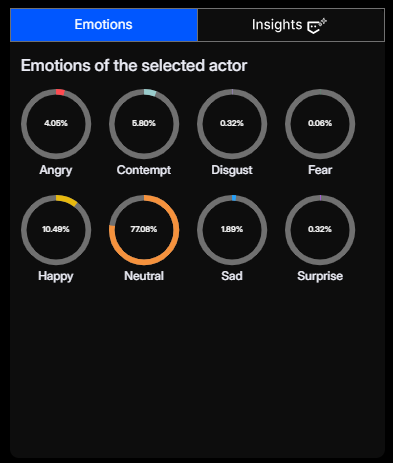
For example, in therapy recordings, emotionless facial or vocal patterns may prompt psychologist review for possible numbing or dissociation. In employee feedback or interviews, emotionally flat language can indicate burnout, avoidance, or low psychological safety. By recognizing that absence of emotion still carries meaning.