Embarrassment
Embarrassment is a self-conscious emotion that arises when an individual perceives that they have violated a social norm, made a mistake, or been exposed in a way that may lead to negative judgment from others. Psychologically, it is closely linked to social awareness and self-evaluation—it reflects how people believe they are being seen and evaluated in a given moment.
Unlike deeper emotions such as shame or guilt, embarrassment is often situational and short-lived, but it plays an important role in social functioning. It helps regulate behavior, maintain social harmony, and signal acknowledgment of a misstep.
How Embarrassment Is Expressed
Embarrassment is highly visible in human communication because it triggers distinct and often involuntary signals across face, voice, body language, and behavior.
Facial Expressions
Facial cues are among the strongest indicators of embarrassment. Common signs include:
- Averted gaze or looking down
- Tight or awkward smiles
- Blushing or flushed cheeks
- Brief grimaces or lip presses
These expressions often appear quickly and may be difficult to consciously control, making them reliable emotional indicators.
Tone of Voice
Embarrassment can significantly affect how a person speaks. Vocal patterns may include:
- Hesitation or pauses
- Nervous laughter
- Changes in pitch (often higher)
- Softer or less confident delivery
The voice may reflect discomfort, uncertainty, or an attempt to recover from a socially awkward moment.
Gestures and Body Language
Body language during embarrassment often signals a desire to reduce attention or withdraw from the situation:
- Shrugging or self-touching (e.g., touching face or neck)
- Turning the body away
- Fidgeting or restless movement
- Covering parts of the face
These behaviors indicate self-consciousness and an attempt to manage social perception.
Language and Verbal Cues
In conversation, embarrassment is expressed through:
- Self-deprecating comments (“That was silly of me”)
- Apologies (“Sorry about that”)
- Deflection or humor to ease tension
- Shortened or fragmented responses
People may try to quickly move past the moment or downplay its significance.
Interaction Patterns
Embarrassment often leads to repair behavior—efforts to restore social balance. This may include apologizing, laughing it off, or shifting the conversation. In some cases, individuals may withdraw or reduce participation temporarily.
Embarrassment in Text-Based Communication
In digital communication, where physical cues are absent, embarrassment is conveyed through subtle language patterns and formatting choices.
Common indicators include:
- Use of qualifiers (“kind of,” “maybe,” “I guess”)
- Self-correction or rephrasing messages
- Nervous humor or emojis to soften the message
- Apologetic tone or over-explanation
For example, “Sorry, that might have been a dumb question 😅” reflects embarrassment more clearly than a neutral statement.
Why Embarrassment Matters in Real-World Contexts
Though often seen as a minor emotion, embarrassment has meaningful implications across various domains.
Customer Support: Customers may feel embarrassed when reporting issues, especially if they believe the mistake was theirs. Recognizing this helps agents respond with reassurance rather than judgment.
Workplace and Leadership: Employees may hesitate to speak up or ask questions due to fear of embarrassment. Leaders who reduce this friction create safer, more open environments.
Education: Students often avoid participation when they fear embarrassment. Understanding this emotion helps educators encourage engagement without pressure.
Healthcare: Patients may feel embarrassed discussing sensitive topics. Detecting this emotion allows practitioners to respond with greater sensitivity and care.
Embarrassment Through the Lens of Emotion AI
Embarrassment is complex because it involves internal self-perception combined with external social context. Emotion AI helps identify this state by analyzing patterns across multiple signals.
Instead of relying on a single cue, systems evaluate:
- Facial expressions associated with discomfort
- Vocal changes indicating hesitation or nervousness
- Language patterns reflecting self-consciousness
- Behavioral shifts during interaction
This provides a more objective and consistent way to understand when embarrassment is present.
How Imentiv AI Detects Embarrassment
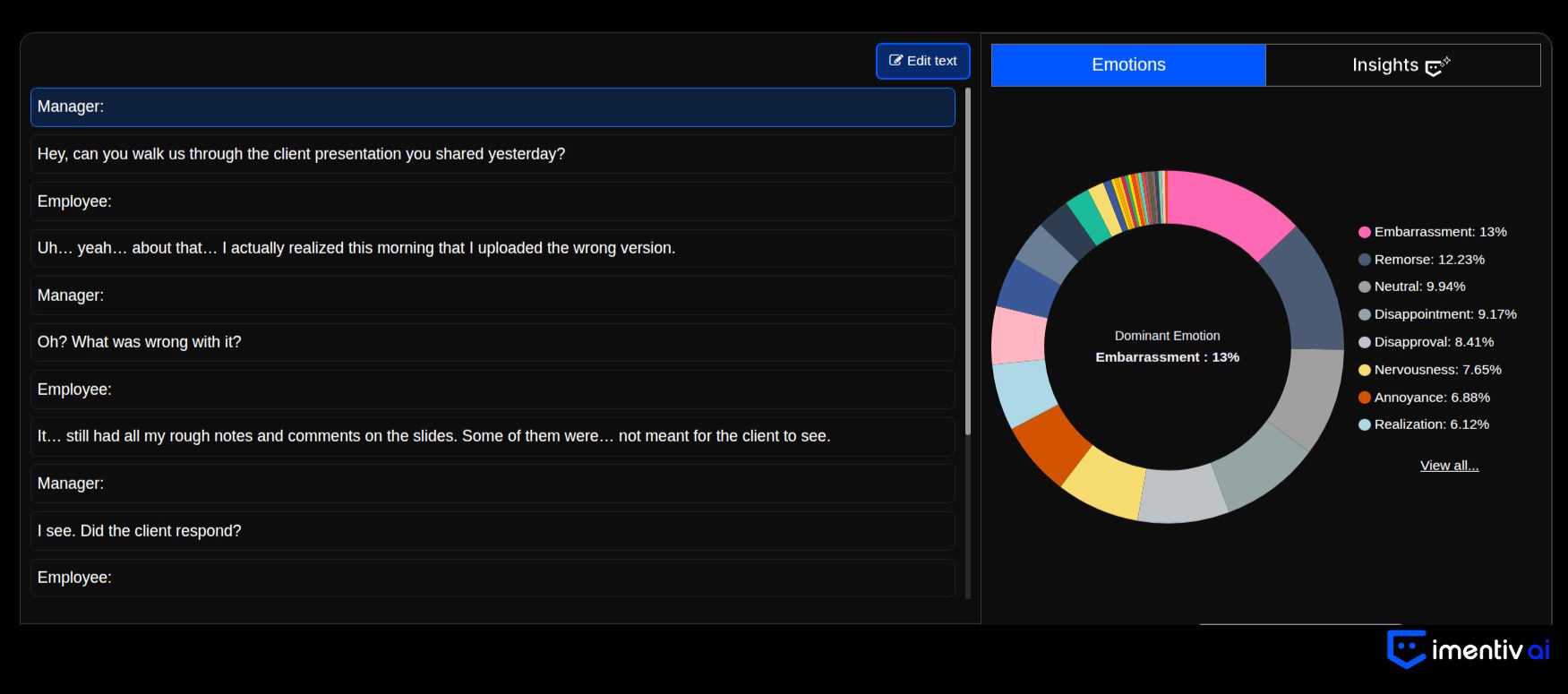
Imentiv AI uses advanced text emotion analysis to detect embarrassment with precision, even when it is subtly expressed.
Contextual Understanding
Analyzes sentences within the full conversation to identify moments of self-consciousness or social discomfort.
Linguistic Pattern Detection
Identifies combinations of:
- Apologies
- Hesitation markers
- Self-deprecating language
- Over-explanation or correction
Emotion Mapping
Detects embarrassment alongside related emotions such as uncertainty or anxiety, providing deeper context.
From Social Signal to Insight
Embarrassment may be brief, but it carries important social meaning. It signals awareness, vulnerability, and a desire to maintain social harmony. When recognized correctly, it creates opportunities for empathy, reassurance, and a stronger human connection.
With tools like Imentiv AI, organizations can detect and respond to embarrassment more effectively—reducing friction, improving communication, and creating more supportive interactions.
Understanding embarrassment is not just about identifying discomfort, it is about responding in a way that restores confidence and trust.
Spot discomfort early. Sign up to start detecting embarrassment and other emotions with Imentiv AI →