Decoding the Signals, Respecting the Story: Why Multimodal Emotion AI is About Experience, Not Mind Reading
Emotion AI is one of the most fascinating frontiers in technology and one of the easiest to misunderstand. The idea sounds cinematic: technology that can sense human engagement, adapt to subtle shifts in attention, and make digital interactions feel genuinely responsive.
But at imentiv. ai, we believe responsible innovation starts with clarity, not hype. To understand the true value of Emotion AI, we have to start with what it is not .
- It is not mind reading.
- It is not a psychological evaluation or an automated personality test.
- It is not a diagnostic tool, nor is it a substitute for clinical therapy.
- It is not a machine that claims to know your hidden intentions or define who you are.
Instead, multimodal Emotion AI does something much more objective and practical: it analyzes observable, moment-to-moment behavioral signals across video , audio , text , and images . The goal isn't to "decode the soul" or pass judgment. The goal is to help professionals, creators, and organizations design experiences and strategies that are more adaptive, human-centered, and deeply engaging.
Signals, Not Certainty
Human expression is incredibly nuanced. A smile can mean genuine joy, polite compliance, nervousness, or just a social reflex. A sudden drop in vocal pitch might mean fatigue, deep concentration, or a change in room acoustics. No responsible AI system should look at a single facial expression or listen to a solitary vocal cue and claim to know the absolute truth of what a person feels.
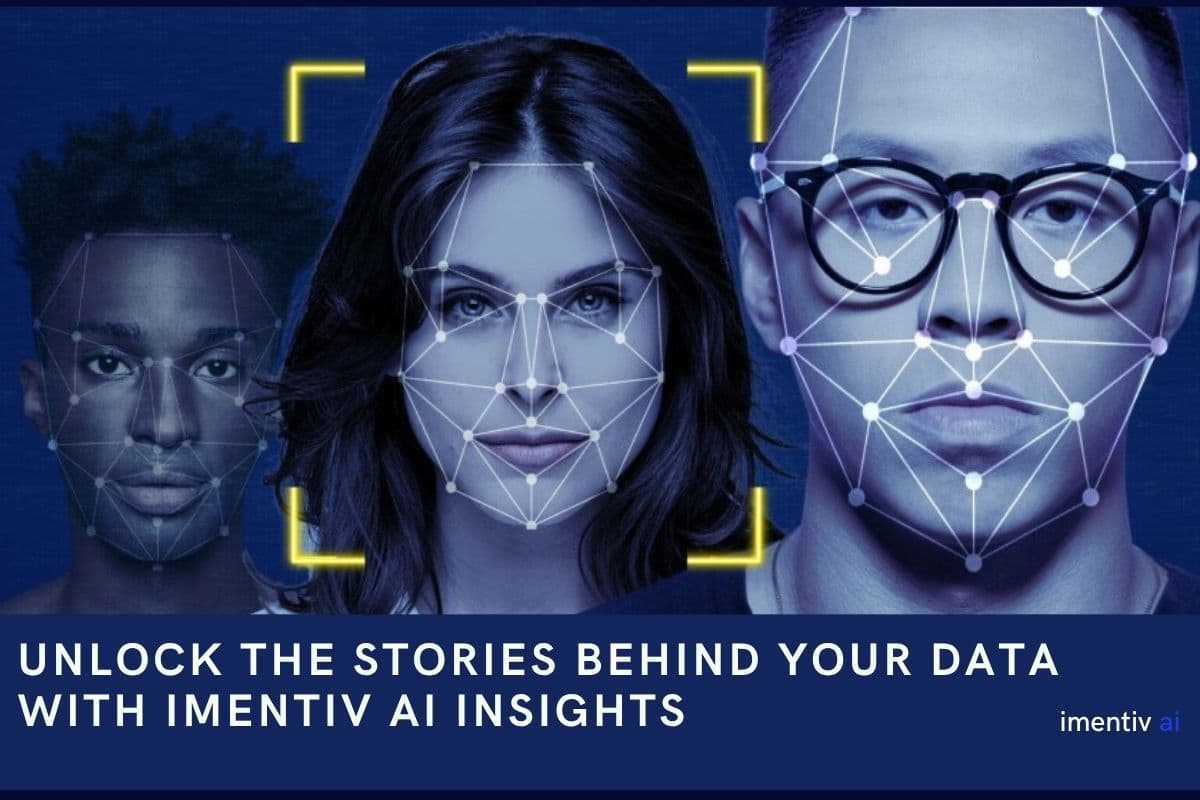
That is why imentiv. ai takes a multimodal approach . By interpreting the intersection of visual cues, auditory tones, and textual context, our platform identifies patterns rather than jumping to conclusions. We lean heavily into validated psychological frameworks like looking at valence (how positive or negative an expression is), arousal (the intensity of the energy), and facial muscle movements to provide structural data, not guesswork.
Even then, these outputs are probabilistic signals, not absolute verdicts. A responsible system doesn't say:
"This person is angry."
It says something much more accurate and humble:
"The system detected a combination of vocal inflections and facial cues consistently associated with low engagement or negative affect in this moment."
This distinction matters. It takes the technology out of the realm of sci-fi surveillance and places it firmly where it belongs: as a collaborative support tool to assist human understanding.
What Multimodal Emotion AI Actually Does: 8 Industry Use Cases
For years, analytics have been entirely transactional. They tell you what people click, where they drop off a video, or when they close a page. But traditional data misses the human element behind the behavior.
By mapping the blended signals of expression, voice, and text, Emotion AI adds a missing layer of contextual data. It answers a different question: How are people actually experiencing this interaction?
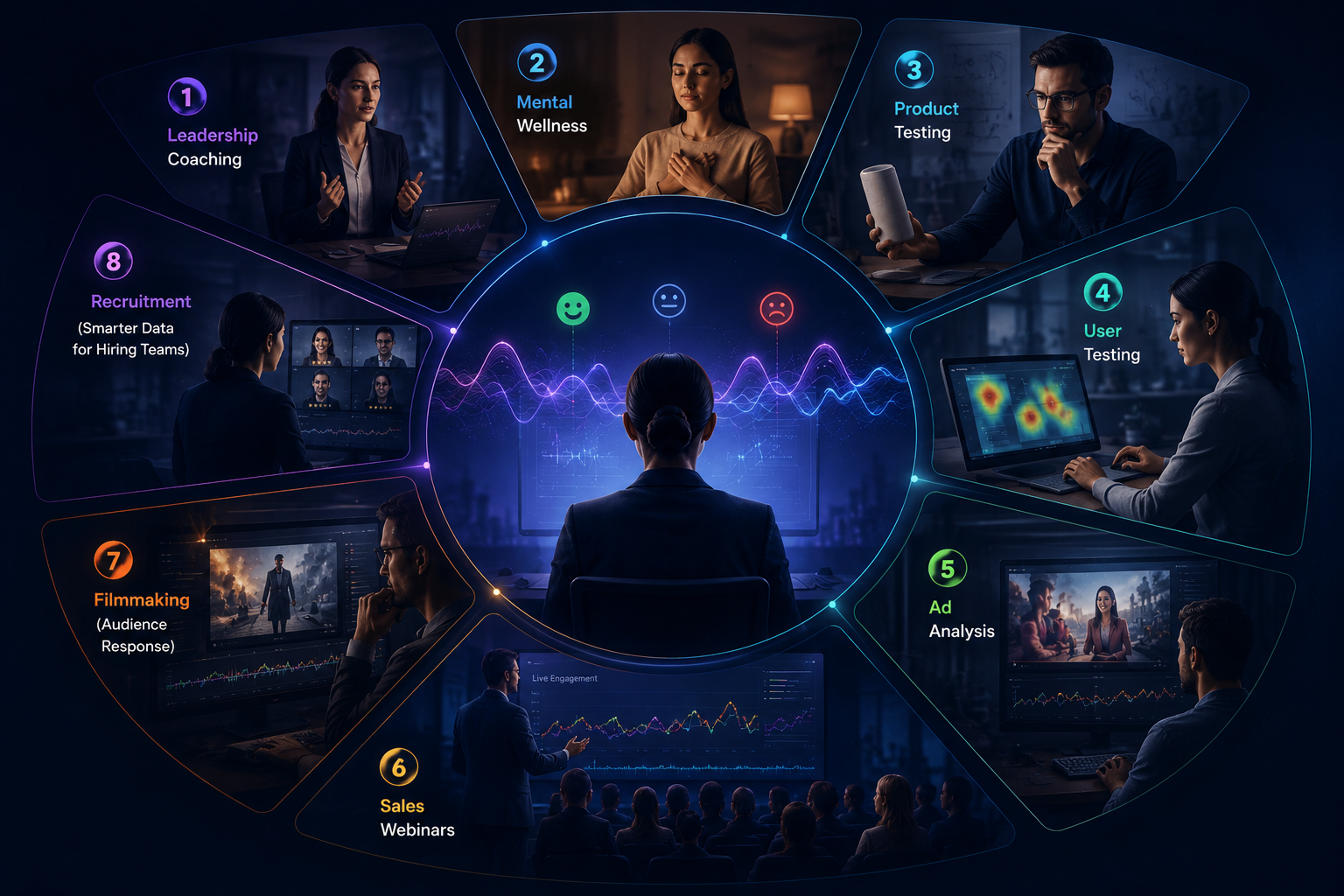
When used responsibly as an assistive tool, these insights unlock incredible potential across eight core areas:
1. Leadership Coaching (Lead Smarter with Emotion-Driven Insights)
Great leadership relies heavily on emotional intelligence (EQ). In hybrid or digital coaching environments, Emotion AI helps coaches build self-awareness by analyzing their own communication patterns. It maps vocal tone, facial expressiveness, and speech clarity during practice sessions, giving leaders objective data on how their delivery impacts presence, empathy, and perceived engagement.
2. Mental Wellness (Detecting Behavioral Patterns to Support Care)
Crucial Boundary: Emotion AI is never a therapist or a diagnostic machine.
In wellness applications, it acts strictly as an observational assistant. By tracking gradual, longitudinal shifts in a user's vocal energy, facial micro-expressions, or sentiment patterns in journal logs over weeks, it can flag subtle behavioral dips. This data empowers individuals or care providers to catch patterns of low affect early and intentionally implement proactive wellness strategies.
3. Product Testing (Understanding Emotional Responses to Products)
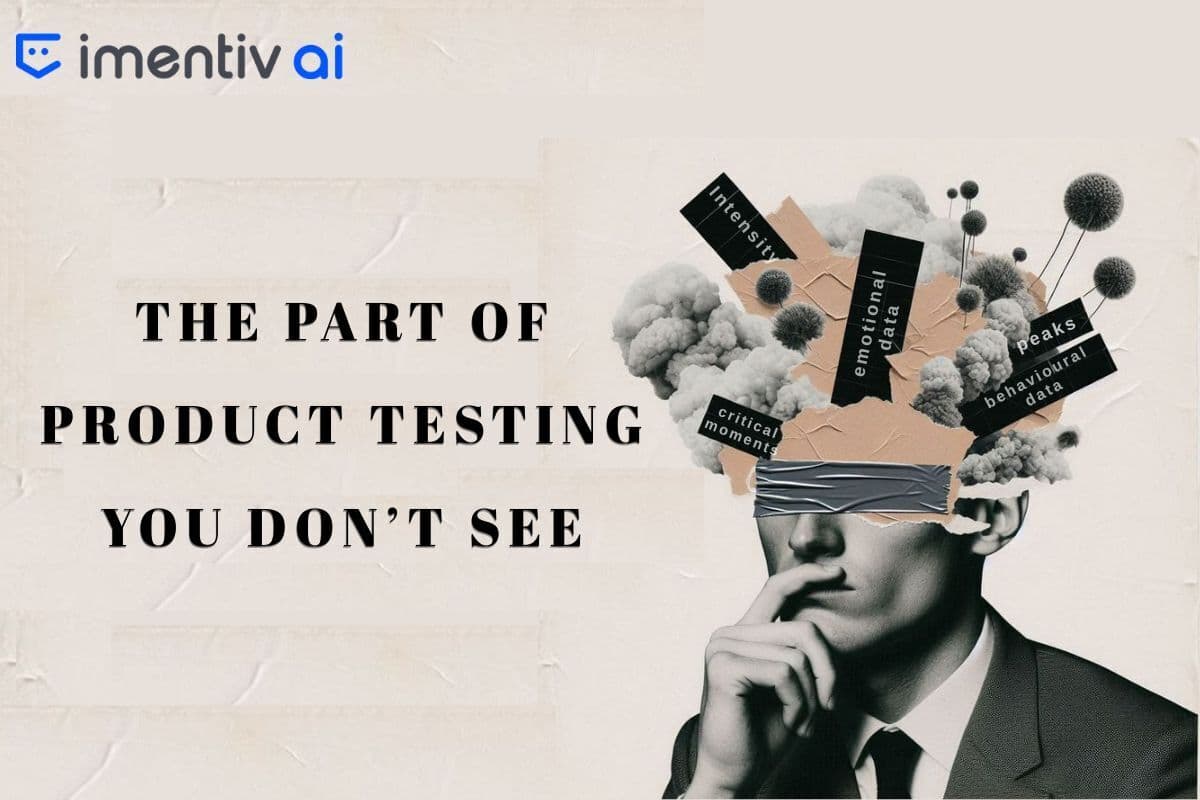
When users interact with a physical product prototype or digital software for the first time, their immediate, non-verbal physical signals tell the real story. Emotion AI tracks micro-expressions of confusion (like a furrowed brow) or delight during out-of-box experiences, helping product designers pinpoint exact friction points that instruction manuals or traditional surveys fail to capture.
4. User Testing (Optimizing the Digital Experience)
User experience (UX) design thrives on empathy. By integrating emotion analytics into user testing sessions, UX researchers can overlay a participant's facial and vocal signals directly onto their screen-recording timeline. Designers can see exactly which drop-down menu caused frustration, which layout sparked confusion, and what seamless flow left the user feeling satisfied.
5. Ad Analysis (Measuring the Emotional Impact of Campaigns)
Traditional marketing relies on retrospective surveys, but human memory is biased. Emotion AI allows brands to test advertisements scene-by-scene with opt-in focus groups. By analyzing aggregate emotional resonance, secondary reactions, and peak attention moments frame-by-frame, creators can optimize their hooks and narrative pacing before launching a campaign.
6. Sales Webinars (Analyzing Aggregate Audience Engagement)
Presenting to a silent, digital room makes it incredibly difficult to read the crowd. Emotion AI processes aggregate, anonymous audience signals during live webinars or recordings to provide a real-time or post-event engagement graph. Presenters can pinpoint exactly when the audience lost interest, when a value proposition landed perfectly, or where a slide caused confusion.
7. Filmmaking (Assessing Audience Response to Films)
In cinema, pacing is everything. Directors and editors use Emotion AI during test screenings to track how effectively a scene builds tension, drops a jump-scare, or delivers a comedic punchline. Mapping the visual and vocal responses of a test audience ensures that the creative intent of the scene translates perfectly to the viewer's actual experience.
8. Recruitment (Smarter Data Patterns for Hiring Teams)
In recruitment, Emotion AI does not replace human judgment or rank a candidate’s worth. Instead, it serves as an administrative support layer during video assessments to track aggregate engagement trends, baseline communication clarity, and situational comfort across candidates. This gives HR teams an objective, standardized set of signal patterns to review alongside traditional qualifications.
The Boundaries of Responsible AI
Understanding the limits of Emotion AI is just as important as understanding its capabilities. Because expressions are tied so deeply to culture, context, individual neurodiversity, and environment, this technology should never be used to make automated, high-impact judgments about a person’s character, trustworthiness, or value.
A person is not an emotional score. A facial expression is not a verdict. This is why imentiv. ai champions clear ethical boundaries:
- It must be transparent and consent-based: Users must always know when human signals are being processed.
- It must be contextual: A learner looking away from a screen might be distracted, or they might be thinking deeply. The technology must look at aggregate patterns, not isolated data points stripped of environment.
- It must include human oversight: AI is an assistant. Critical interpretations and decisions always require the human heart, intellect, and expert psychological context.
A More Honest Conversation About the Future
There are two ways the future of Emotion AI could go. One is the wrong way: a world of invasive emotional scoring and hidden surveillance that leaves people feeling watched, categorized, and reduced.
The other path - the one we are actively building at imentiv. ai , is entirely different. It is a future where transparent, privacy-first technology acts as a quiet bridge between human intent and digital execution. We combine deep machine learning with human psychological expertise to ensure our data remains grounded, practical, and deeply respectful of individual boundaries.
We don't need machines that pretend to know everything about us. We need technology that listens more attentively to the signals we choose to share, while remaining humble about what those signals mean. That is how we move beyond clicks and impressions to build digital and professional spaces that truly respect the complexity of the people using them.
Ready to build experiences that truly connect?
Discover how multimodal insights can transform your digital strategy without compromising trust.