How Emotion AI Is Transforming Product Testing: Understanding Customer Reactions Beyond Surveys
The Hidden Challenge in Product Testing
Ask any product researcher what the most time-consuming part of product testing is, and the answer is rarely recruiting participants or designing the study. More often, it's what happens after the testing session ends.
Hours of recorded videos must be reviewed manually. Researchers pause, rewind, compare participants, and search for the exact moment someone hesitated, smiled, frowned, or looked uncertain. They cross-reference transcripts with observation notes, trying to understand not only what participants said but also what they experienced in the moment.
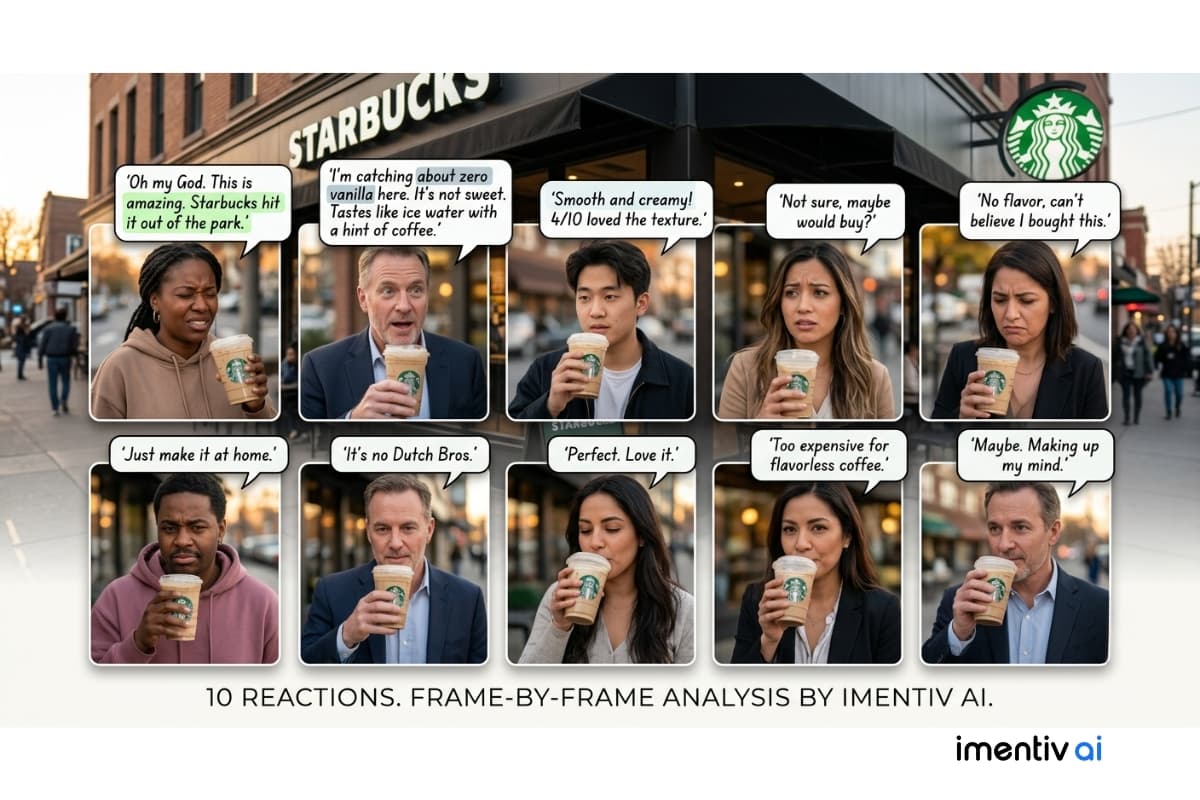
Traditional research methods capture only part of the picture. Surveys reveal what participants remember. Interviews explain what they choose to share. Analytics record where they clicked or how long they spent on a task. Yet between these data points exists another layer of insight, one that often goes unnoticed.
A brief pause before picking up a product.
A subtle expression of confusion while reading packaging instructions.
A momentary increase in engagement when a particular feature is demonstrated.
These reactions happen before participants consciously explain their thoughts, making them valuable indicators of genuine customer experience.
The challenge has never been that this information doesn't exist. It's already present in every testing session, hidden within video, audio, and behavioral cues. The challenge is that manually identifying these moments across dozens or hundreds of participants simply isn't scalable.
This is where imentiv ai helps. Rather than replacing researchers, it enables them to understand emotional and behavioral patterns across product testing sessions faster, allowing them to focus on interpreting insights instead of spending days searching for them.
Product Testing Isn't Just About Software
When people hear the term product testing , they often imagine usability testing for websites or mobile applications. In reality, product testing spans a much broader landscape.
Companies evaluate:
- Household and cleaning products
- Food and beverage packaging
- Consumer electronics
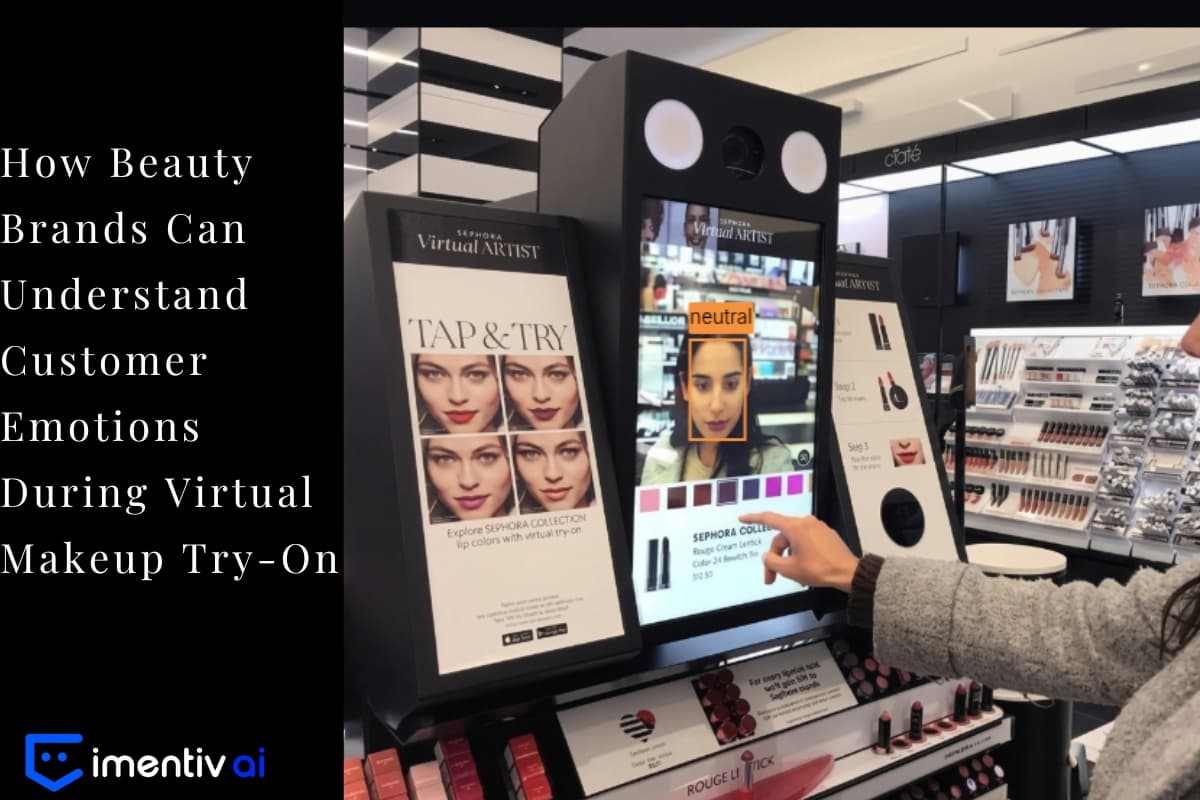
- Cosmetics and personal care products
- Medical devices
- Retail displays
- Product prototypes
- Marketing concepts and advertisements
- Product demonstrations
Regardless of the product category, researchers ask similar questions:
- Do customers understand how to use the product?
- Which features capture their attention?
- Where do they hesitate or become confused?
- Which messages resonate most strongly?
- What creates excitement, curiosity, or frustration?
- Which version is most likely to succeed in the market?
Traditional methods answer many of these questions through interviews, observation, and surveys. Emotion AI complements these approaches by analyzing multimodal behavioral signals, including facial expressions, vocal characteristics, speech patterns, body language, and conversational context, to help researchers identify meaningful moments that might otherwise remain hidden.
Instead of relying solely on what customers say afterward, researchers gain additional context about what customers appeared to experience throughout the testing process.
Organizing Product Testing Sessions at Scale
Before meaningful analysis can begin, research data needs to be organized.
This seemingly simple step is often where research operations become inefficient.
Video recordings may be stored across multiple folders. Participant identifiers become disconnected from recordings. Task timestamps live in separate spreadsheets. Finding a specific moment across multiple sessions can take longer than analyzing it.
The Product Testing workspace within imentiv ai is designed to simplify this process.
Researchers begin by creating a project and importing participant recordings through whichever workflow best suits their research:
- Upload video files directly
- Import recordings using URLs
- Connect and bulk import sessions from Dropbox
Bulk imports become especially valuable after large research studies. Instead of uploading every participant individually, an entire week's worth of testing sessions can be organized within a single project in just a few steps.
This structure transforms a collection of video files into a searchable research dataset.
Rather than wondering where an important moment occurred, researchers can immediately locate emotional changes within the appropriate participant, task, and product version.
Why Structure Matters
Emotion data has little value without context.
A rise in frustration becomes meaningful only when researchers know which participant , which task , which product version , and which exact moment produced that reaction.
Turning Individual Reactions into Product Insights
Most emotion analysis tools evaluate one recording at a time.
While this works well for reviewing individual participants, product researchers often need answers that extend beyond a single session.
Questions like:
- Did most participants struggle with the same feature?
- Which packaging version generated greater interest?
- Where did engagement consistently increase?
- Was confusion isolated or shared across the study?
Answering these questions requires project-level analysis rather than isolated video reviews.
Behind imentiv ai's Insights layer is an orchestration engine that combines emotional and behavioral signals from every participant within a project into a unified analytical view.
Instead of examining one recording after another, researchers can identify emotional patterns across the entire participant group.
For example, a single participant showing hesitation during product setup may simply reflect individual preference.
However, if eight out of ten participants demonstrate a similar increase in cognitive effort during the same step, the finding becomes considerably more significant. It may indicate unclear instructions, packaging design issues, or opportunities to improve the customer experience.
The difference is subtle but important.
One participant tells a story.
A consistent emotional pattern across an entire cohort tells researchers where meaningful product improvements may exist.
Individual Signals vs. Collective Patterns
An isolated emotional response is useful.
A recurring emotional response across an entire participant group becomes evidence.
Aggregating multimodal behavioral data allows research teams to distinguish between individual variation and consistent customer experience.
Ask Questions About Your Product Testing Data
As projects grow larger, manually reviewing every session becomes increasingly impractical.
Instead of searching through timelines and spreadsheets, researchers often simply want answers.
The Insights workspace allows teams to explore project data using natural language.
Researchers can ask questions such as:
- Which participant showed the highest frustration during product setup?
- Where did cognitive load increase across all testing sessions?
- Compare emotional engagement between Product Version A and Product Version B.
- Which product demonstration generated the highest interest?
- Did participants respond more positively to the redesigned packaging?
- Which stage consistently reduced customer engagement?
Rather than generating static dashboards, the conversational interface supports ongoing exploration. Researchers can ask follow-up questions, compare participant groups, or investigate specific emotional moments without losing previous context.
Importantly, the system is designed to support, not replace, human interpretation.
Its purpose is not to determine why customers felt a certain way. Instead, it identifies the moments most deserving of a researcher's attention, allowing human expertise to focus where it matters most.
Why Emotional Response Matters Beyond Usability
Traditional product testing often measures whether customers can successfully complete a task.
Can they open the package?
Can they assemble the product?
Can they understand the instructions?
Can they complete the intended workflow?
These are essential questions.
They are not the only questions.
Successful products do more than function correctly.
They create interest.
They inspire confidence.
They build excitement.
They encourage customers to return.
Two products may produce identical usability scores while generating very different emotional experiences.
Participants may complete every task successfully while feeling indifferent throughout the experience.
Alternatively, a product feature might consistently increase engagement and curiosity despite requiring slightly more interaction.
These emotional differences frequently become early indicators of market performance, customer preference, and long-term adoption.
By evaluating usability metrics alongside emotional engagement, researchers gain a more complete understanding of how customers experience a product, not only whether they can use it, but whether they genuinely connect with it.
A Real-World Example: Consumer Product Testing with Emotion AI
One example comes from a global household products company that used imentiv ai during concept testing for a new consumer product.
Participants were recorded while interacting with the product, observing demonstrations, and discussing their overall experience.
Traditional research methods indicated that participants clearly understood how the product worked. Instructions were easy to follow, task completion was high, and interviews suggested that the concept was well understood.
If the study had ended there, the conclusion would have been straightforward: the product concept worked.
However, multimodal emotion analysis revealed a more nuanced picture.
Across multiple participants, emotional engagement consistently increased whenever one specific product benefit was demonstrated, while remaining comparatively flat during other portions of the session.
Although participants successfully understood every feature, one message generated noticeably stronger emotional engagement than the others.
This distinction was not immediately visible through comprehension scores or post-session interviews alone.
By identifying where customer interest naturally increased, researchers gained valuable insight into which product messaging was most likely to resonate with a broader audience.
Rather than replacing traditional research methods, the emotional analysis complemented them, helping researchers prioritize the moments that deserved deeper investigation.
Seen in Practice
Usability confirmed that the product worked.
Emotional response revealed which version customers were genuinely drawn toward.
Together, these insights provided a more complete understanding of customer experience than either method could have achieved independently.
AI Supports Researchers, It Doesn't Replace Them
Emotion AI is not designed to make decisions on behalf of researchers.
Interpreting human behavior requires context, experience, and professional judgment.
Researchers remain responsible for understanding why participants responded as they did, determining which findings matter most, and translating those insights into product decisions.
What changes is how they spend their time.
Instead of reviewing hours of recordings to locate meaningful moments, researchers can devote more attention to understanding customer needs, validating hypotheses, collaborating with stakeholders, and shaping better products.
Pattern recognition across hundreds of interactions is something artificial intelligence performs exceptionally well.
Understanding human experience remains fundamentally a human responsibility.
The greatest value emerges when both work together.
The Future of Product Testing Is More Human, Not Less
As organizations continue to invest in customer-centered design, understanding what customers say is no longer enough.
Researchers also need to understand what customers experience throughout every interaction.
By combining multimodal emotion analysis with structured project management, cohort-level insights, and conversational exploration, imentiv ai helps research teams uncover meaningful behavioral patterns that traditional research methods may overlook.
The result is not the replacement of human expertise, but its amplification.
When researchers spend less time searching through recordings and more time interpreting meaningful insights, they can make better-informed decisions, build stronger products, and create experiences that resonate more deeply with the people they are designed for.