Affective AI’s Role in Early Detection and Intervention for Suicide and Self-Harm
Understanding and addressing self-harm and suicide is one of the most pressing challenges in mental health today. These acts often arise from overwhelming emotional distress, underscoring the urgent need for tools that can recognize and interpret such emotions effectively. Emotion AI, or Affective AI, is emerging as a transformative technology in this domain. By analyzing emotions from video, audio, and text inputs (a process known as multimodal emotion recognition), Emotion AI provides a detailed emotional analysis that can aid in understanding mental health difficulties and intervening during crises.
What Are Self-Harm and Suicidal Ideation?
Self-harm refers to deliberate actions taken to cause physical injury to oneself, often as a coping mechanism for emotional pain, stress, or trauma. It can include behaviors such as cutting, burning, or hitting oneself. While self-harm is not always an indication of suicidal intent, it is a significant red flag that the individual is struggling with deep emotional distress.
Suicidal ideation involves thinking about, planning, or wishing for death. It ranges from fleeting thoughts to detailed plans for taking one’s own life. Suicidal ideation often stems from feelings of hopelessness, worthlessness, or being overwhelmed by life’s challenges. It is critical to identify and address such thoughts early to prevent potential suicide attempts.
Both self-harm and suicidal ideation are complex and multifaceted, often linked to underlying mental health conditions such as depression, anxiety, borderline personality disorder, or trauma-related disorders. These behaviors are cries for help and signal the need for immediate intervention and support.
The Role of Affective AI in Crisis Intervention
Affective AI integrates advanced machine learning algorithms to detect and analyze emotional states. It examines subtle cues in facial expressions, voice tones, and written words, offering a comprehensive understanding of an individual’s emotional condition. This capability is especially crucial in detecting signs of self-harm or suicidal ideation, where early identification can be lifesaving.
- Video Inputs: Facial expression reveal a wealth of emotional information. Affective AI leverages models like the Facial Action Coding System (FACS) to identify micro-expressions, subtle, involuntary facial movements linked to emotions. For instance, signs of sadness, despair, or withdrawal can be detected through a detailed analysis of facial muscle movements from videos.
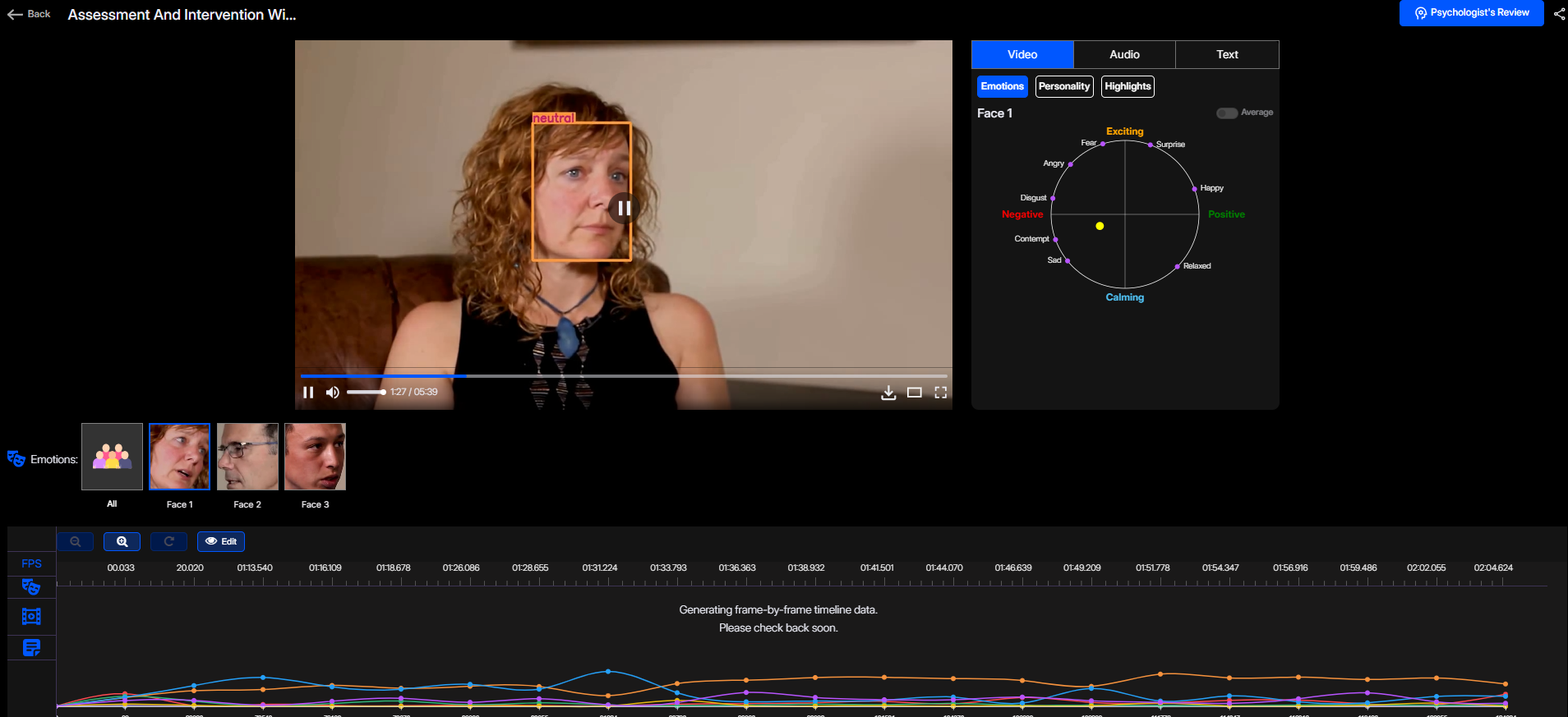
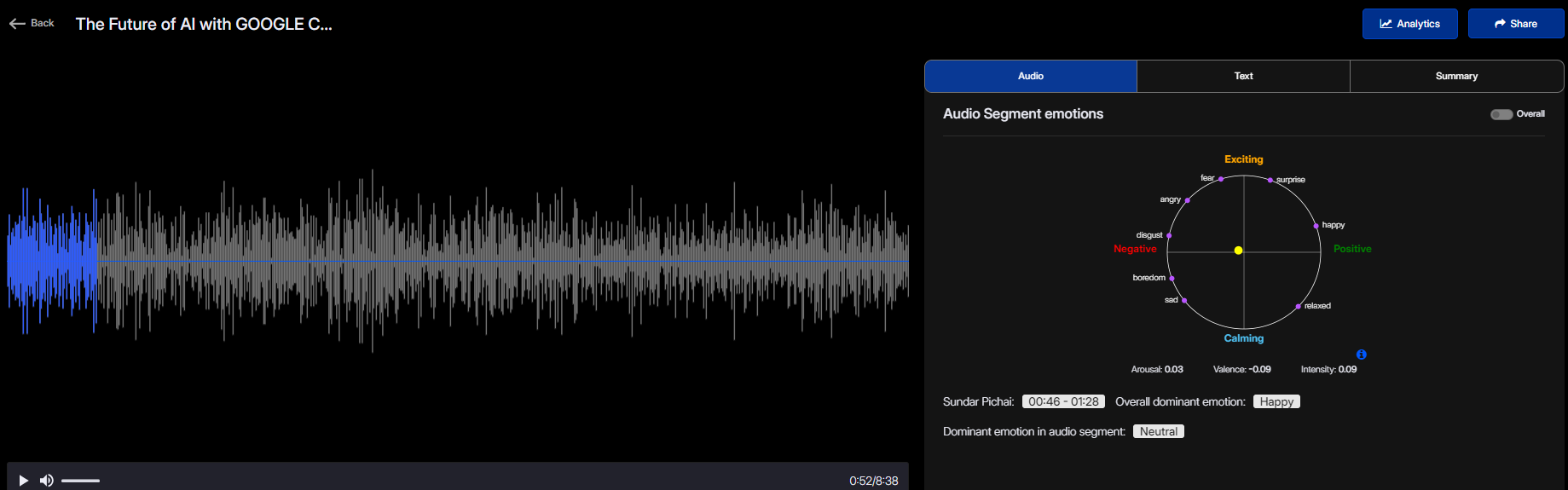
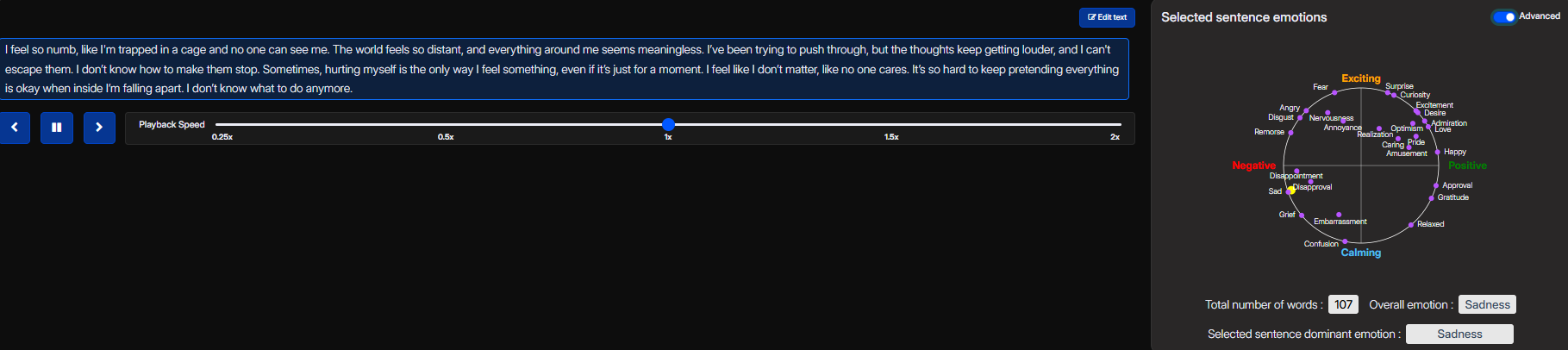
For more information on how Emotion AI analyzes such scenarios, you can explore this example.
Detailed Emotional Analysis for Mental Health Support
Emotion AI’s ability to provide granular emotional analysis sets it apart. By analyzing inputs at a micro-level, it captures the intensity, frequency, and transitions of emotions. This detailed data helps mental health professionals understand the nuances of an individual’s emotional experiences, making interventions more targeted and effective.
For example:
Identifying Emotional Triggers: By recognizing shifts in emotional states, Emotion AI can highlight potential triggers for distress, enabling proactive intervention.
Monitoring Progress: Emotion AI allows for continuous monitoring of emotional patterns, helping professionals assess the effectiveness of therapeutic interventions.
Enhancing Therapist Guidance: Emotion AI contributes to research on emotional patterns and mental health, offering therapists data-driven insights and guidance. By understanding the specific emotional trajectories of individuals, therapists can refine their approaches and strategies.
Applications in Crisis Situations
In scenarios involving self-harm or suicidal ideation, Emotion AI can play a pivotal role:
- Research Support: Emotion AI’s detailed analysis provides valuable data for mental health research, helping to uncover trends and correlations that improve crisis intervention techniques
- Integration with Mental Health Services: The actionable data generated by Emotion AI enhances the ability of mental health professionals to respond effectively, aligning with existing services to provide comprehensive support.
Addressing Ethical Considerations
The use of Emotion AI in mental health must prioritize ethical considerations, including privacy, consent, and data security. Ensuring that individuals are aware of how their data is analyzed and used is paramount. Additionally, the technology should be deployed as a supportive tool, augmenting, not replacing the expertise of mental health professionals.
Conclusion
Emotion AI or Affective AI is revolutionizing how we approach mental health crises, offering tools that deeply understand and analyze human emotions. By identifying signs of self-harm and suicide (through video, audio, and text inputs) this multimodal emotion recognition technology provides a lifeline for those in distress.
As we continue to refine and integrate Emotion AI into mental health care, its potential to save lives and support individuals in their darkest moments is immense.
Note: This technology is a support system and does not replace professional medical care. If you or someone you know is experiencing a mental health crisis, consult a licensed mental health professional or seek immediate help.