Why Do “Resolved” Customer Support Calls Still Lead to Churn?
AI in customer support has changed what's possible. So why are most CX teams still making decisions based on what customers said and ignoring everything they showed?
Every day, video support interactions are recorded, stored, and reviewed. Agents are scored. Tickets are closed. Dashboards turn green. And somewhere in that same dataset, a frustrated customer is quietly deciding to leave — their disengagement written clearly across their face, their resignation audible in the pauses between words. None of it makes it into the report.
This isn't a data problem. It's a visibility problem. And the CX teams who don't solve it are paying for it in churn they can't explain.
The Resolution That Wasn't
Here's what most post-call data captures: issue category, handle time, resolution status, CSAT score — if the customer bothers to fill it out.
Here's what it misses: the exact moment a customer stopped believing the agent could help them. The subtle shift from engaged to enduring. The micro-expression of doubt that flashed when a solution was offered. The voice that said "okay, sure" while the face said something else entirely.
According to PwC, 32% of customers walk away from a brand they love after just one bad experience. But "bad" is rarely dramatic. It's the interaction that felt transactional. The support session where the customer felt processed, not heard. These moments don't show up as failed resolutions — they show up three weeks later as cancelled subscriptions with no clear cause.
CX teams are measuring outputs. Emotion AI in customer support measures experience. The gap between these two is where loyalty is lost.
What You're Actually Leaving on the Table
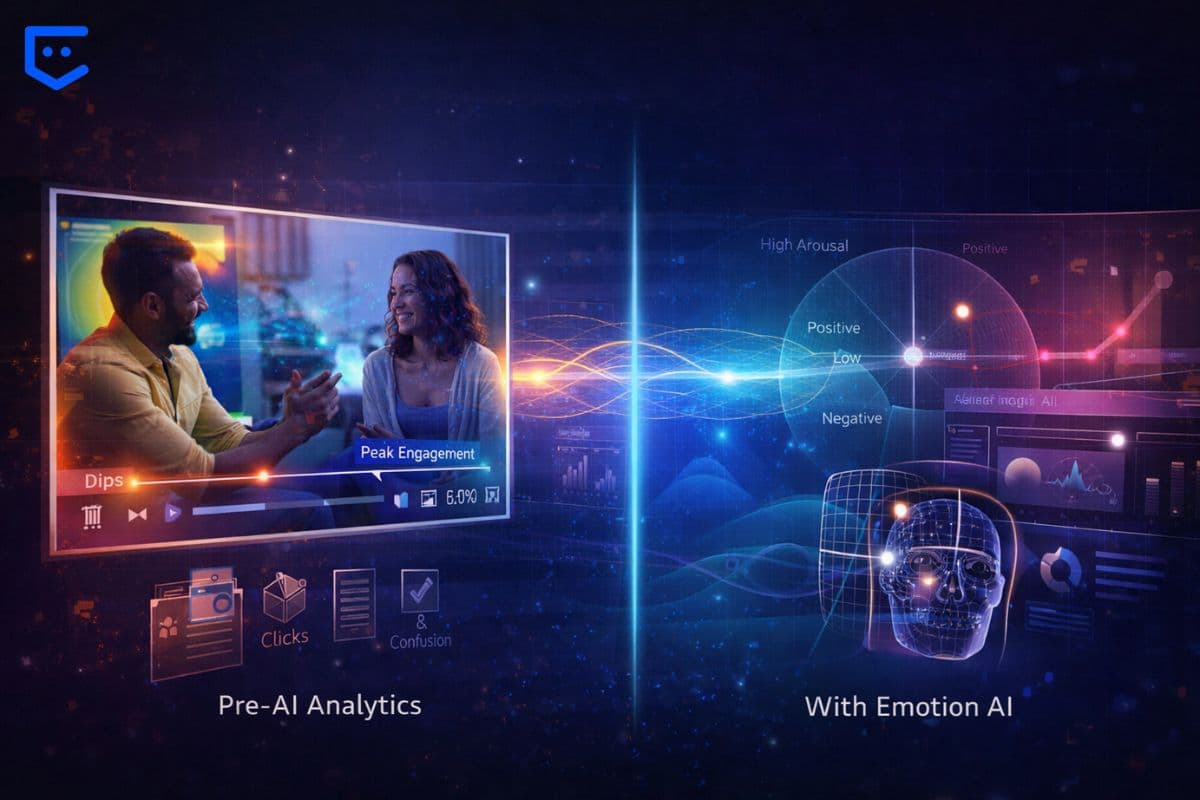
Without emotion AI, every recorded video call your team reviews tells only part of the story. You can track what was said and whether the issue was marked “resolved.” What you can’t see is how the interaction actually felt to the customer.
That gap shows up first in coaching. Feedback like “be more empathetic” sounds useful, but it’s rarely tied to a specific moment. Agents aren’t shown when engagement dropped or when frustration began to rise. Without clear emotional markers in the timeline, improvement becomes trial and error instead of targeted development.
Escalations follow the same pattern. Frustration usually builds gradually. There’s often a subtle shift — a pause, a change in tone, a visible disengagement — that signals the conversation is at risk. If no one catches that shift in time, the opportunity to recover the interaction is gone.
Quality assurance has its own blind spot. A call can meet every checklist requirement and still leave the customer feeling dismissed. Traditional QA measures compliance and process. Customers evaluate the experience.
Research from Salesforce shows that 88% of customers say the experience a company provides matters as much as its product. Yet most evaluation frameworks are still designed around procedure, not perception.
That disconnect — between operational success and emotional impact — is where loyalty quietly erodes.
What Changes When You Can Actually See It
This is where Imentiv AI reframes what's possible for CX teams. This is not by adding another metric to the dashboard, but by changing what you're able to understand from every recorded video interaction.
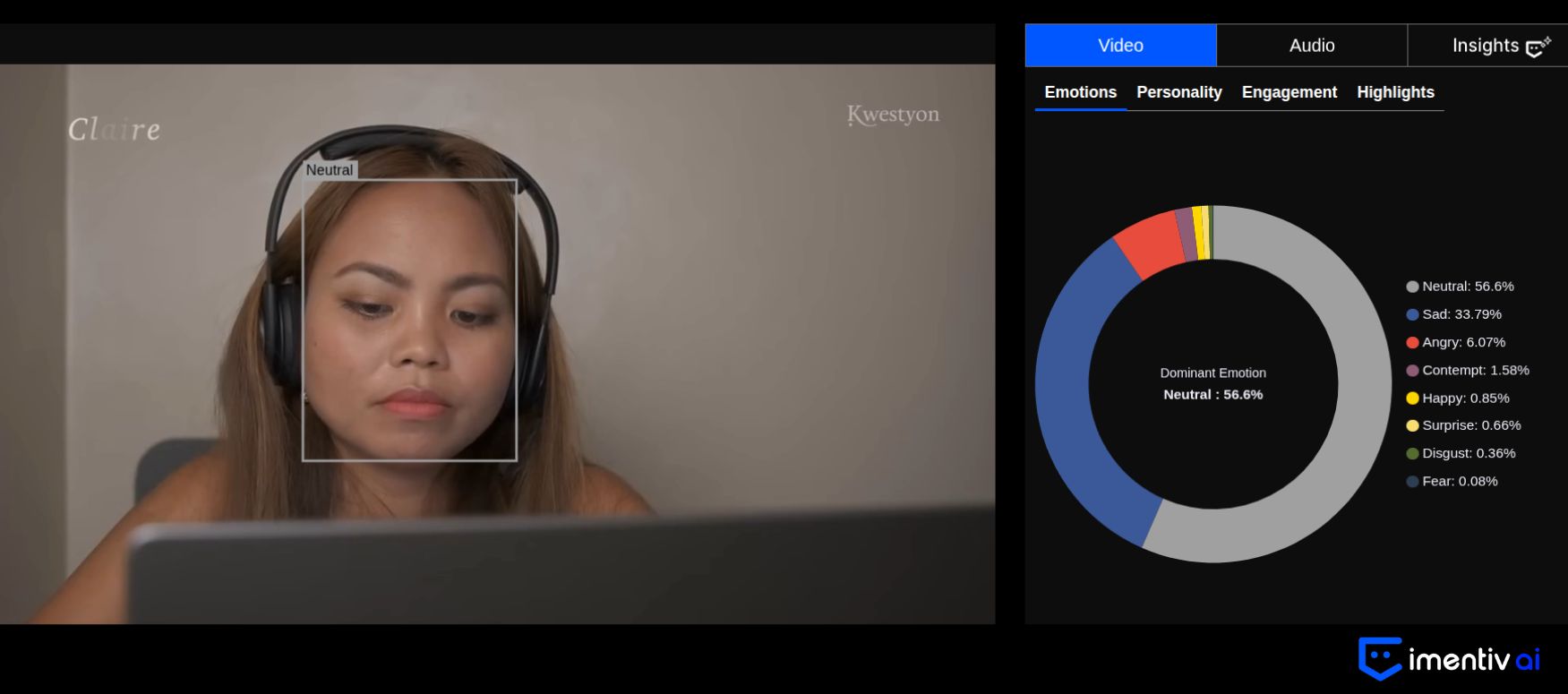 Emotion recognition that tracks the full arc, not just the outcome. Imentiv AI's video emotion analysis doesn't assign a single mood to a call. It maps how emotion moves with the
valence-arousal graph. From the opening exchange to the resolution moment, it identifies emotions such as happiness, anger, sadness, surprise, and more across the entire session. That timeline is where the real story lives. It shows you not just that a customer was frustrated, but when they became frustrated and what triggered the shift.
Emotion recognition that tracks the full arc, not just the outcome. Imentiv AI's video emotion analysis doesn't assign a single mood to a call. It maps how emotion moves with the
valence-arousal graph. From the opening exchange to the resolution moment, it identifies emotions such as happiness, anger, sadness, surprise, and more across the entire session. That timeline is where the real story lives. It shows you not just that a customer was frustrated, but when they became frustrated and what triggered the shift.
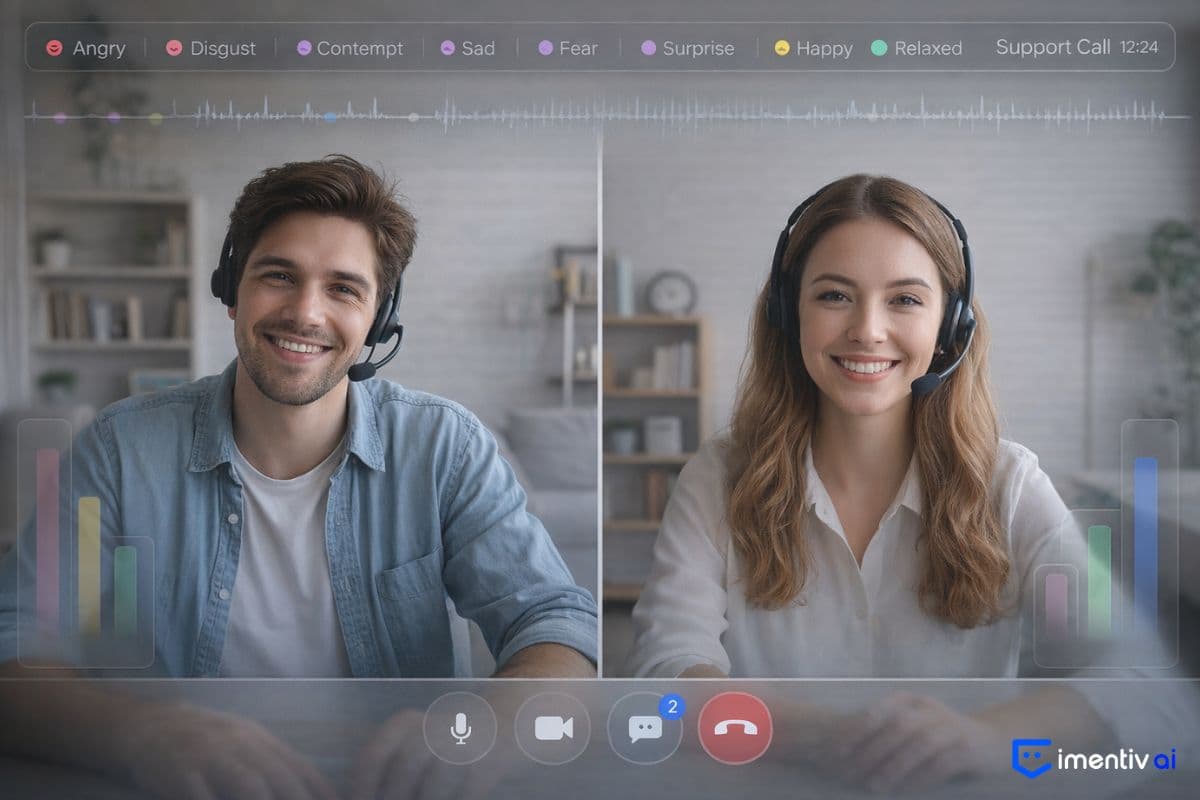
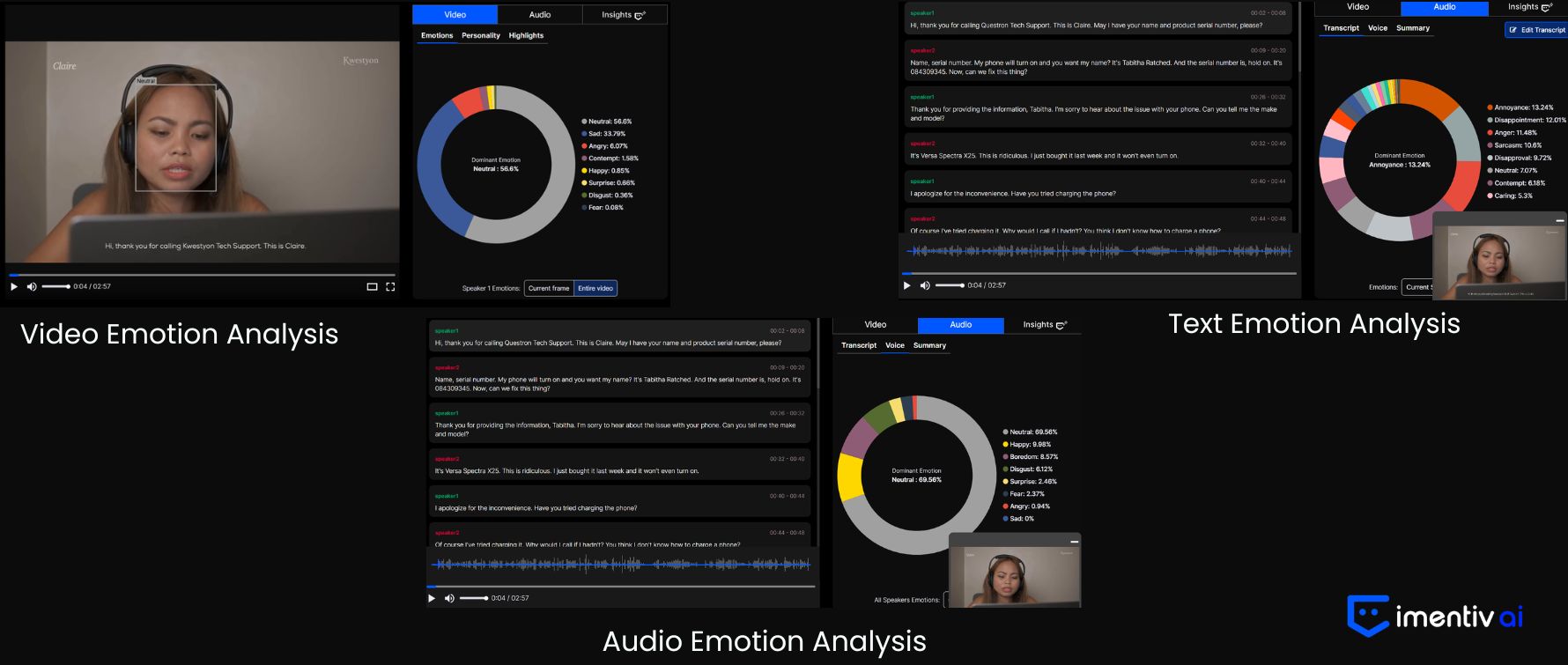 Multimodal analysis: because faces and voices don't always agree. A customer can look composed and sound tense. An agent can seem confident while their engagement is visibly dropping. Imentiv AI combines facial expression analysis with vocal signals — tone, pitch, pace, energy — to build a layered emotional picture that's far more accurate than either channel alone. When the signals diverge, that divergence is itself the insight.
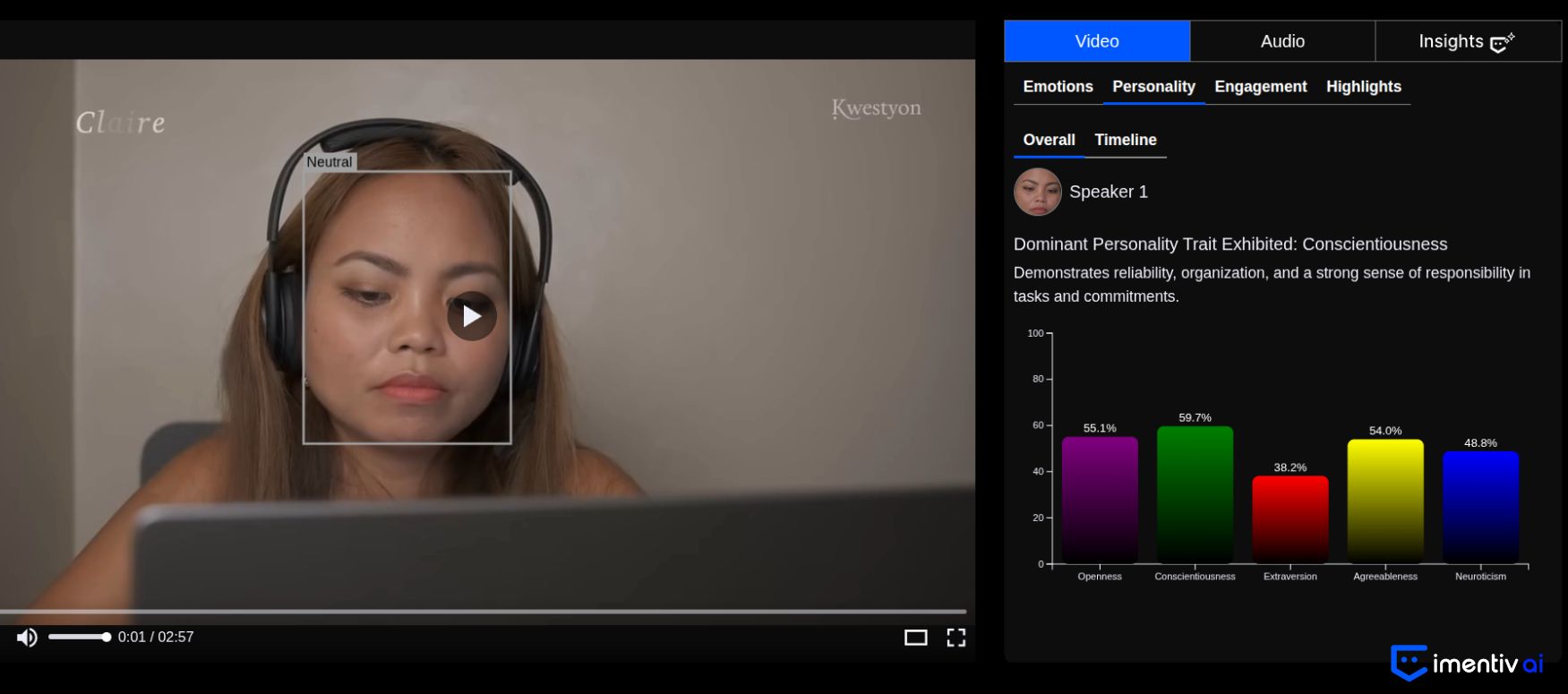 Personality trait analysis: Knowing who you're talking to changes everything. Two customers can go through the same support interaction and walk away with completely different impressions. Not because the service changed — but because they’re different people.
Imentiv AI analyzes the personality traits of individuals in recorded video interactions using the
OCEAN model (Openness, Conscientiousness, Extraversion, Agreeableness, and Neuroticism). By examining behavioral signals in communication, the platform identifies underlying personality tendencies that influence how someone responds during a conversation.
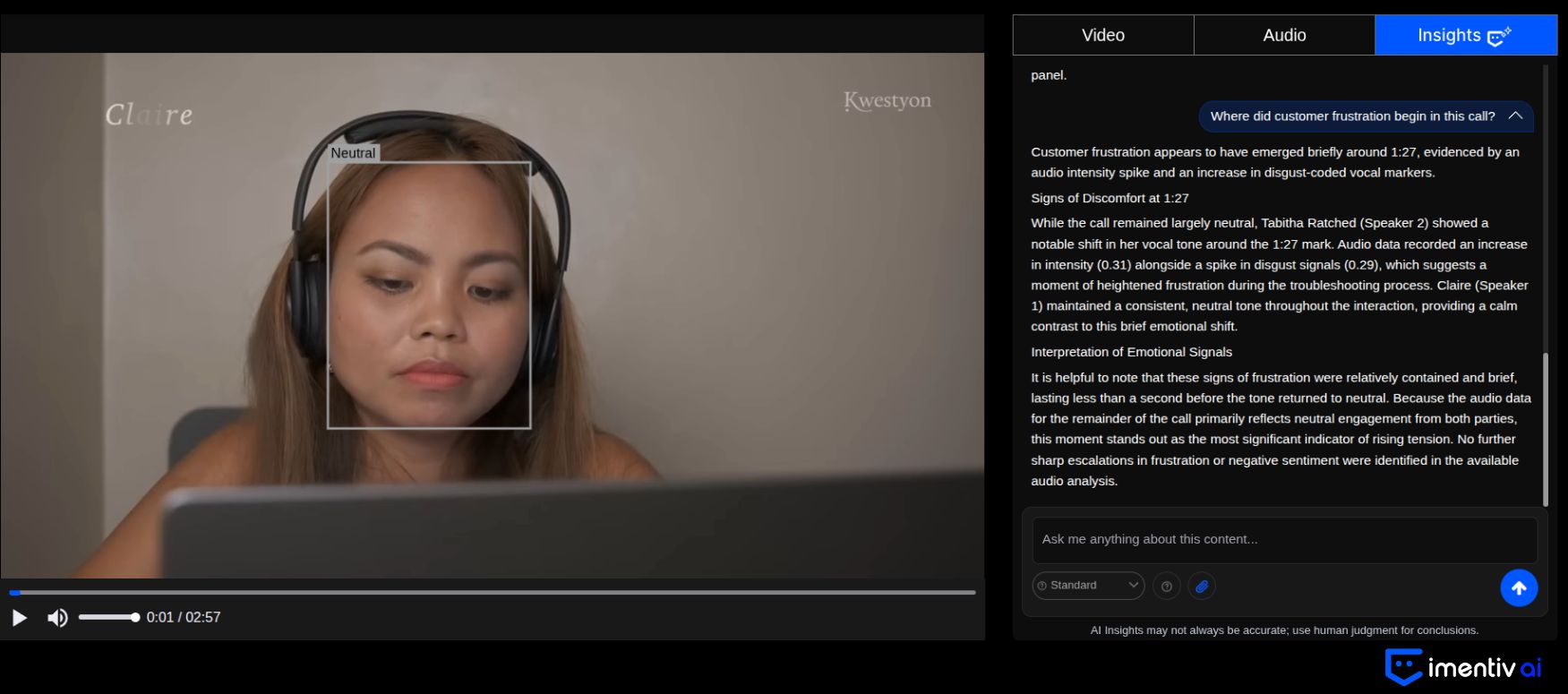
AI Insights: Ask better questions, Get clearer answers. Data alone doesn’t solve problems. Teams need context. Imentiv AI’s AI Insights feature allows you to ask specific questions about your recorded video interactions and receive context-aware answers. Instead of manually reviewing hours of footage, you can ask:
Where did customer frustration begin in this call?
Did the agent’s tone change after the objection?
How did the customer’s emotional state evolve before resolution?
It’s not just analytics. It’s the ability to explore your data through natural questions and get meaningful answers without guesswork.
The Cost of Waiting
Every week without emotion AI in your customer support operation is another week of video interactions reviewed at face value. Another round of coaching built on incomplete feedback. Another set of churned customers whose warning signs were visible — just not to anyone watching.
The customers who leave quietly are the ones CX teams remember the least and lose the most. Imentiv AI makes the invisible visible — so your team can act on what's actually happening in every recorded interaction, not just what made it into the notes.
The question isn't whether emotion AI in customer support is worth it. It's how much the gap has already cost you.
See what your customer support video interactions have been trying to tell you. Explore Imentiv AI.