Triggers
A trigger is any stimulus—such as an action, object, memory, or situation—that evokes a strong emotional reaction. It may be external or internal and can produce a rapid, sometimes disproportionate emotional, psychological, or physiological response. These reactions are highly individualized, shaped by prior conditioning, neurological associations, and autobiographical memory. Such stimuli can disrupt an individual’s ability to stay grounded and present, often influencing thought patterns, emotional responses, and behavior. Much like grief, they manifest in varied and highly personal ways. Specific places, dates, sensory experiences, or significant anniversaries may prompt the resurgence of painful or overwhelming emotions.
In mental health contexts, triggers are cues that can intensify symptoms associated with conditions like anxiety or depression. The term is also frequently linked to trauma, where certain reminders reactivate distressing memories or emotional states. They may present across sensory modalities — auditory, visual, olfactory, tactile, or situational — and can activate responses ranging from subclinical emotional reactivity to acute psychological distress. While triggers are most frequently discussed in the context of adverse emotional reactions, they may equally precipitate positively valenced responses such as reward anticipation, nostalgic recall, or motivational activation.
What is a Trigger in Psychology?
Clinically, a trigger is defined as any stimulus, internal or external, that activates a conditioned emotional or behavioral response, typically through associative neural pathways formed during periods of significant emotional arousal. The mechanism underlying triggers is rooted in associative learning theory and reinforced by neurobiological processes involving the amygdala, hippocampus, and prefrontal cortex.
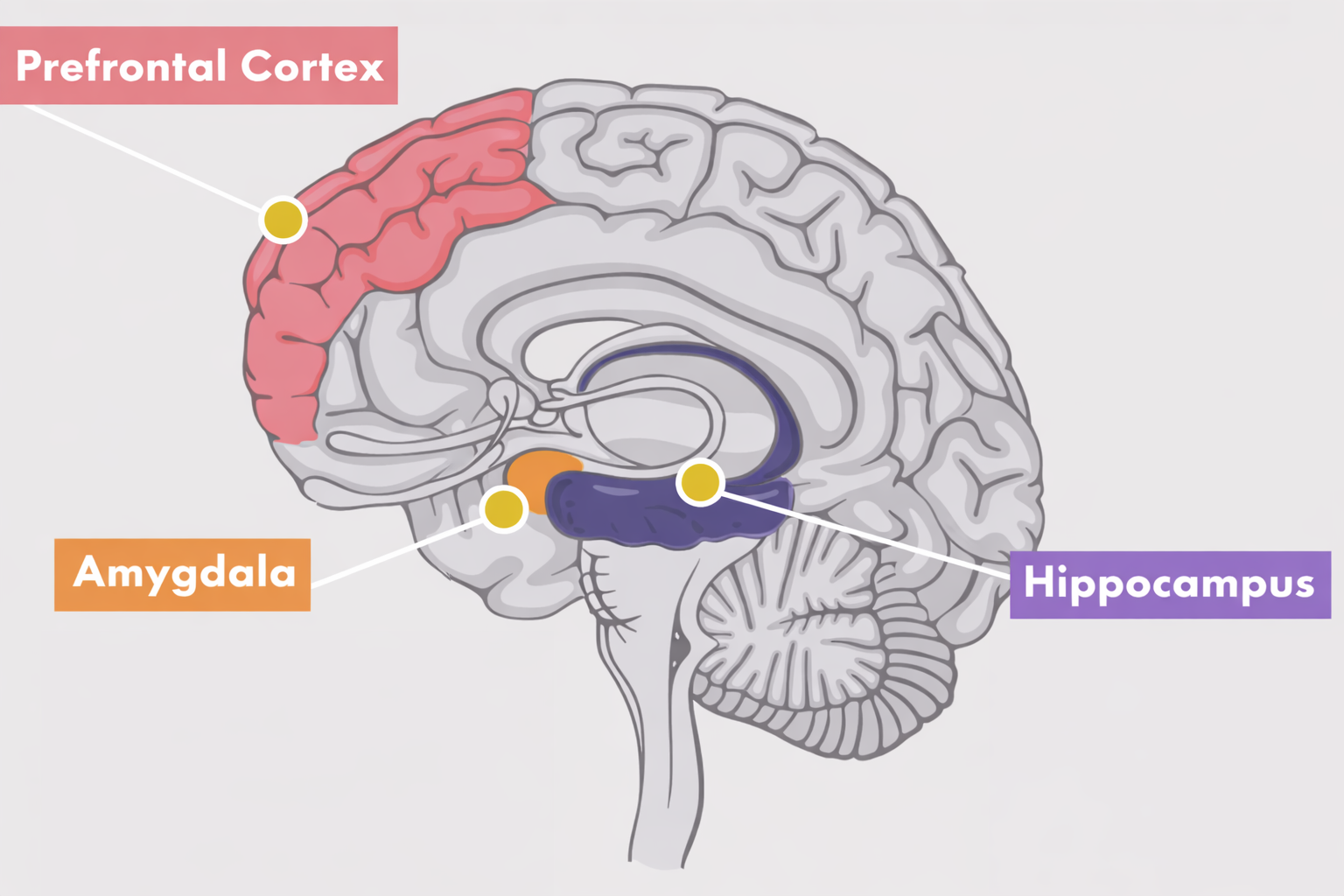
When a previously neutral stimulus becomes repeatedly paired with a high-intensity emotional event, it acquires the capacity to independently reactivate the associated emotional state — often involuntarily and outside of conscious awareness. Triggers are a core construct in the clinical understanding of post-traumatic stress disorder (PTSD), generalized anxiety disorder (GAD), specific phobias, and emotional dysregulation. Their identification and systematic desensitization form foundational components of evidence-based therapeutic modalities, including cognitive behavioral therapy (CBT ), exposure and response prevention (ERP), and eye movement desensitization and reprocessing (EMDR).
How Are Triggers Viewed from an Emotion AI Perspective?
From an Emotion AI perspective, triggers are operationalized as contextual antecedent events that precede and precipitate measurable shifts in an individual's affective state. Emotion AI systems do not detect triggers directly; rather, they identify the downstream emotional responses that follow triggering stimuli, i.e., capturing statistically significant deviations from established emotional baselines across behavioral, vocal, and linguistic channels. Detection relies on multimodal signal processing, including analysis of facial action units (FAUs), prosodic features, speech rate variability, and lexical sentiment shifts. Because triggers are inherently individualized and not externally visible, Emotion AI inference is necessarily probabilistic, grounded in pattern recognition rather than causal attribution. Ethical deployment of Emotion AI in this domain requires explicit acknowledgment of these inferential limits and the avoidance of deterministic clinical conclusions drawn from automated emotional analysis alone.
How Imentiv AI Identifies Potential Trigger Patterns
As a multimodal Emotion AI platform, Imentiv AI analyzes emotional signals across text, voice, and visual data to surface potential trigger-response dynamics. Rather than labeling a specific word or moment as “the trigger,” the system examines correlations between contextual cues and subsequent emotional shifts.
This may include:
- Sudden changes in facial expression or micro-expressions following particular topics
- Vocal shifts such as increased tension, hesitation, or tone variation after certain references
- Recurrent spikes in emotionally charged language within written communication
- Escalation patterns where similar themes consistently precede heightened emotional intensity
.png?alt=media&token=43209d57-8483-4f23-b6e6-bd5152334534)
By mapping these deviations longitudinally, the platform can highlight recurring stimulus-response associations. These insights help organizations, researchers, and professionals better understand emotional reactivity patterns in communication, collaboration, learning, or customer interactions.
Importantly, the system surfaces probabilistic patterns—not definitive psychological conclusions. It does not diagnose trauma, define personal vulnerabilities, or determine intent. All outputs are designed to support structured human interpretation.
Why Is Ethical Interpretation Important When Analyzing Triggers?
Given the direct relationship between triggers and psychological vulnerability, including trauma histories, clinical diagnoses, and neurologically conditioned stress responses, rigorous ethical standards are non-negotiable in any automated analysis of triggering events. Imentiv AI is architected to augment human clinical and research judgment, not to replace it. The platform refrains from diagnostic labeling, causal attribution, or inference of underlying psychological conditions based solely on detected emotional reactivity. All outputs are designed to function as probabilistic signals within a broader, human-supervised interpretive framework, ensuring that the sensitivity and clinical complexity of trigger-related emotional responses are handled with the precision, care, and contextual awareness they require.
Insights from Imentiv AI are meant to support emotional understanding, not diagnose conditions or replace professional mental health care. Seek professional help if needed.