Caring
Caring is an emotional and psychological state characterized by empathy, concern, and a genuine desire to support another person’s well-being. In human communication, caring is not just an intention; it is something that is expressed, perceived, and experienced through a combination of signals across behavior, language, and interaction.
At its core, caring reflects emotional attunement—the ability to recognize what someone else is feeling and respond in a way that makes them feel understood, valued, and supported. It plays a critical role in building trust, strengthening relationships, and enabling effective communication across both personal and professional contexts.

How Caring Is Expressed
Caring is inherently multimodal, meaning it is communicated through multiple channels at once. To truly understand it, you have to look beyond words and consider the full spectrum of human expression.
Facial Expressions
Facial cues often provide the earliest signals of caring. Soft eye contact, relaxed facial muscles, and a genuine, subtle smile can indicate warmth and attentiveness. Brief micro-expressions—such as concern or empathy—may appear when someone processes another person’s emotions, signaling real-time emotional alignment.
Tone of Voice
A caring tone is typically warm, calm, and measured. It adapts to the emotional context—slowing down when reassurance is needed or softening during sensitive conversations. Even with the same words, a shift in tone can change how caring a message feels.
Gestures and Body Language
Nonverbal behavior reinforces intent. Open posture, leaning slightly forward, nodding, and minimizing distractions all signal presence and attention. These behaviors communicate that the speaker is engaged and genuinely interested in the other person.
Language and Verbal Cues
In spoken and written communication, caring is reflected through:
- Empathy (“I understand how you feel”)
- Reassurance (“I’m here to help”)
- Support (“Let’s figure this out together”)
- Active listening (“Tell me more about what happened”)
Caring language is not generic—it is context-aware, specific, and responsive to the situation.
Consistency Over Time
Caring is not defined by a single interaction. It is reinforced through consistent behavior—following up, remembering details, and continuing support across time. This continuity is what differentiates genuine care from surface-level politeness.
Caring in Text-Based Communication
In digital environments, where facial expressions and tone may be absent, caring must be conveyed entirely through language. This makes word choice, phrasing, and context even more critical.
Caring in text often appears as:
- Acknowledgment of the other person’s feelings
- Thoughtful and respectful tone
- Clear intent to help or support
- Personalized, non-scripted responses
For example, “I understand this has been frustrating for you, let me help resolve it” communicates significantly more care than a generic response like “Your issue is being processed.”
Why Caring Matters in Real-World Contexts
Caring is a key driver of outcomes across industries where human interaction matters.
Healthcare: Patients respond better when they feel understood and supported. Caring communication improves trust, honesty, and adherence to treatment.
Customer Support: Empathetic responses can de-escalate frustration and turn negative experiences into positive ones, directly impacting satisfaction and loyalty.
Leadership and Workplace Culture: Leaders who demonstrate care build psychological safety, improve team engagement, and foster stronger collaboration.
Education: Students are more likely to participate and perform well in environments where they feel supported and valued.
Caring Through the Lens of Emotion AI
While caring is naturally understood by humans, it has historically been difficult to measure objectively. Emotion AI changes this by analyzing observable patterns in communication .
By evaluating signals across text, voice, video, and behavior, emotion AI can identify whether caring is present, how strongly it is expressed, and how consistently it appears over time. This shifts the understanding of caring from subjective interpretation to data-driven insight .
How Imentiv AI Detects Caring
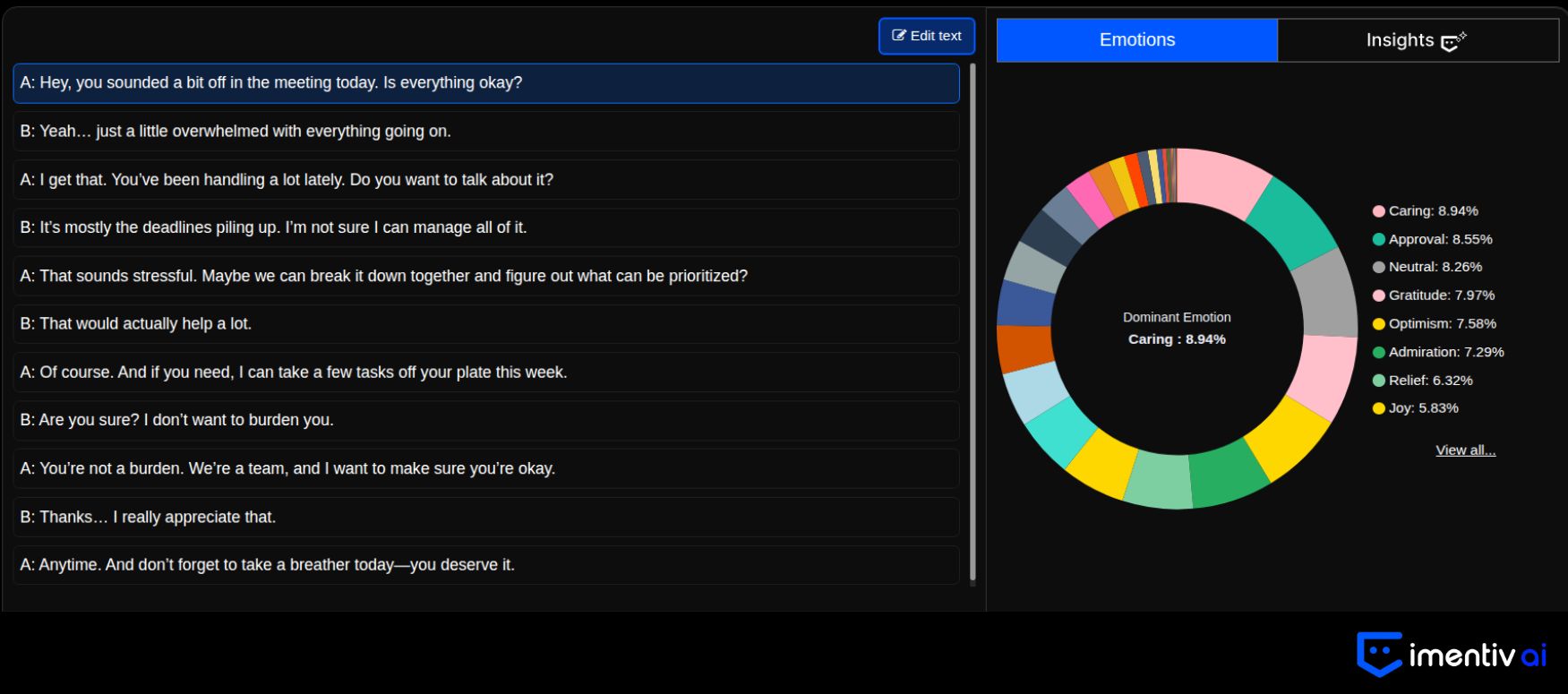
Imentiv AI detects caring through advanced text emotion analysis, examining how language reflects empathy, support, and intent within context. It evaluates entire conversations to determine whether responses acknowledge emotions, offer reassurance, and show genuine concern.
It further analyzes tone (warmth, patience), linguistic patterns (empathetic phrases, supportive wording), and intent (helpful vs. purely functional replies) to distinguish real caring from generic communication. This enables organizations to understand whether their written interactions truly feel human, supportive, and emotionally aligned.
From Emotion to Actionable Insight
Caring is a subtle but powerful component of human communication. It shapes how messages are received, how relationships are built, and how decisions are made. Yet, because it is expressed through a complex mix of signals, it is often overlooked or misinterpreted.
With platforms like Imentiv AI, organizations can move beyond assumptions and start measuring caring in a structured, scalable way. This enables better training, improved communication strategies, and more human-centered experiences.
In an increasingly digital world, the ability to recognize and respond to caring is not just valuable—it is essential for meaningful, effective interaction.