Trauma
Trauma is a psychological and physiological response to deeply distressing or overwhelming experiences that exceed an individual’s ability to cope or emotionally process what has happened. These experiences may include abuse, neglect, violence, loss, serious accidents, or chronic emotional harm. Trauma can influence emotional regulation, sense of safety, identity, relationships, and physical health, often shaping how a person responds to stress, threat, and connection long after the event has passed.
Rooted in trauma psychology and neurobiology research, trauma is understood as a disruption in the brain’s ability to distinguish between past threat and present safety. When trauma occurs, the brain’s survival systems, especially the amygdala, hippocampus, and prefrontal cortex, may store experiences in fragmented or emotionally intense ways. Trauma can be categorized into acute trauma (single event), chronic trauma (repeated exposure), and complex trauma (prolonged interpersonal harm, often during developmental years). Trauma responses may include hypervigilance, emotional numbness, intrusive memories, avoidance, dissociation, sleep disturbances, and heightened stress reactivity. These responses are not signs of weakness but adaptive survival mechanisms developed during overwhelming stress.
In therapeutic and psychological practice, trauma-informed approaches emphasize safety, empowerment, and regulation rather than forcing rapid processing of traumatic memories. Modern trauma therapy focuses on helping individuals reconnect with bodily safety, emotional awareness, and cognitive meaning-making. Techniques often include grounding strategies, nervous system regulation, emotional literacy development, and gradual processing of traumatic material. The goal is not to erase memories but to reduce emotional overwhelm, restore control, and support post-traumatic growth. Trauma therapy recognizes that healing is non-linear and deeply individual, requiring sensitivity to cultural, social, and developmental contexts.
In social, workplace, and educational environments, trauma awareness supports psychological safety and compassionate communication. Trauma can influence attention, emotional regulation, trust-building, and stress tolerance. Organizations that adopt trauma-informed practices often see improvements in engagement, conflict resolution, and overall well-being. From a social psychology perspective, trauma-informed cultures reduce stigma, improve empathy, and support healthier interpersonal systems.
Emotion AI and Trauma: Understanding Emotional Patterns Through Technology
Emotion AI introduces new possibilities for understanding how trauma may influence emotional expression patterns over time. Traditional observation methods often rely on self-report or behavioral observation alone, which may not fully capture internal emotional states, especially when individuals suppress or mask distress. Multimodal Emotion AI can help identify emotional trends, variability, and contextual emotional responses without labeling or diagnosing trauma.
Imentiv’s multimodal Emotion AI system analyzes facial expressions , vocal emotional markers , and linguistic emotional patterns together to create a broader emotional context map. This allows emotional responses to be understood dynamically rather than as isolated emotional snapshots.
For example:
- In trauma survivors, facial expressions may appear neutral or controlled, while vocal tone may show strain or emotional fatigue. • Emotional responses may shift rapidly between emotional suppression and emotional intensity during stressful conversations. • Linguistic patterns may include safety-seeking language, threat-focused cognition, or emotional distancing depending on context.
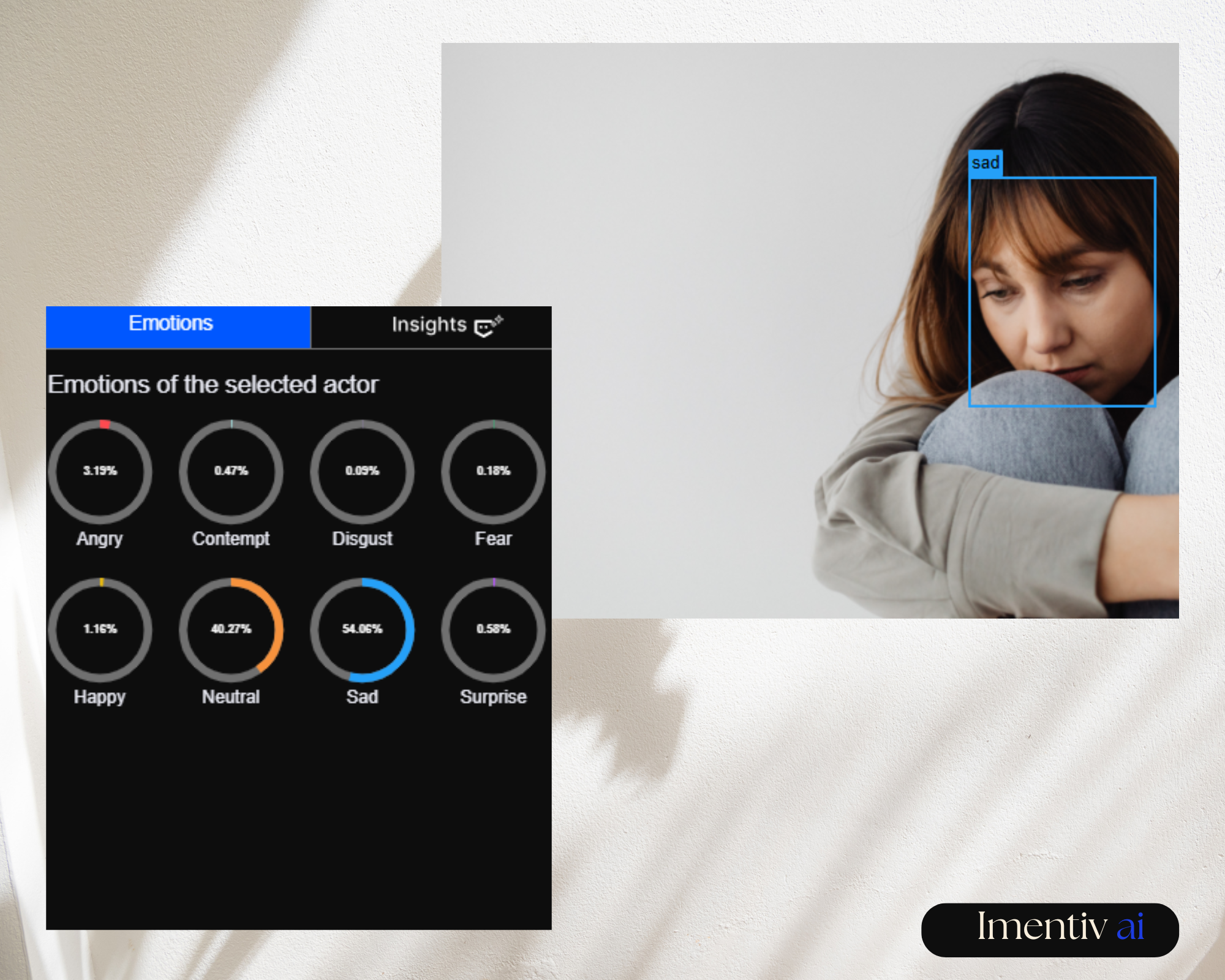
Through Emotion AI, Imentiv provides non-diagnostic emotional insights that can support therapists, researchers, and organizations in understanding emotional regulation patterns and stress responses. These insights are meant to enhance human understanding, not replace clinical judgment.
Ethics and Responsible Use
Imentiv’s Emotion AI is built with strict ethical boundaries. It is not a diagnostic or clinical assessment tool but a supportive system designed to provide emotional pattern insights. Data privacy, informed consent, and human oversight are central to its design. Emotional data must always be interpreted within context and reviewed by trained professionals where needed.
By combining psychological science with responsible AI development, Imentiv supports a future where emotional complexity is better understood, and trauma-informed systems become more accessible across industries.
Note: Emotion AI is a supportive tool designed to enhance emotional understanding and trauma-informed awareness. It is not intended for diagnosis, clinical labeling, or independent mental health decision-making.
Discover how Emotion AI supports trauma-informed emotional understanding — Learn more.