Surprise Emotion
Surprise is a basic emotion that arises when something unexpected happens—good, bad, or neutral. It comes with a quick feeling of shock or wonder that briefly interrupts what we were thinking or doing. Surprises can happen when we learn new information, face sudden events, or see fast changes around us. After the initial reaction, it often turns into other emotions like joy, fear, confusion, or curiosity.
Surprise plays an important role in how we react to the world. It makes us pay attention, think faster, and quickly understand what’s happening. This helps us learn, remember things better, and stay open to new ideas. Even though surprise is usually short, it can change what we expect in the future and influence our decisions.
Psychologically, surprise is positioned around neutral valence (it can feel pleasant or unpleasant depending on the event) and high arousal (a sudden spike in attention and energy), but it always creates a burst of energy and attention. It represents a fast change in our mind and emotions, helping us adjust when something unexpected happens.
Paul Ekman’s Perspective
Paul Ekman identified surprise as one of the six universal emotions recognized across all cultures, alongside happiness, sadness, anger, fear, and disgust. In his Facial Action Coding System (FACS), surprise is linked to muscle movements such as raised eyebrows (AU1+2), widened eyes (AU5), and a dropped jaw (AU26). These expressions signal heightened alertness and readiness to process something unexpected.
Ekman emphasized that surprise is the briefest of all emotions—it acts as a cognitive reset that prepares the body to respond. It’s not inherently good or bad, but a trigger emotion that transitions quickly into understanding, excitement, or concern depending on context. Surprise plays a key role in attention, social learning, and the emotional engagement that drives curiosity and innovation.
Surprise Emotion in Emotion AI
Emotion AI systems interpret surprise by analyzing multiple emotional signals to detect sudden changes in expression, tone, or behavior that indicate unexpected reactions or heightened awareness.
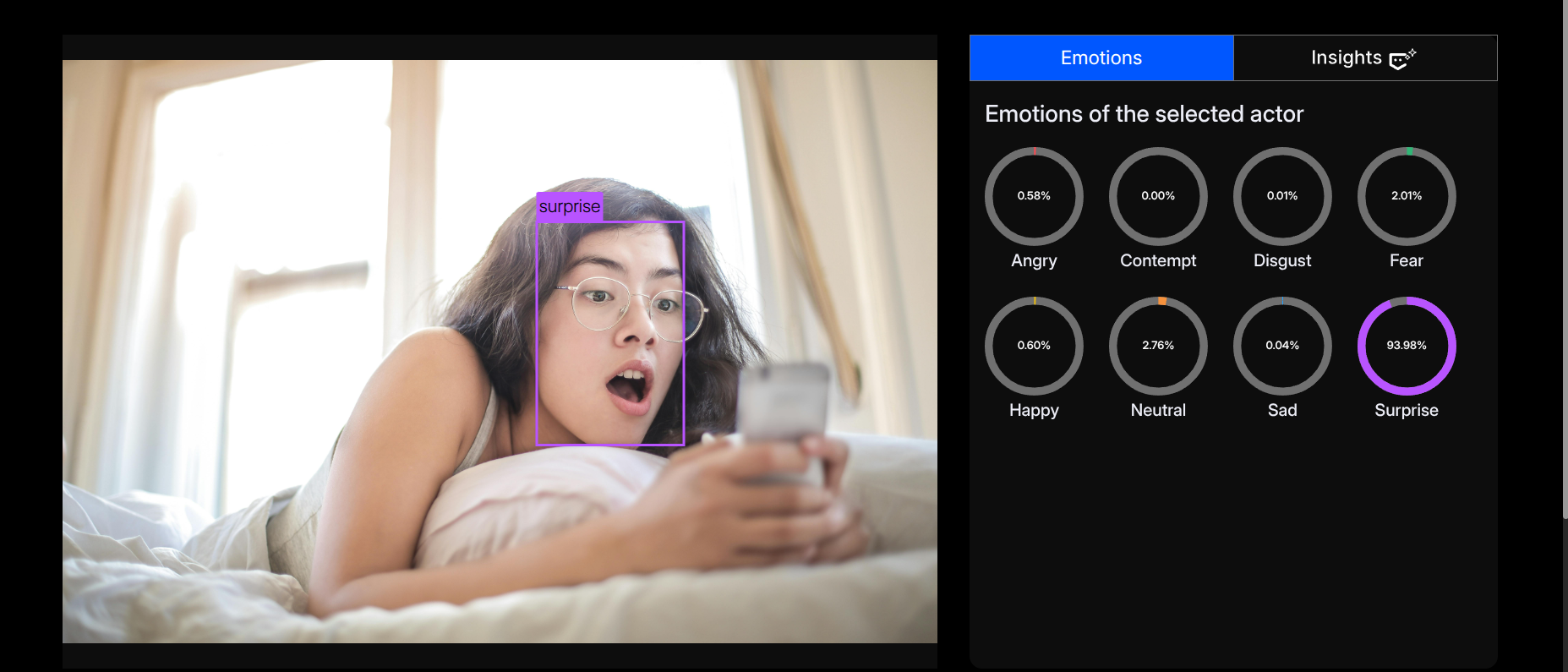
Facial Emotion Recognition:
Detects surprise through raised eyebrows, widened eyes, and an open mouth. Subtle micro-expressions of surprise can indicate genuine reactions, engagement, or emotional honesty during conversations or interviews.
In a video Imentiv AI processed, we can see a little girl's reaction to a surprise gift her parents gave her.
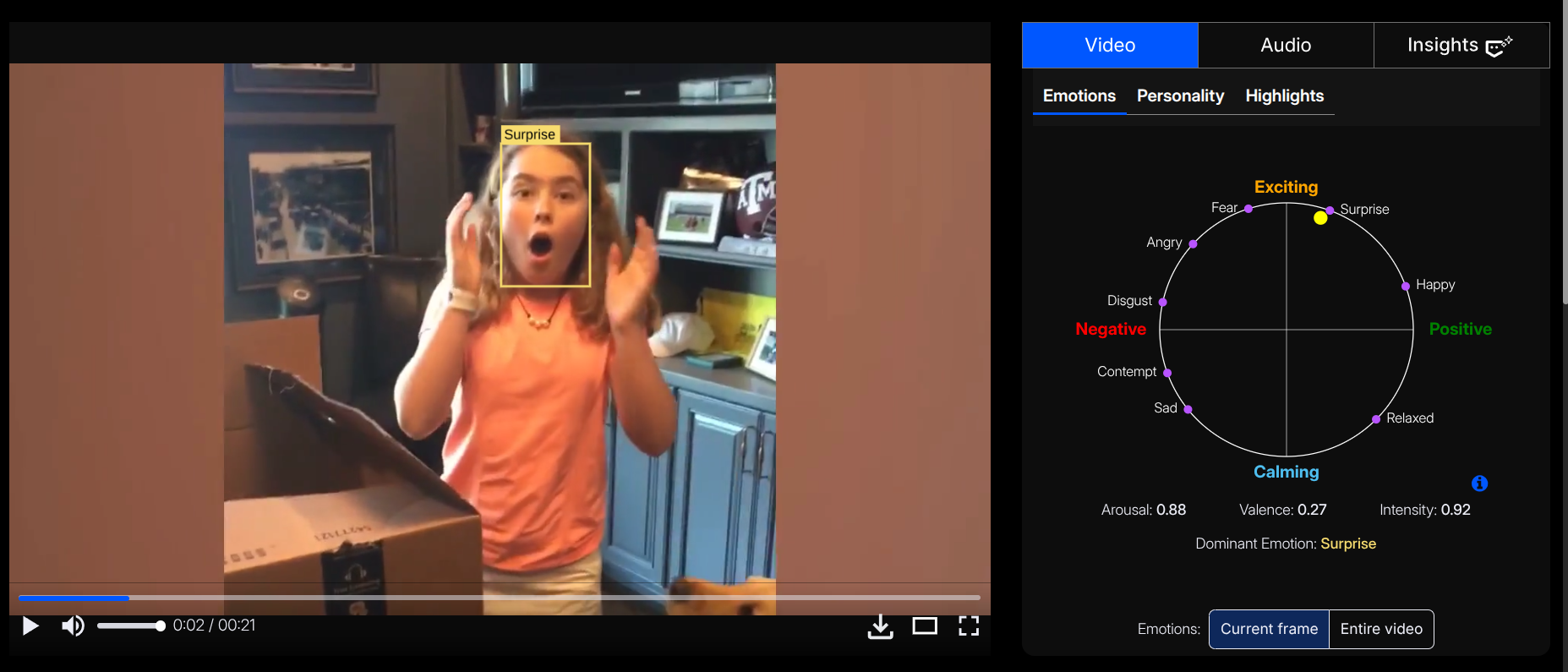
In the screenshot given, we can see the raised eyebrow and jaw drop on the girl, indicating surprise, and on the right in the valence-arousal graph, we can see that the surprise level is highest on the positive note, which gives us the idea that she is surprised by seeing something nice.
Audio Emotion Recognition:
Surprise is often heard in speech as a sudden change in tone or pitch, a sharp intake of breath, brief pauses, or exclamations (“Oh!”, “Really?”, “Wow!”).
Text Emotion Analysis:
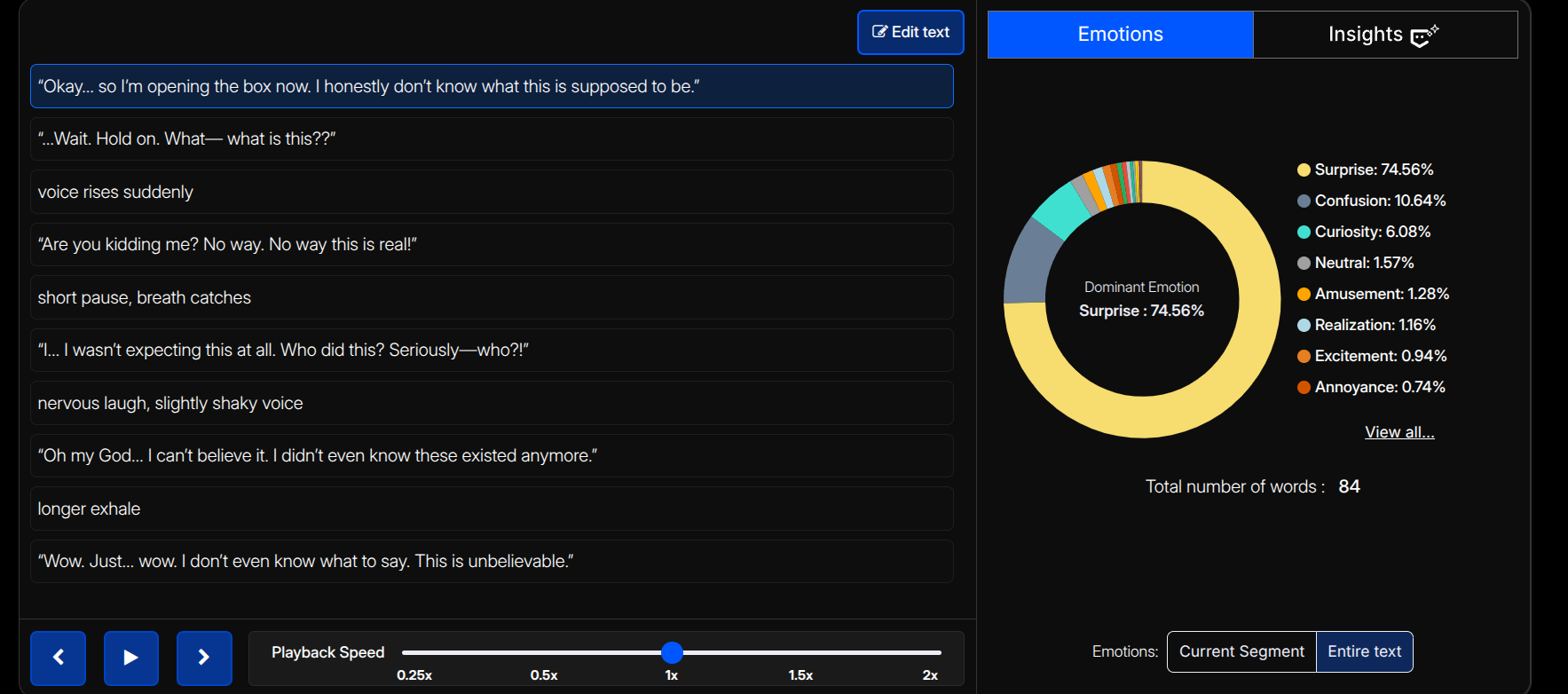
Surprise appears in written or spoken text through words and expressions that convey disbelief, astonishment, or unexpected discovery. In the transcript processed by Imentiv AI, the dominant emotion is identified as surprise , which is clearly reflected in the text in awe of the speaker.
Organizational and Behavioral Context
In workplace and learning environments, detecting surprise can reveal engagement, attention shifts, or emotional authenticity. Positive surprise during presentations or training suggests interest and openness, while negative surprise may indicate unmet expectations or confusion.
For Emotion AI, interpreting surprise accurately requires temporal and contextual understanding. Since emotions are fleeting, systems must track changes over time and correlate them with other cues to distinguish genuine surprise from other expressions like fear or confusion.
Curious how AI detects emotions like surprise? Explore it with Imentiv AI.