Psyche
The psyche refers to the totality of the human mind, encompassing conscious thought, unconscious processes, emotional experience, memory, perception, and the underlying psychological structures that govern behavior, identity, and subjective experience. Derived from the ancient Greek word meaning "soul" or "breath of life," the psyche is the foundational construct around which psychology, psychiatry, and cognitive neuroscience are organized. It is not a discrete anatomical structure but rather a functional and experiential system — the integrated whole of mental life that mediates an individual's relationship with themselves, others, and the world. Understanding the psyche is central to understanding why humans think, feel, and behave the way they do.
What is the Psyche in Psychology?
In clinical and theoretical psychology, the psyche is understood as the complete system of mental functioning, spanning cognitive, affective, motivational, and unconscious dimensions. Its conceptualization has evolved significantly across major psychological traditions. In psychoanalytic theory, Sigmund Freud described the psyche as structured across three dynamic systems, which are the id, ego, and superego, each governing different aspects of instinctual drive, rational mediation, and moral regulation. Carl Jung expanded this framework, introducing the concept of the collective unconscious, archetypes, and the persona, positioning the psyche as a self-regulating system oriented toward individuation and psychological wholeness.
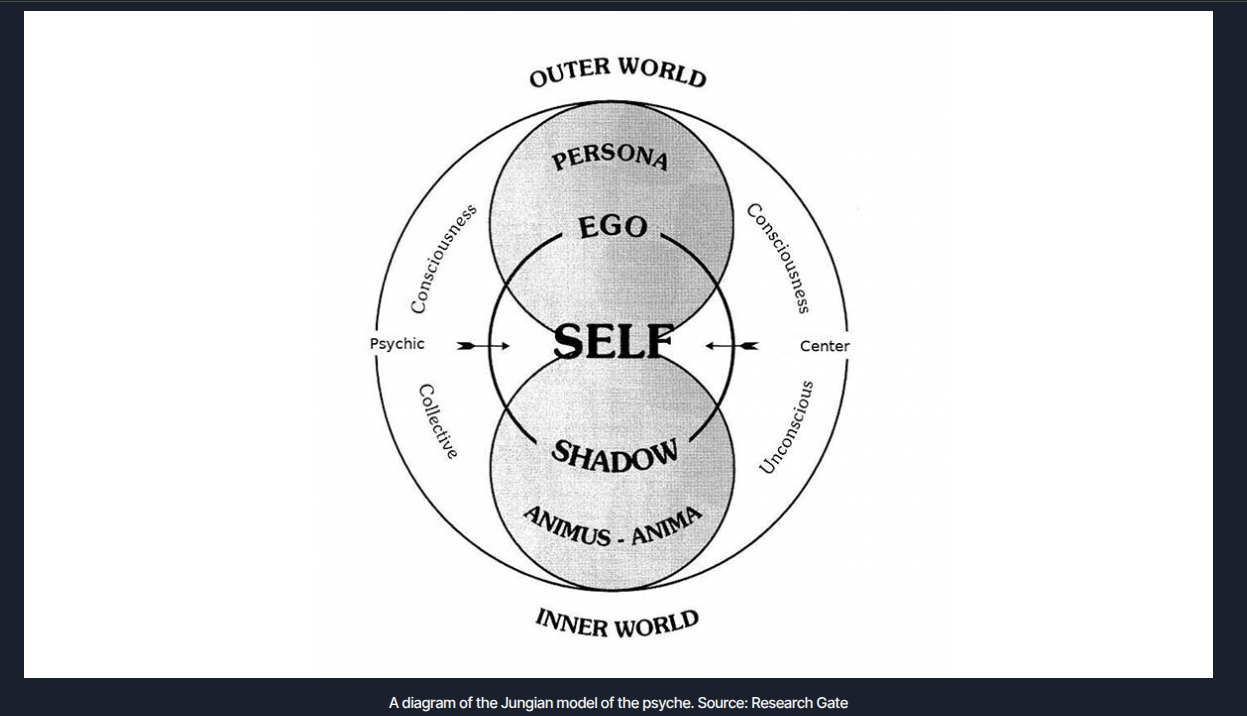
Contemporary cognitive and neuropsychological perspectives conceptualize the psyche in terms of information processing systems, neural network architecture, and the dynamic interplay between conscious awareness and implicit cognitive and emotional processes. Across all frameworks, the psyche is recognized as the organizing system through which experience is perceived, interpreted, emotionally processed, and translated into behavior, making it the primary object of study in all domains of psychological science.
Psyche and Emotion AI
From an Emotion AI perspective, the psyche is understood as the generative source of the emotional signals that AI systems are designed to detect, analyze, and interpret. Every emotional expression, whether surfaced through facial movement, vocal modulation, linguistic choice, or physiological change, is a downstream manifestation of underlying psychic processes: cognitive appraisals, memory activations, motivational states, and affective regulations that originate within the broader psychological system. Emotion AI does not access the psyche directly; rather, it observes the behavioral and expressive outputs that the psyche produces, using these observable signals as proxies for deeper internal states.
Because the psyche is complex, layered, and highly individualized, Emotion AI systems operate with an inherent inferential distance from the true psychological reality of any given individual. Multimodal signal analysis, integrating facial action units, prosodic features, speech dynamics, and natural language processing, allows Emotion AI to construct increasingly nuanced models of emotional state, but these models remain probabilistic approximations of psychic reality rather than direct readings of it. Ethical Emotion AI development, therefore, demands a fundamental epistemic humility: an acknowledgment that computational emotional analysis captures surface-level expressive data, not the full depth and complexity of the human psyche.
Psyche and Imentiv AI
In platforms such as Imentiv AI, emotional insights are derived from the analysis of communication signals rather than assumptions about an individual’s inner psyche. Through multimodal emotion analysis, including facial cues, vocal tone, speech dynamics, and text-based emotional patterns, the platform identifies shifts in emotional expression across interactions.
By surfacing patterns in emotional communication over time, these insights can support research, workplace communication analysis, education, and customer experience evaluation. The goal is not to interpret a person’s psyche or make psychological judgments, but to provide structured emotional data that helps professionals better understand interaction dynamics, emotional engagement, and behavioral patterns.
Ethical Interpretation
The psyche represents the most intimate and complex dimension of human experience, encompassing not only conscious thought and emotion but also deeply personal histories, vulnerabilities, unconscious processes, and the fundamental architecture of individual identity. Automated analysis of psychic signals, therefore, carries profound ethical responsibilities.
Imentiv AI is designed to operate as an analytical tool that augments human understanding rather than reduces the psyche to a set of computable variables. The platform upholds strict principles of data sensitivity, inferential transparency, ensuring that all emotional insights are communicated as probabilistic, context-dependent observations rather than definitive psychological conclusions. In domains as sensitive as mental wellness, trauma research, clinical practice, and personal development, this ethical foundation is not optional; it is the essential condition under which Emotion AI can responsibly engage with the depth and dignity of the human psyche.