.jpg?alt=media&token=32b767b1-6890-4cdf-837b-51aff94f7943&w=3840&q=75)
Psychologist’s Review: Adding Context and Clarity
The Psychologist’s Review in Imentiv AI brings together two strengths that rarely meet - artificial intelligence and human expertise. On one side, the AI can analyze video, audio, text, or images, pulling out patterns that would take hours for a person to notice. On the other side, every insight is then verified by a licensed psychologist upon the user’s request. The psychologist adds depth, context, and a professional perspective to the AI’s findings. More than raw analysis, it provides thoughtfully interpreted, psychology-driven findings.
How the Psychologist’s Review Works
Users can request the Psychologist’s Review with a single click to have the insights validated by an expert.
.jpg?alt=media&token=6a8a9141-6711-4293-9085-5470d5a07bcd)
At this point, the emotional insights of videos are passed on to our in-house psychologist.
Rather than just approving the Emotion AI’s output, our psychology expert thoughtfully examines it to ensure it aligns with established psychological knowledge and meaningful interpretation.
If the system highlights something unusual, say a contradictory emotion or an inconsistent pattern, our psychologist digs deeper. They evaluate whether the signal is truly significant or simply an artifact of the moment. This second layer makes sure that nothing important is overlooked and that subtle human factors are given the weight they deserve.
It’s not just a technical validation exercise, but a considered review focused on clarity and relevance in the AI’s findings.
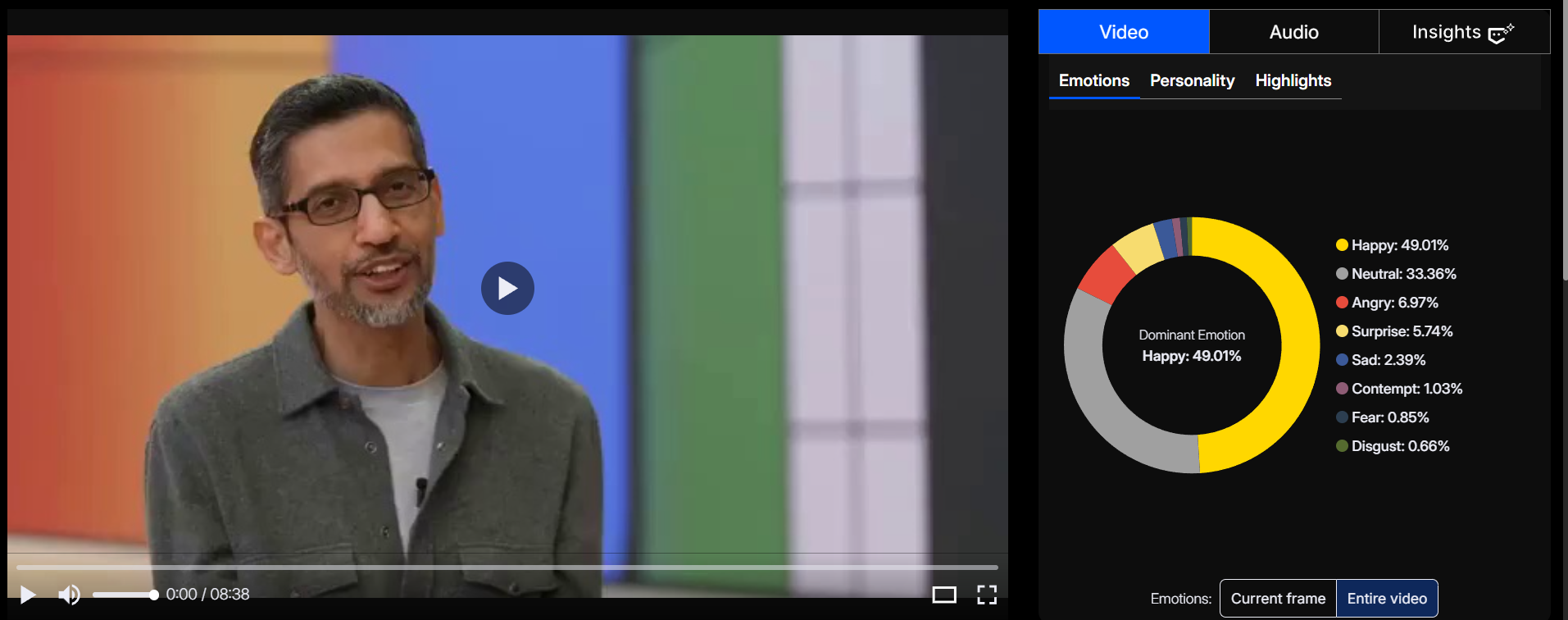
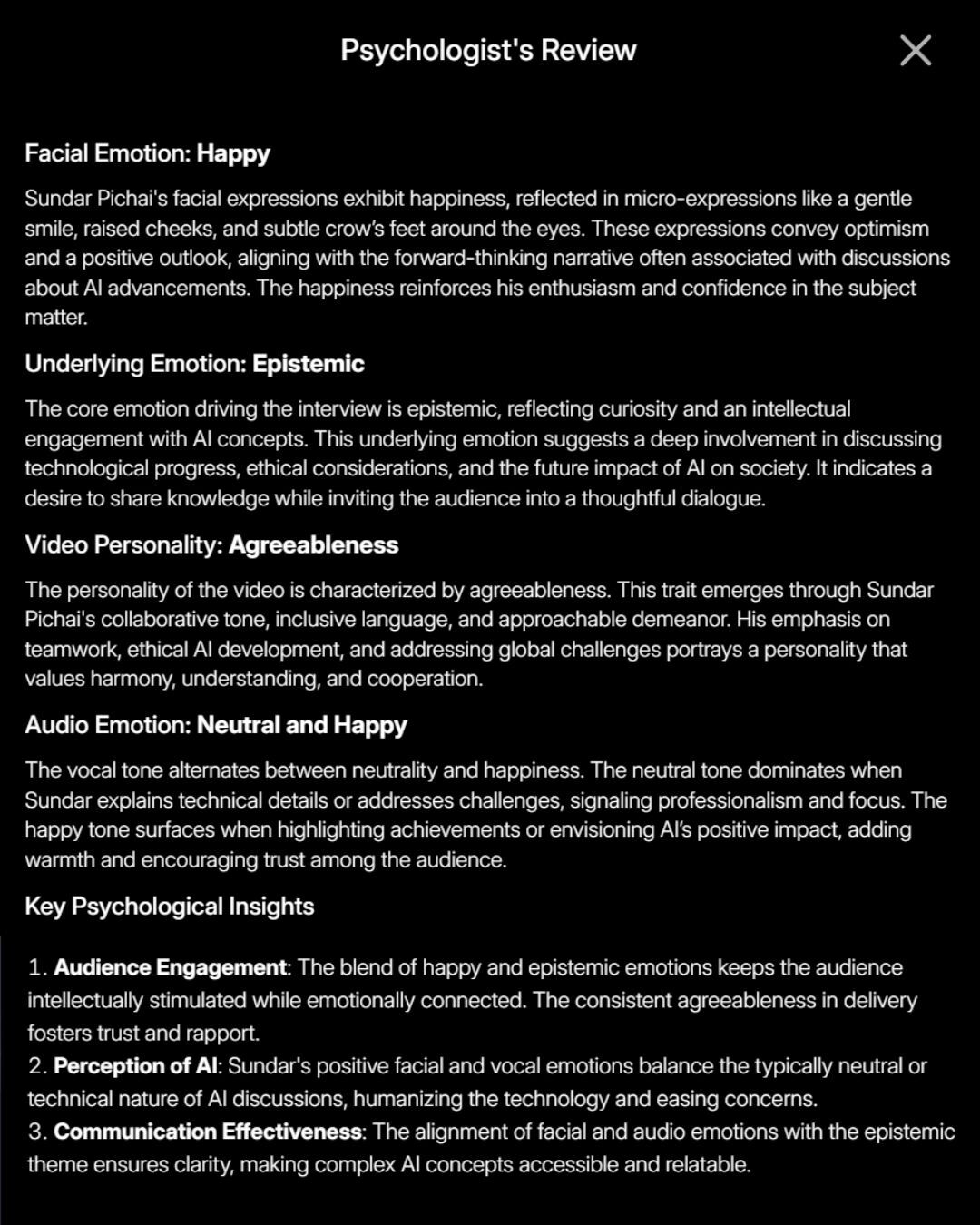
The final report blends the AI’s analytical depth with a psychologist’s perspective. Rather than just presenting data, it provides insights that are clarified and grounded in context.
Why Expert Review Matters
AI is exceptionally good at spotting signals, but people are more than just data points. Emotions shift quickly and can be influenced by small details—environment, culture, tone of voice, even the pressure of the moment. Without human review, AI findings risk being too literal or detached from real-life meaning.
For example, imagine an interview setting where a candidate looks tense. An algorithm might flag that as negative, while a psychologist can recognize it as ordinary nerves rather than a long-term trait. This distinction prevents unfair conclusions and ensures that profiles are realistic and actionable.
Thoughtful Expert Review
Before the final report is delivered, our psychologist carefully reviews the findings to ensure they are clear, relevant, and aligned with established psychological understanding.
Psychology-Based Review – Observed behaviors are considered alongside well-established psychological research and theory.
Contextual Interpretation – Ambiguous or unexpected signals are explained in straightforward, practical terms.
Comprehensive Reporting – You receive a single report that brings together AI-driven insights and the psychologist’s professional perspective.
This additional layer of review helps shape the results into something clear and practical—moving beyond raw observations toward insights you can meaningfully apply.
From Data to Practical Direction
The Psychologist’s Review isn’t about labeling the AI as “right” or “wrong.” It’s about helping the data make sense. Our psychologist looks at the patterns the AI identifies and explains what those behaviors could mean in everyday situations.
For organizations, this brings added clarity and perspective. Instead of reacting to numbers alone, decision-makers receive insights that have been thoughtfully interpreted and placed in context. The AI handles the scale and complexity, while the psychologist adds human understanding. Therefore, the final output feels balanced, nuanced, and ready to support real-world decisions.
Disclaimer:
This psychologist’s review is based solely on the emotional data available within the uploaded input, which may include video emotion (facial expressions), audio emotion (tone and speech patterns), text emotion (linguistic and sentiment cues), or image-based emotional indicators. The analysis is conducted within a highly controlled setting and often over a brief segment of captured data.
As such, the interpretation reflects observable emotional signals within that limited context only. It does not constitute a psychological diagnosis, clinical evaluation, or confirmation of any mental health condition. This review is intended to serve as a supportive insight tool rather than a diagnostic or therapeutic assessment.
For concerns related to mental health conditions, emotional distress, or the need for deeper psychological understanding, it is strongly recommended to consult a qualified psychologist or mental health professional for a comprehensive evaluation.