User Psychology
Emotion AI and User Psychology
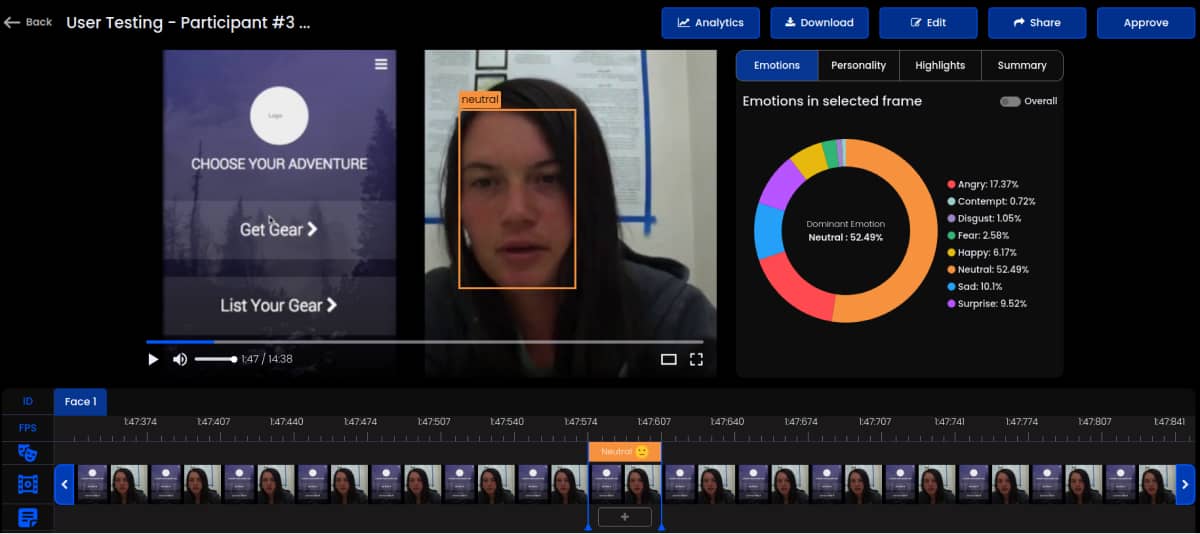
Traditional user research often depends on surveys, interviews, or self-reported feedback. However, users may not always articulate their true emotional experience. This is where Imentiv AI enhances User Psychology research by capturing emotional responses through facial and vocal analysis.
Imentiv’s multimodal Emotion AI system focuses strongly on:
Facial Emotion Recognition in UX Research
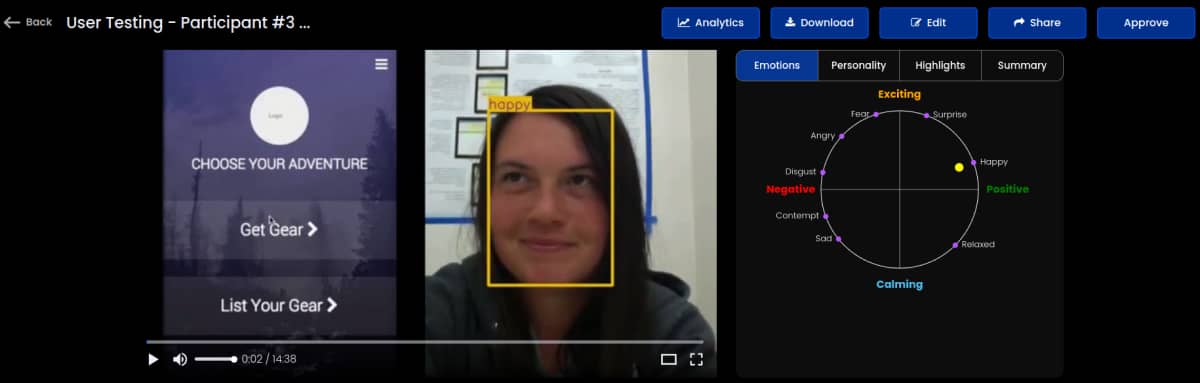
Facial micro-expressions reveal authentic reactions that may not be verbally expressed. During usability testing or product interaction, subtle signals such as eyebrow tension (confusion), lip compression (frustration), raised brows (surprise), or genuine smiles (engagement) provide insight into user experience quality. Even brief emotional shifts can highlight friction points, moments of delight, or cognitive overload.
In user experience analysis, facial data helps teams: • Identify exact interface moments causing confusion or hesitation • Measure emotional engagement during feature exploration • Detect stress or fatigue during complex workflows • Compare emotional impact of design variations (A/B testing)
Audio Emotion Recognition in UX Analysis
Vocal tone provides additional depth beyond facial cues. Changes in pitch, speech speed, vocal strain, pauses, or hesitation can signal uncertainty, excitement, irritation, or confidence. During live testing sessions, product demos, or feedback interviews, voice analysis helps detect emotional intensity even when users say neutral words.In UX research, vocal data helps: • Detect frustration masked by polite feedback • Identify enthusiasm or genuine interest • Measure cognitive load through speech pace and hesitation • Understand emotional reactions in remote usability testing environments
By combining facial and audio emotion signals, Imentiv AI creates a dynamic emotional map of the user journey. This multimodal approach allows researchers to move beyond “What did the user say?” toward “What did the user truly experience?”
Applications in User Experience & Product Research
Product Testing: Evaluate emotional engagement, confusion points, and satisfaction during prototype interaction.
Marketing & Campaign Testing: Measure authentic emotional reactions to advertisements, branding elements, and storytelling.
Customer Journey Mapping: Identify emotional drop-offs, friction points, and trust-building moments across touchpoints.
Workplace Digital Tools: Analyze employee emotional engagement during onboarding platforms, training systems, or enterprise software interaction.
Ethics and Responsible Use
Imentiv AI is designed to support human-centered design and research. It is not intended to manipulate user behavior but to improve clarity, usability, and inclusivity. Ethical deployment requires informed consent, data privacy protection, and contextual human interpretation of emotional insights.
By integrating User Psychology with advanced facial and audio Emotion AI, Imentiv helps organizations design experiences that are emotionally intelligent, user-centered, and grounded in real human reactions rather than assumptions.
Discover how Imentiv AI transforms user experience research with emotional intelligence — Learn more.