Temperament

Temperament from a Psychological Perspective
In psychology, temperament is viewed as a core component of emotional functioning that has a strong biological and neurological basis. Unlike personality traits, which evolve through experience and socialization, temperament is observable in infancy and shows continuity across development.
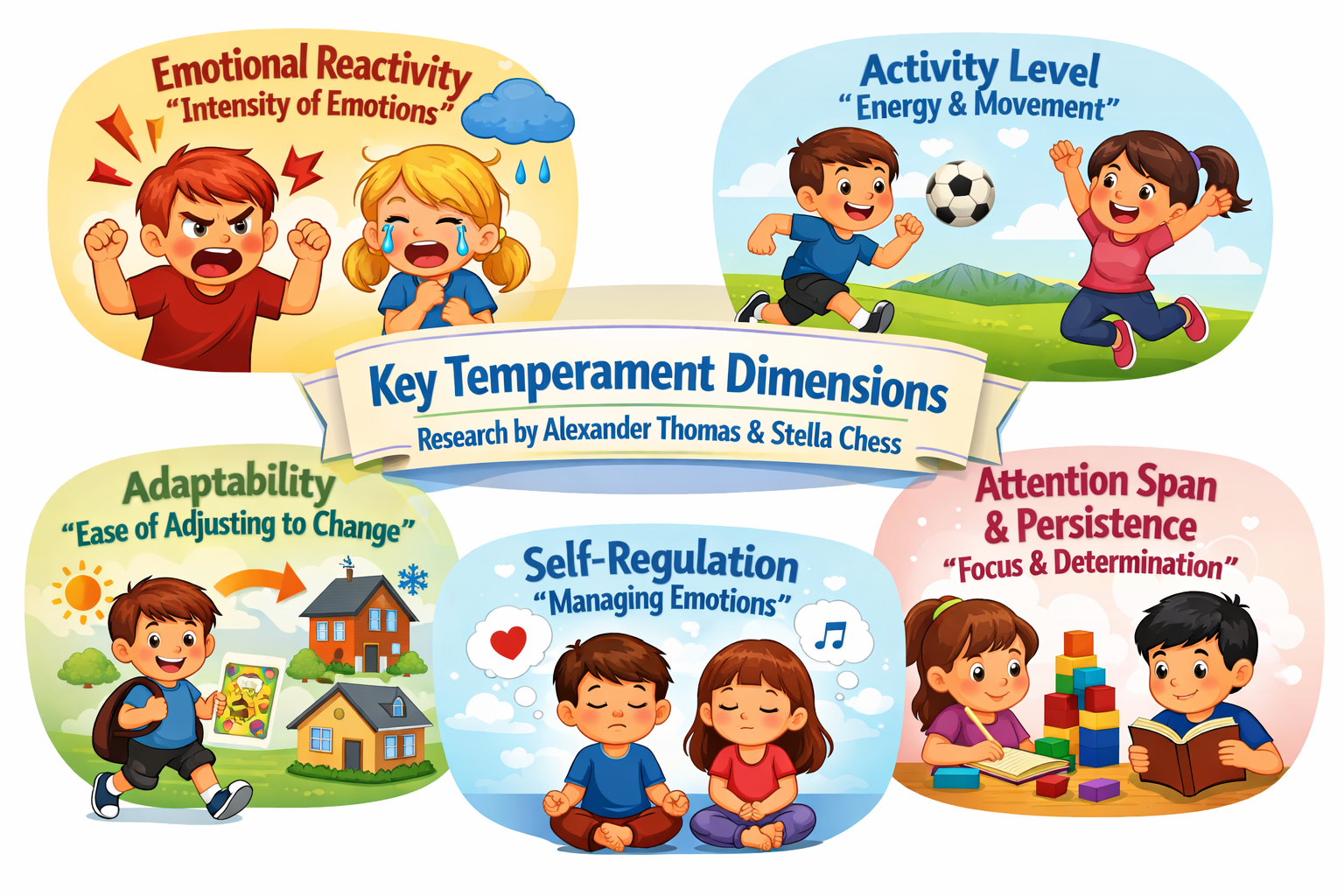
Classic research by Alexander Thomas and Stella Chess identified key temperament dimensions, including:
- Emotional reactivity – how strongly emotions are experienced
- Activity level – overall energy and movement
- Adaptability – ease of adjusting to change
- Attention span and persistence – ability to stay focused
-
Self-regulation
– capacity to soothe or manage emotional arousal
Classical Types of Temperament
One of the earliest and most widely referenced ways of understanding temperament comes from classical temperament theory. This framework describes four broad temperament patterns based on emotional reactivity, energy levels, and regulation styles. While modern psychology uses more nuanced models, these categories remain useful for explaining observable emotional tendencies.
Sanguine Temperament
Sanguine individuals tend to be emotionally expressive, optimistic, and socially outgoing. They usually experience emotions quickly but recover just as fast. This temperament is associated with high energy, enthusiasm, and adaptability, though it may also involve impulsivity or difficulty sustaining focus.Choleric Temperament
Choleric temperament is marked by high emotional intensity, assertiveness, and goal-driven behavior. Individuals with this pattern often respond strongly to challenges and may display anger or frustration more readily. They are typically decisive and action-oriented but may struggle with emotional regulation under stress.Melancholic Temperament
Melancholic individuals are often emotionally sensitive, thoughtful, and detail-oriented. They tend to experience emotions deeply and for longer durations. This temperament is associated with introspection, caution, and strong emotional awareness, but it may also involve overthinking or vulnerability to emotional overwhelm.Phlegmatic Temperament
Phlegmatic temperament is characterized by emotional calmness, low reactivity, and steady regulation. Individuals with this pattern often appear composed, patient, and reliable. While they manage stress well, they may be perceived as emotionally reserved or slow to respond in emotionally charged situations.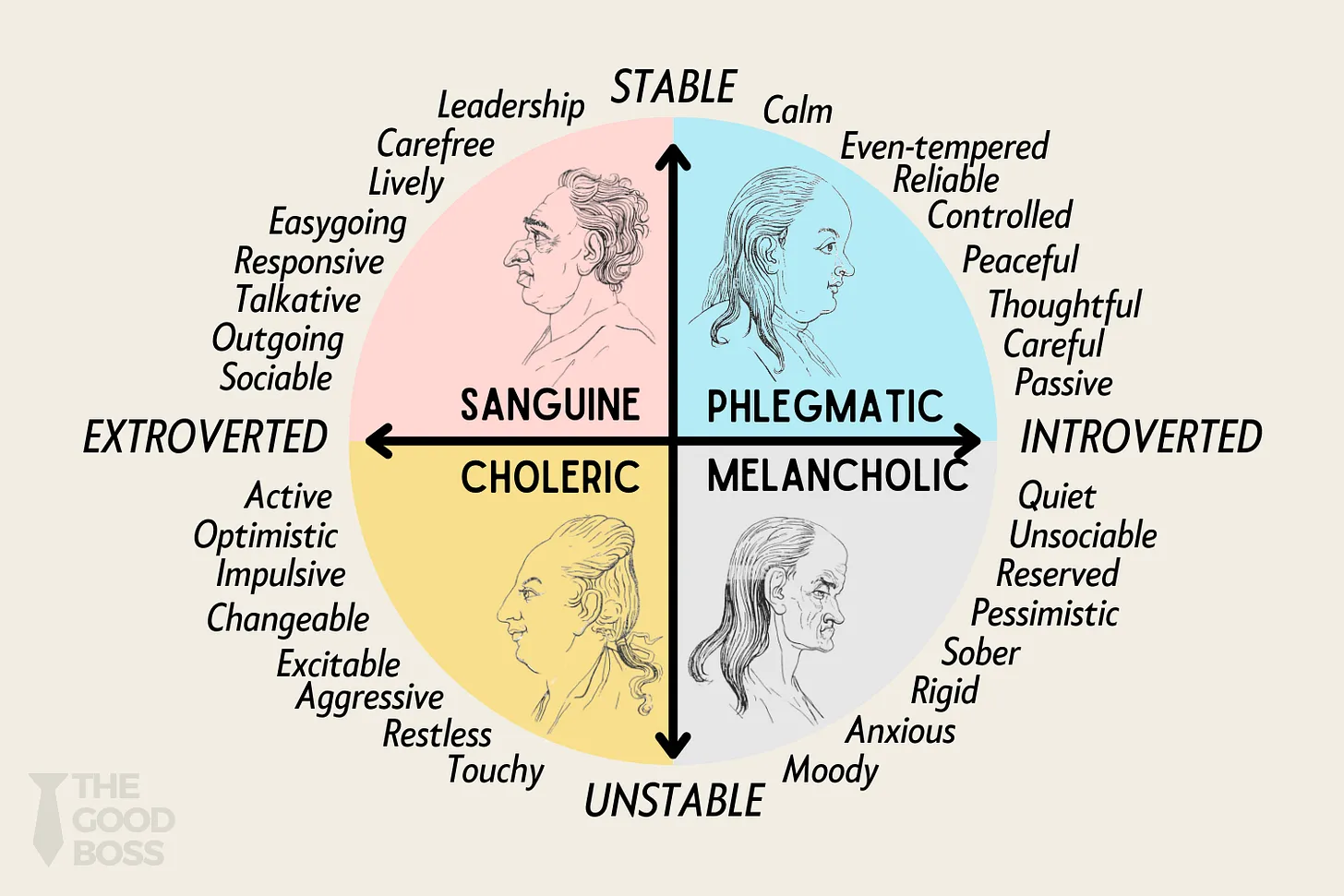
Temperament and Emotional Regulation
Temperament plays a key role in how people handle stress, uncertainty, and emotional demands. Individuals with higher emotional reactivity may experience emotions more intensely, while those with stronger self-regulation can recover more quickly from emotional arousal. These patterns influence learning, relationships, resilience, and vulnerability to emotional difficulties across the lifespan.
Importantly, temperament does not determine outcomes on its own. Emotional well-being depends on how temperament interacts with emotional skills, coping strategies, and external support.
Understanding Temperament Through Emotion AI
From an Emotion AI perspective, temperament is not inferred from a single emotional moment but from consistent emotional patterns over time . Unlike temporary emotional states, temperament-related signals emerge through repeated responses across situations.
Emotion AI can identify temperament-linked patterns such as:
- Stable levels of emotional intensity across interactions
- Consistent reactivity to stress, novelty, or feedback
- Regulation styles, such as quick recovery versus prolonged arousal
- Baseline emotional tone across voice, facial cues, and language
Temperament in the Context of Imentiv AI
Within Imentiv AI, temperament-related insights emerge through repeated multimodal emotional analysis rather than labels or assumptions. By examining patterns across video, audio, and text over time, the platform supports understanding of emotional reactivity and regulation styles in settings such as therapy, education, workplace assessments, and behavioral research. Psychologist-reviewed interpretation ensures that temperament signals are understood as tendencies, not limitations.
Why Temperament Matters
Understanding temperament helps explain why people respond differently to the same situation. It supports more empathetic communication, better emotional regulation strategies, and environments that align with individual emotional needs. When combined with Emotion AI, temperament becomes a measurable emotional pattern rather than a static trait, allowing for deeper and more ethical insight into human behavior.
Note: Emotion AI insights are intended to support understanding of emotional patterns and behavioral tendencies. They do not replace psychological diagnosis or clinical evaluation. All emotional data should be interpreted within appropriate developmental, cultural, and professional contexts.