Remorse
Remorse is a distressing emotion experienced by an individual who regrets actions that they have done in the past, which they deem to be shameful, hurtful, or wrong. Remorse is closely allied to guilt and self-directed resentment. When a person regrets an earlier action or failure to act, it may be because of remorse or in response to various other consequences, including being punished for the act or omission. People may express remorse through apologies, trying to repair the damage they have caused, or self-imposed punishments.
What is Remorse in Psychology?
In psychology, remorse is a complex emotional response that occurs when an individual recognizes that their actions have caused harm to others or violated their own moral values. It is commonly associated with feelings of guilt, regret, empathy for those affected, and a desire to make amends. Unlike simple regret, which often focuses on negative consequences for oneself, remorse reflects a deeper sense of responsibility and concern for the impact of one’s behavior on others. Remorse plays an important role in moral development, social relationships, and prosocial behavior, as it can motivate accountability, repair, and meaningful behavior change.
Remorse in the legal context
In a legal context, the perceived remorse of an offender is assessed by Western justice systems during trials, sentencing, parole hearings, and in restorative justice. However, there are epistemological problems with assessing an offender's level of remorse.
In general, a person needs to be unable to feel fear, as well as remorse, to develop psychopathic traits. Legal and business professions, such as insurance, have done research on the expression of remorse via apologies, primarily because of the potential litigation and financial implications.
Where Does Remorse Fit in Plutchik’s Model of Emotions?
Within Plutchik’s Wheel of Emotions , remorse is not considered a primary emotion but a secondary or blended emotion . It is commonly understood as a combination of sadness and disgust, where sadness reflects emotional pain or loss, and disgust is directed inward toward one’s own actions or behavior. This emotional blend helps explain why remorse involves both emotional suffering and moral self-evaluation, making it more complex and context-dependent than basic emotions.
.jpg?alt=media&token=7db4db96-a8a3-4f4b-842b-0c202289ec1f)
How Is Remorse Viewed from an Emotion AI Perspective?
From an Emotion AI perspective, remorse is therefore treated as a compound emotional state rather than a single, easily identifiable signal. It often appears through a pattern of emotional cues such as sadness, guilt, reduced emotional intensity, hesitation in speech, changes in language, and subtle facial expressions like lowered gaze or reduced expressiveness. Because remorse depends heavily on context, intent, and reflection, it cannot be reliably inferred from isolated signals or momentary expressions.
Emotion AI systems address this complexity by analyzing emotional patterns across multiple modalities—such as facial expressions, voice tone, speech dynamics, and text—over time. By observing how emotional signals evolve within a conversation or narrative, Emotion AI can help surface indicators of self-awareness, accountability, and emotional recognition. Ethical Emotion AI systems do not assign moral judgment or intent; instead, they provide probabilistic insights that support informed human interpretation.
How Does Imentiv AI Identify Remorse Through Transcription Analysis?
From the Imentiv AI perspective, remorse is identified through transcription and language-based signals . When analyzing transcribed speech or text, Imentiv AI examines linguistic markers commonly associated with remorse, such as expressions of responsibility, acknowledgment of harm, self-reflective language, apologetic phrasing, and emotionally weighted word choices. These language cues are analyzed alongside vocal tone and emotional patterns to detect shifts toward introspection, guilt, or empathy.
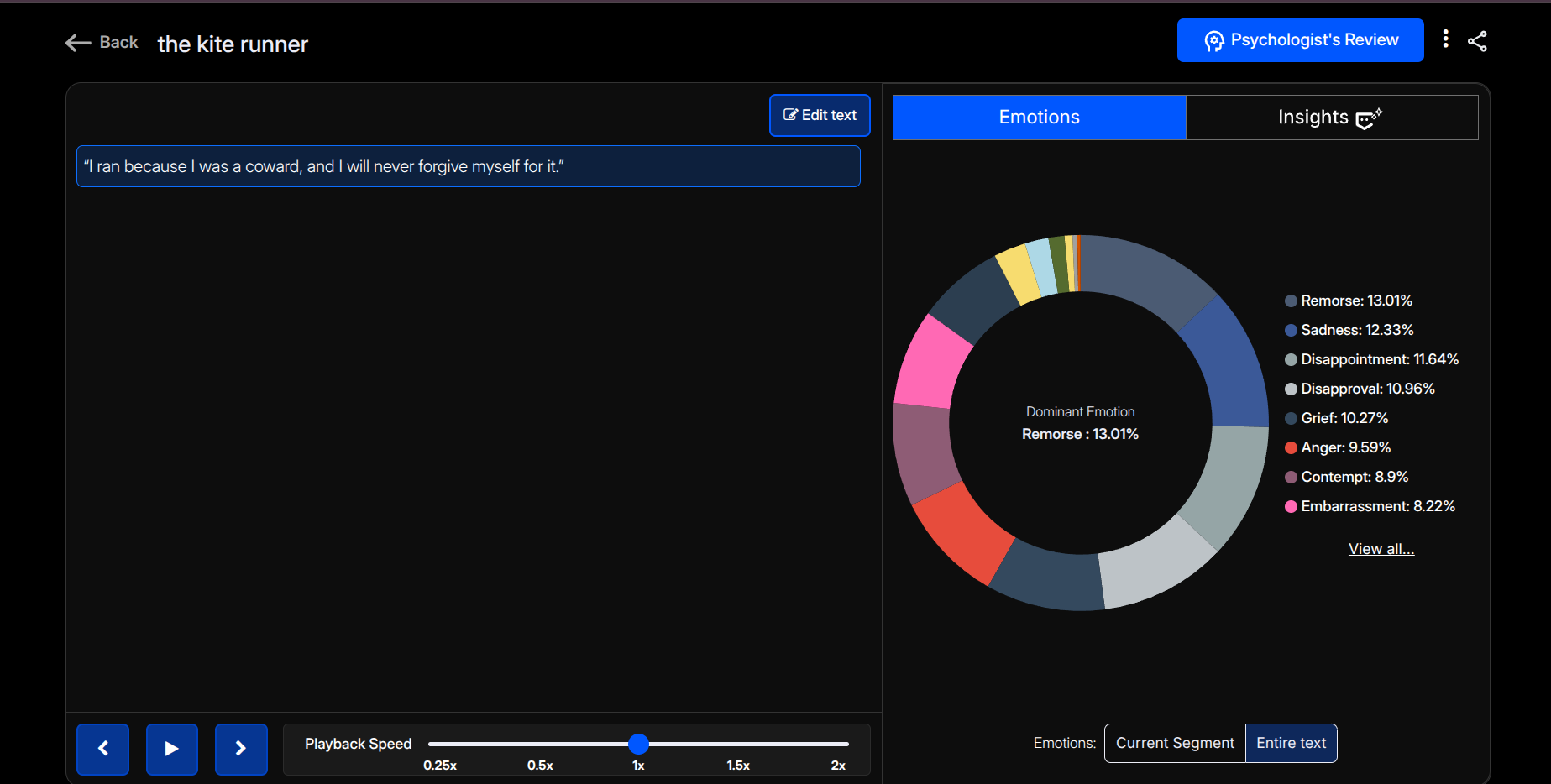
Rather than labeling remorse as a definitive emotional state, Imentiv AI offers emotional context that may help interpret moments of reflection or accountability within communication. When used ethically and with human oversight, this approach supports applications in research, coaching, conflict analysis, and mental wellness by enabling more empathetic, context-aware understanding of emotional behavior—while respecting the complexity and sensitivity of human emotions.
Why Is Ethical Interpretation Important When Analyzing Remorse?
Because remorse involves moral meaning and personal context, ethical interpretation is essential. Imentiv AI is designed to support emotional awareness rather than assign intent or judgment. By focusing on emotional patterns instead of labels, it enables a more empathetic, human-centered understanding of emotional behavior, particularly in sensitive domains such as mental wellness, research, and conflict resolution.
Explore how Emotion AI can support a deeper understanding of complex emotions like remorse.