Happy Emotion
Happiness is a basic human emotion characterized by feelings of joy, satisfaction, contentment, or pleasure. It often arises from positive experiences, achievements, meaningful interactions, or a sense of well-being. Happiness can be short-lived—like the joy of a good moment—or long-lasting, reflecting deeper life satisfaction and emotional balance. Physically and behaviorally, it may be shown through smiling, laughter, energetic movements, open body language, and a brighter tone of voice.
Happiness plays a vital role in motivation, creativity, and overall mental health. It encourages social connection, strengthens resilience, and helps people engage more positively with the world around them. Experiencing happiness not only enhances personal fulfillment but also contributes to cooperation, empathy, and stronger relationships. It reflects an emotionally adaptive state that promotes growth, optimism, and psychological stability.
In the emotional spectrum, happiness lies on the higher end of valence (pleasant emotional state) and is typically associated with moderate to high arousal (increased energy and activity). Psychologically, it represents positive emotional evaluation—an internal signal of reward, accomplishment, or harmony between one’s goals and experiences.
Paul Ekman’s Perspective
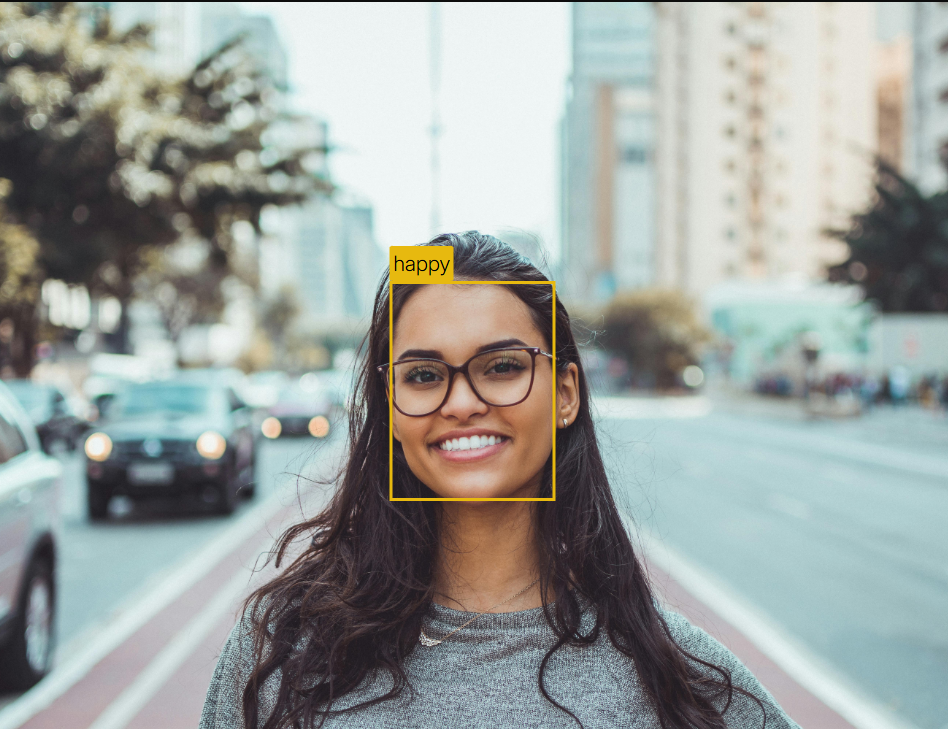
Paul Ekman identified happiness as one of the six universal emotions recognized across all cultures, along with sadness, anger, fear, disgust, and surprise. In his Facial Action Coding System (FACS), happiness is most commonly expressed through the Duchenne smile—activation of the zygomatic major muscle that pulls the lip corners upward (AU12) and the orbicularis oculi muscle that creates crow’s feet around the eyes (AU6).
 Ekman’s
research showed that genuine happiness is difficult to fake because it engages both facial and emotional systems. Beyond facial cues, happiness is also reflected in relaxed posture, open gestures, and an uplifted tone. These expressions play an essential social function—signaling safety, approachability, and shared positivity.
Ekman’s
research showed that genuine happiness is difficult to fake because it engages both facial and emotional systems. Beyond facial cues, happiness is also reflected in relaxed posture, open gestures, and an uplifted tone. These expressions play an essential social function—signaling safety, approachability, and shared positivity.
Happy Emotion in Emotion AI
Emotion AI systems detect happiness by analyzing facial, vocal, and textual cues that signal positive emotional states.
Facial Emotion Recognition: Identifies happiness through facial patterns such as raised cheeks, eye wrinkles, symmetrical smiling, and upward movement of lip corners.
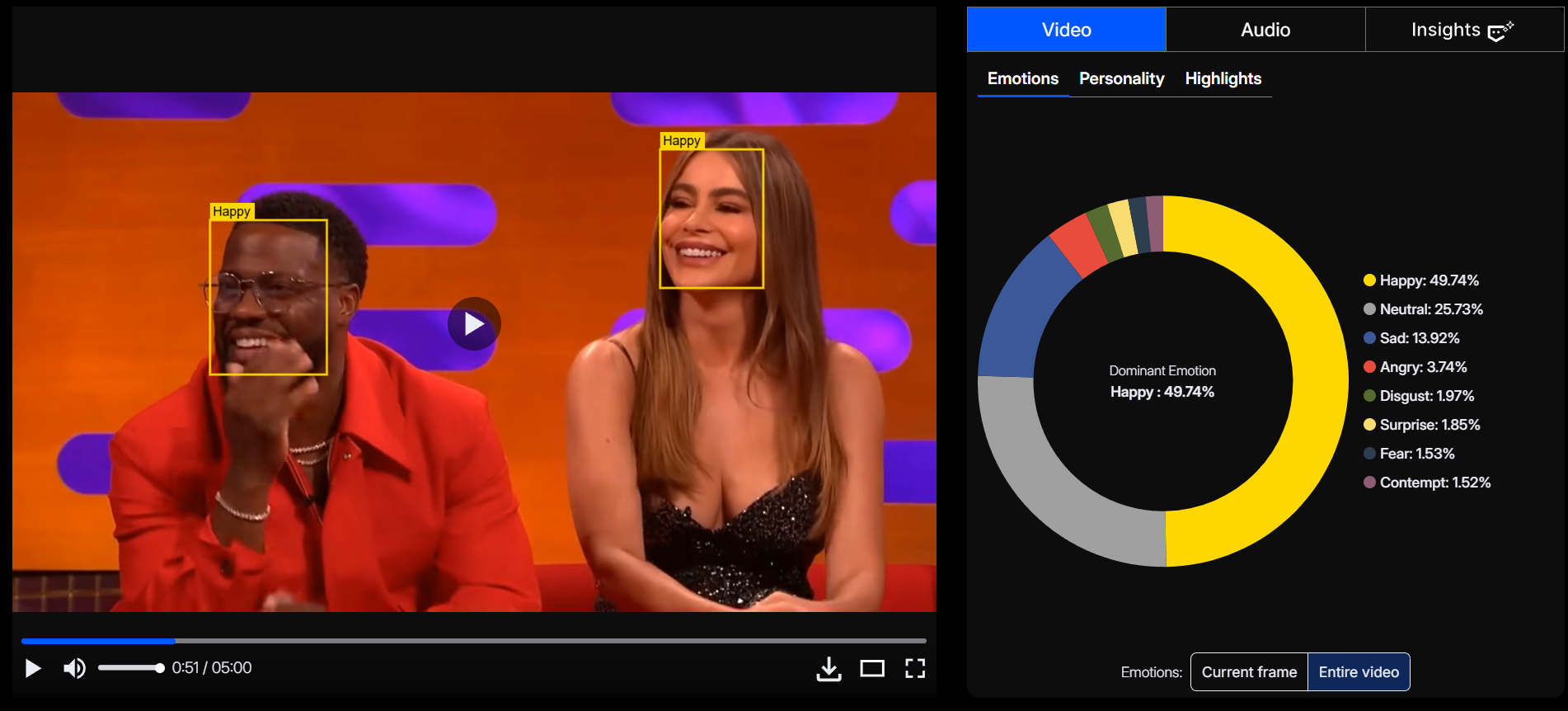 A video analysis performed using Imentiv AI shows that a clip from
The Graham Norton Show expresses a strong sense of happiness. The interaction—featuring Sofía Vergara playfully roasting Kevin Hart—displays consistently high happiness signals. Their expressions, tone, and lively exchange reinforce the cheerful and light-hearted mood. The analysis indicates that the moment successfully captures the positive, entertaining emotion intended in the clip.
A video analysis performed using Imentiv AI shows that a clip from
The Graham Norton Show expresses a strong sense of happiness. The interaction—featuring Sofía Vergara playfully roasting Kevin Hart—displays consistently high happiness signals. Their expressions, tone, and lively exchange reinforce the cheerful and light-hearted mood. The analysis indicates that the moment successfully captures the positive, entertaining emotion intended in the clip.
Audio Emotion Recognition:
Detects happiness in speech through a faster pace, higher pitch, rhythmic tone, and energetic delivery that convey enthusiasm or delight.
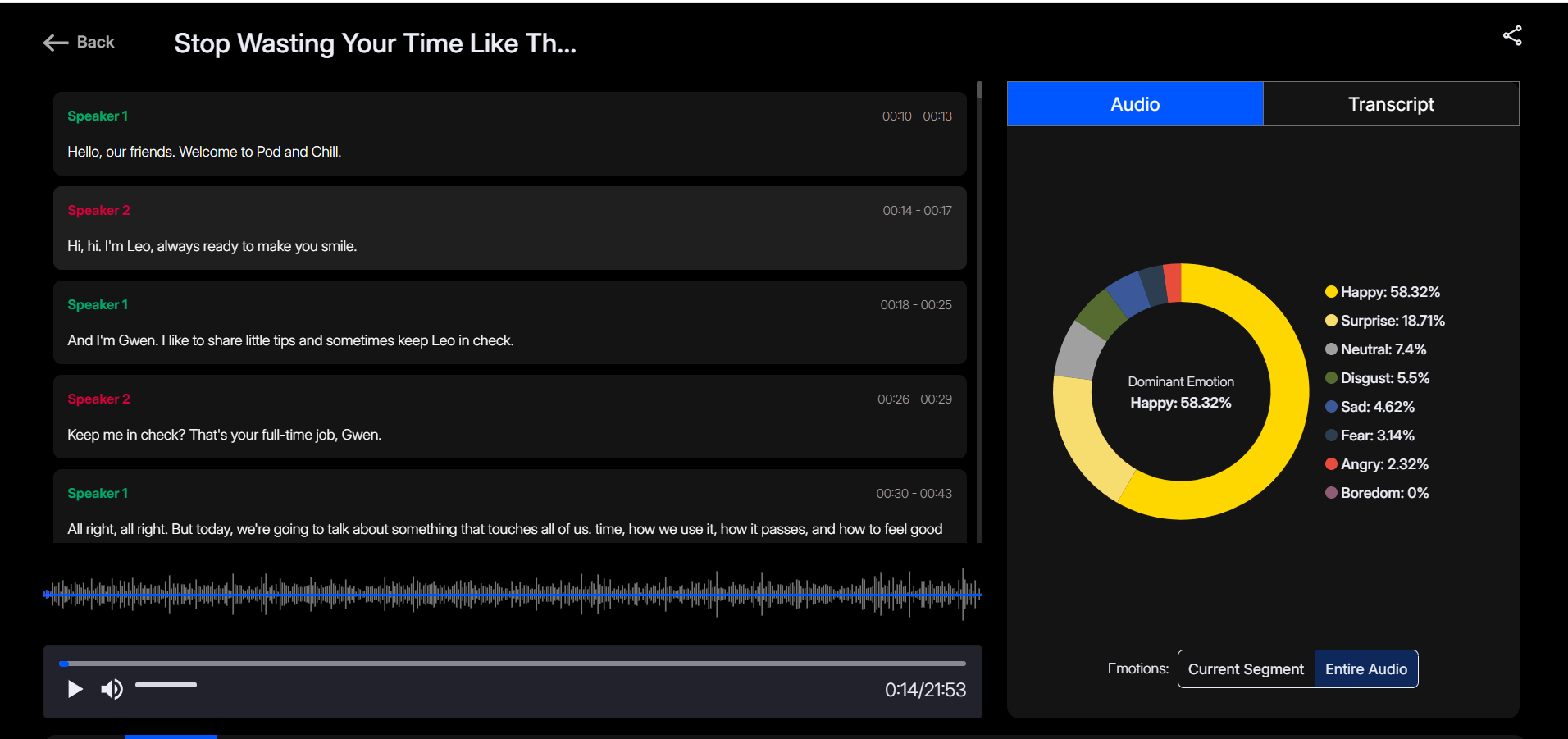
A podcast segment from the discussion “ Stop Wasting Your Time” was analyzed using Imentiv AI, and the dominant emotion detected is happiness. The tone between the speakers is light, friendly, and playful, leading to a happiness score of 58.32%. The natural conversation, light humor, and smooth back-and-forth all add to the positive feeling. This shows that the podcast creates a cheerful, engaging mood—just the way the creators intended.
The natural conversation, light humor, and smooth back-and-forth all add to the positive feeling. This shows that the podcast creates a cheerful, engaging mood—just the way the creators intended.
Text Emotion Analysis:
Recognizes happiness in written or spoken language through positive words, optimistic expressions, humor, appreciation, or affirmations reflecting satisfaction or joy.
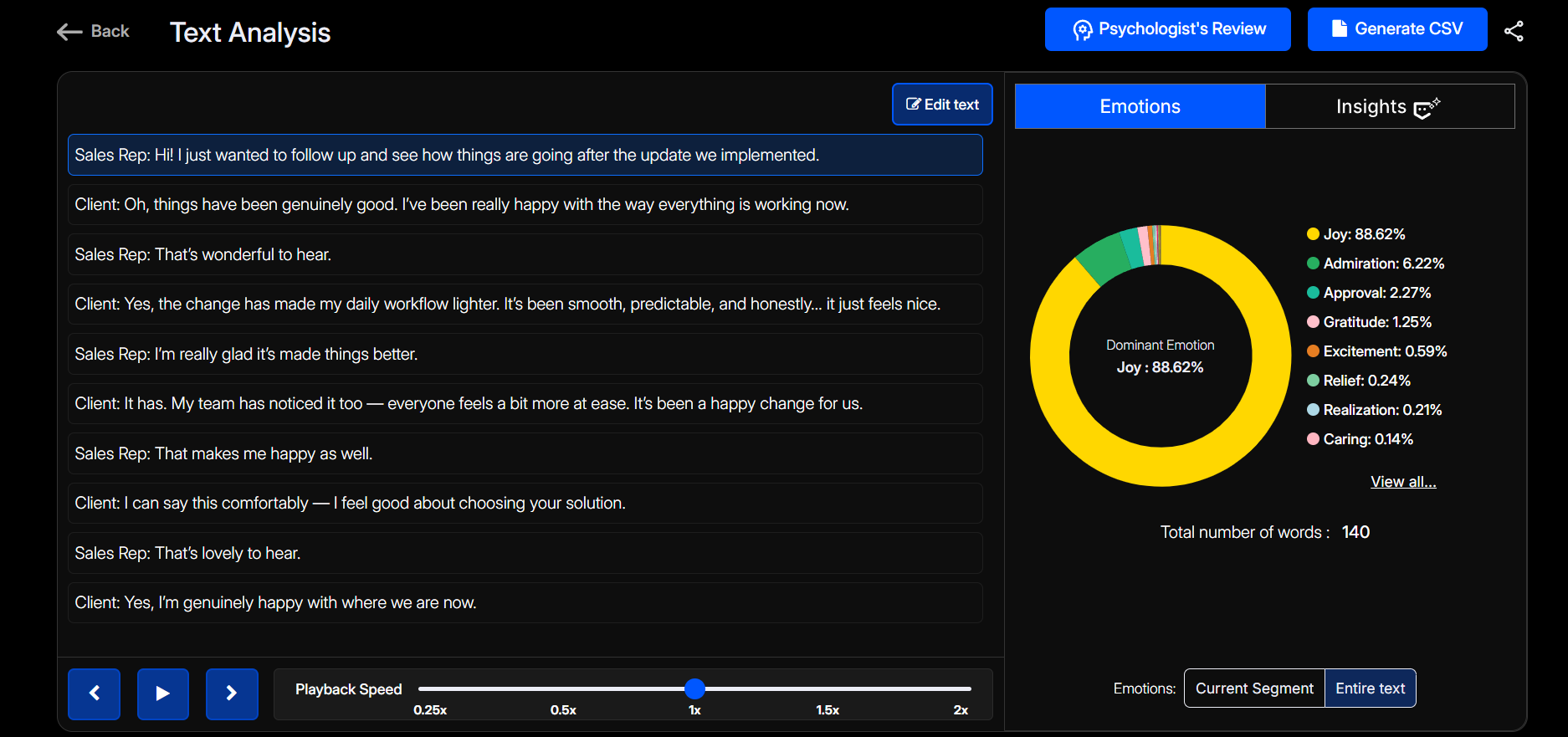 A
sales call conversation was analyzed using Imentiv AI, and the dominant emotion detected is happiness. The client consistently expresses satisfaction, comfort, and genuine joy with the latest update, leading to a high happiness score of 88.62%. Their positive tone, appreciative comments, and smooth flow of conversation further reinforce this result. Overall, the analysis reflects a clearly happy and positive customer experience.
A
sales call conversation was analyzed using Imentiv AI, and the dominant emotion detected is happiness. The client consistently expresses satisfaction, comfort, and genuine joy with the latest update, leading to a high happiness score of 88.62%. Their positive tone, appreciative comments, and smooth flow of conversation further reinforce this result. Overall, the analysis reflects a clearly happy and positive customer experience.
In organizational, behavioral, and customer-experience contexts, happiness usually shows that someone is engaged, motivated, and satisfied. For Emotion AI, spotting happiness helps understand how users feel, see what’s working, and respond in a more empathetic way. Modern systems look beyond facial expressions. They also consider the situation, how often someone smiles, and the tone of their voice. This creates a deeper and more accurate picture of positive emotion.