Fear Emotion
Fear is a basic human emotion that appears when a person senses danger, feels unsafe, or expects something harmful to happen. It can be triggered by real situations—like a threat—or imagined ones, such as worrying about the future. Fear can range from mild uneasiness to intense panic. Physically, it may cause a racing heart, sweating, trembling, tense muscles, or a sudden urge to escape or protect oneself.
Fear plays an important survival role. It prepares the body to react quickly, stay alert, and avoid risky situations. In daily life, fear helps people stay cautious, make safer decisions, and pay attention to warning signs. But when fear becomes too frequent or intense, it can limit actions, increase stress, or affect confidence.
In psychology, fear is considered a low-valence but high-arousal emotion, meaning it feels unpleasant but creates strong physical activation. It often appears when a person feels uncertain, threatened, or out of control.
Paul Ekman’s Perspective
Paul Ekman identified fear as one of the six universal emotions expressed across cultures. In the Facial Action Coding System ( FACS), fear is linked to expressions such as raised and drawn-together eyebrows (AU1+2), widened eyes (AU5), and lips stretched horizontally (AU20).
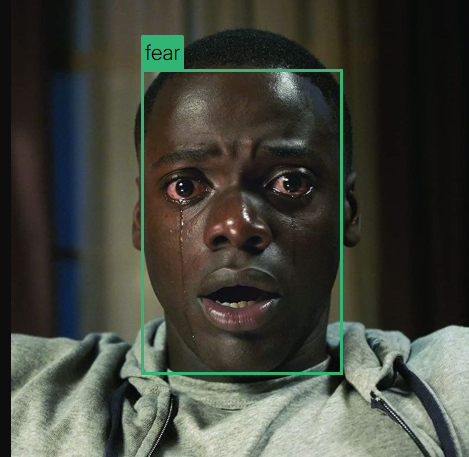
Ekman noted that fear also shows in body language and voice, like sudden stillness, quick movements, shaky tone, or faster breathing. These signals tell others that a person feels threatened or needs help. His research shows that fear is a key emotional signal that helps people avoid danger and seek safety.
Fear in Emotion AI

Using Imentiv AI, a tense scene from the movie Lights Out was analyzed, and fear was identified as the dominant emotion. The platform detected fear as the dominant emotion. The character’s expressions, dark setting, and suspenseful atmosphere contribute to a fear score of 36.86%. The subtle tension in the scene, marked by heightened alertness and uncertainty, reinforces the fearful emotional tone. Overall, the analysis shows that the clip successfully conveys the intended sense of fear and suspense.
Audio Emotion Recognition: Detects fear through a shaky or tight voice, faster speech, higher pitch, or breathiness.
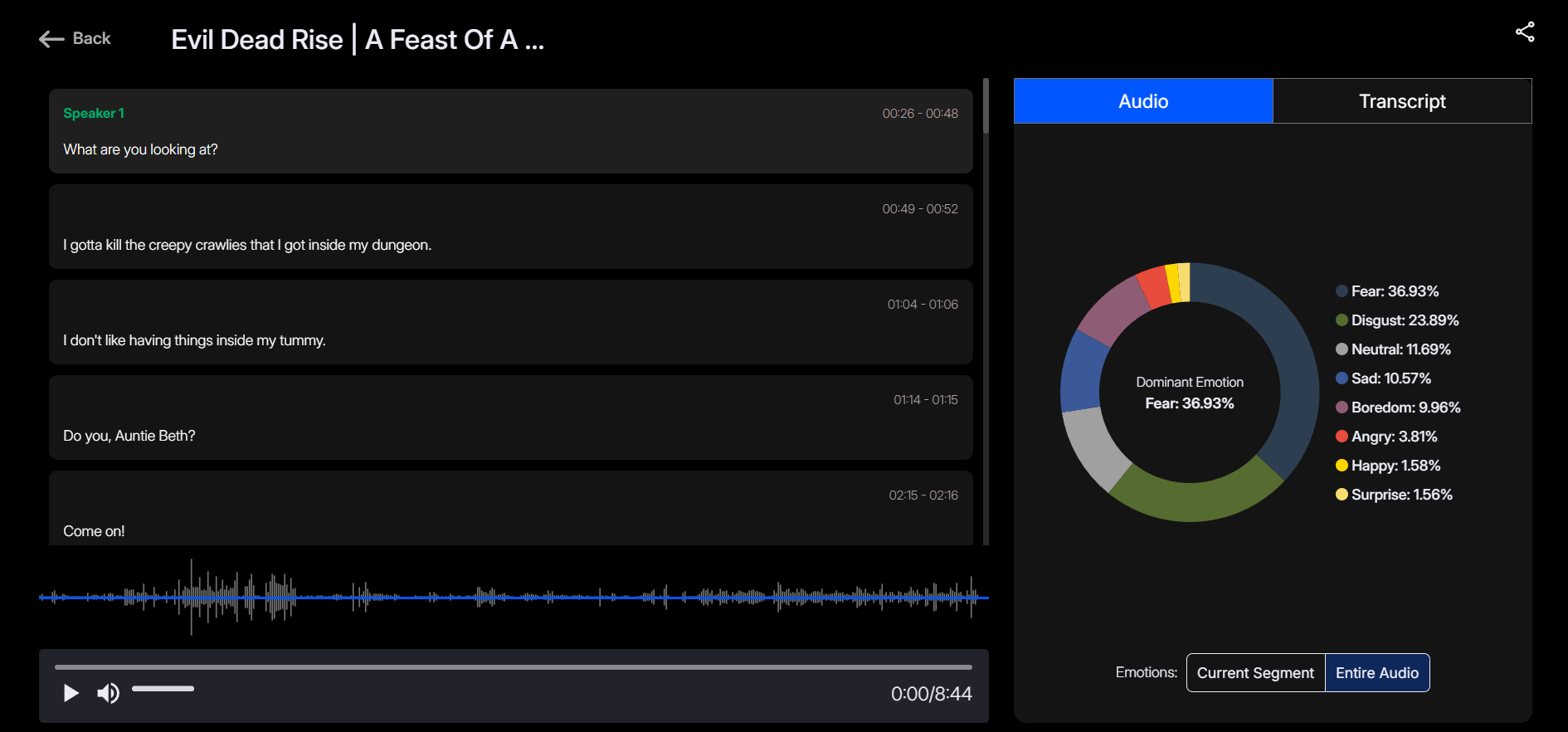 An audio-based emotion analysis performed using Imentiv AI shows that a scene from
Evil Dead Rise is dominated by fear. The emotional distribution highlights fear as the strongest signal, with tone, voice intensity, and dialogue patterns all pointing toward a heightened sense of terror. The analysis confirms that the scene effectively delivers the fear-driven atmosphere intended by the filmmakers.
An audio-based emotion analysis performed using Imentiv AI shows that a scene from
Evil Dead Rise is dominated by fear. The emotional distribution highlights fear as the strongest signal, with tone, voice intensity, and dialogue patterns all pointing toward a heightened sense of terror. The analysis confirms that the scene effectively delivers the fear-driven atmosphere intended by the filmmakers.
Text Emotion Analysis: Finds words that express worry, danger, uncertainty, panic, or anxiety.
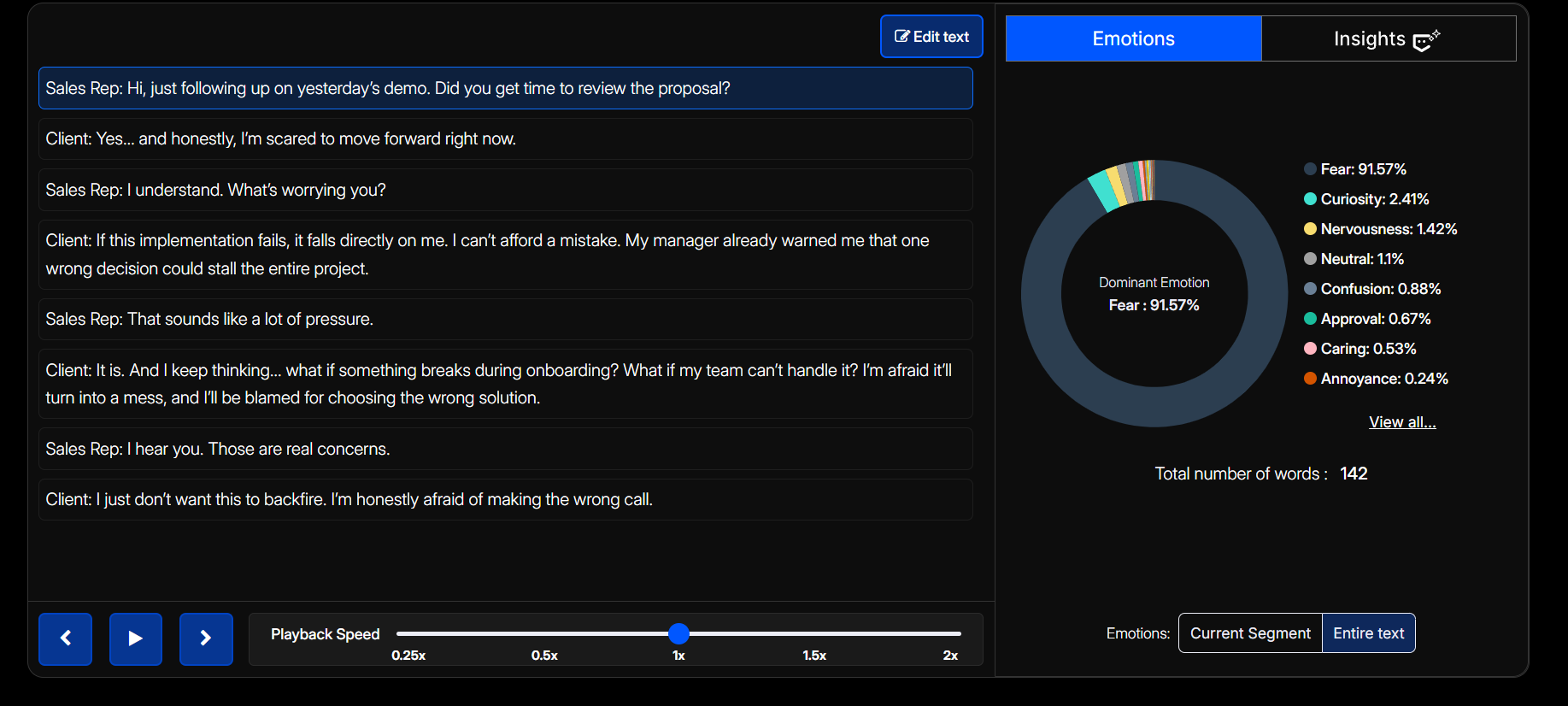
A text-based emotion analysis performed using Imentiv AI processed a sales call exchange where fear emerged as the dominant emotion. The client repeatedly expresses worry, self-doubt, and the pressure of making a high-stakes decision, resulting in a strong fear score of 91.57%. Their concerns about potential failure, blame, and project risks shape the entire emotional tone of the conversation. Overall, the analysis shows that the interaction is driven by anxiety and apprehension, highlighting the client’s deep fear of making the wrong choice.
In many day-to-day situations, fear can signal that a person feels unsure, overwhelmed, or unable to move forward confidently. For Emotion AI, detecting fear helps identify moments where clarity, reassurance, or simpler guidance may be needed. By recognizing early signs of fear, Emotion AI–powered tools and platforms can adjust their responses to lower stress, support decision-making, and create a safer, more comfortable user experience.