Disgust emotion
Disgust is a basic human emotion typically associated with feelings of revulsion, aversion, or strong disapproval toward something unpleasant or offensive. It often arises as a reaction to things perceived as contaminated, morally wrong, or socially unacceptable—ranging from spoiled food and foul odors to unethical behavior or betrayal. Disgust can vary in intensity, from mild distaste to extreme repulsion, and it influences both our physical and moral boundaries.
Disgust lies on the low-valence (unpleasant) and high-arousal (activated) end of the emotional spectrum—marked by strong avoidance motivation. It often prompts immediate withdrawal, rejection, or defensive behavior, signaling both a physical and emotional need for distance from the source of discomfort.
Biologically, disgust serves a protective function. It helps humans avoid harmful substances or environments that might carry disease or danger. Psychologically, it also extends to moral and social domains, guiding judgments about fairness, behavior, and trust. This emotion not only shapes personal preferences but also enforces cultural norms and ethical standards.
Paul Ekman’s Perspective
Paul Ekman identified disgust as one of the six universal human emotions, expressed across all cultures. In his Facial Action Coding System (FACS), disgust is characterized by distinct facial movements such as nose wrinkling (AU9), upper lip raising (AU10), and a narrowed or squinted eye expression. These involuntary cues serve as biological indicators of aversion.
Ekman emphasized that disgust isn’t limited to physical reactions—it also manifests in tone of voice, posture, and social behavior, often signaling rejection or moral judgment. Recognizing these expressions helps others understand when someone feels discomfort or disapproval, forming the basis of moral and emotional boundaries in human interaction.
Disgust Emotion in Emotion AI
Emotion AI systems detect disgust by analyzing a combination of facial, vocal, and textual cues that reflect both physical aversion and moral disapproval.
Facial Emotion Recognition:
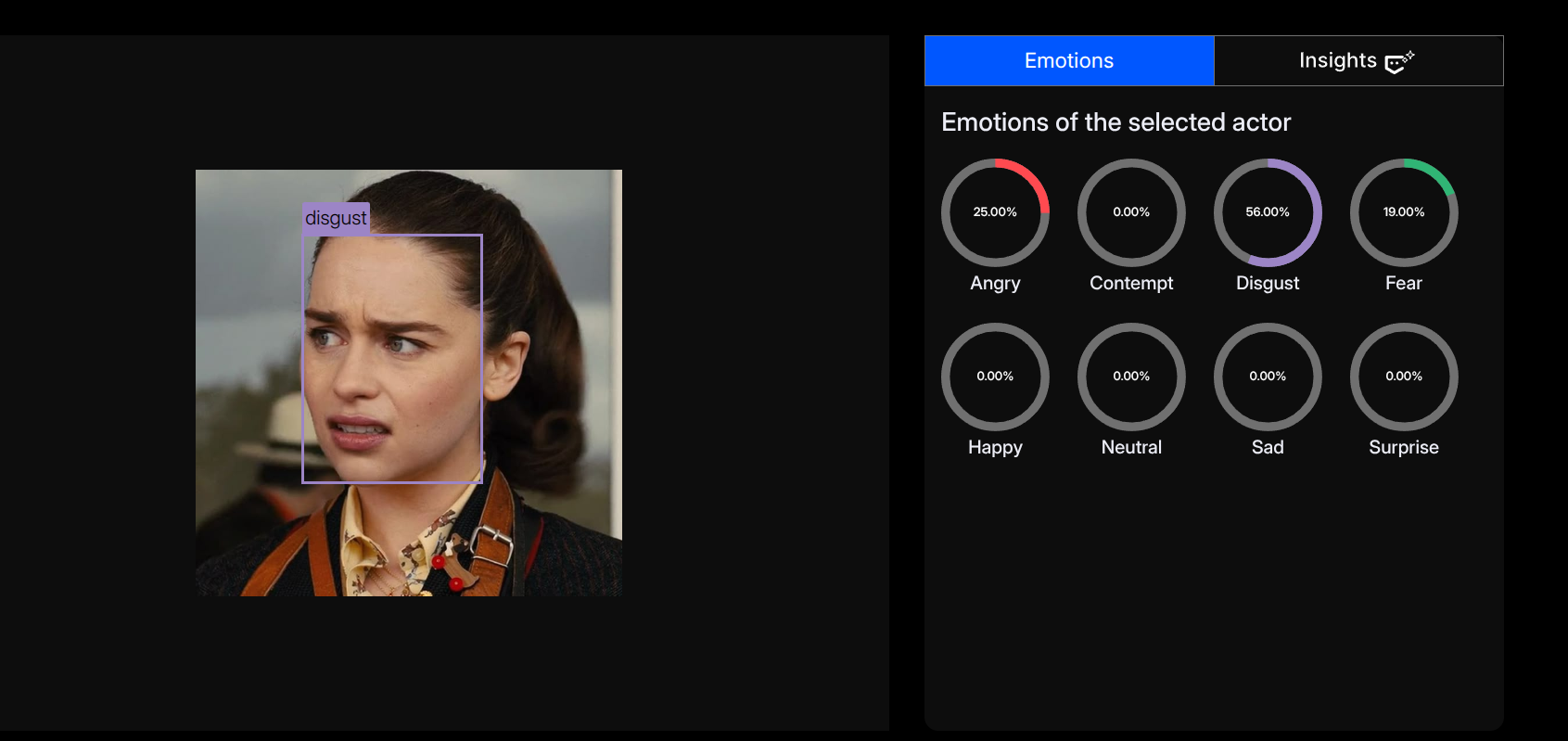
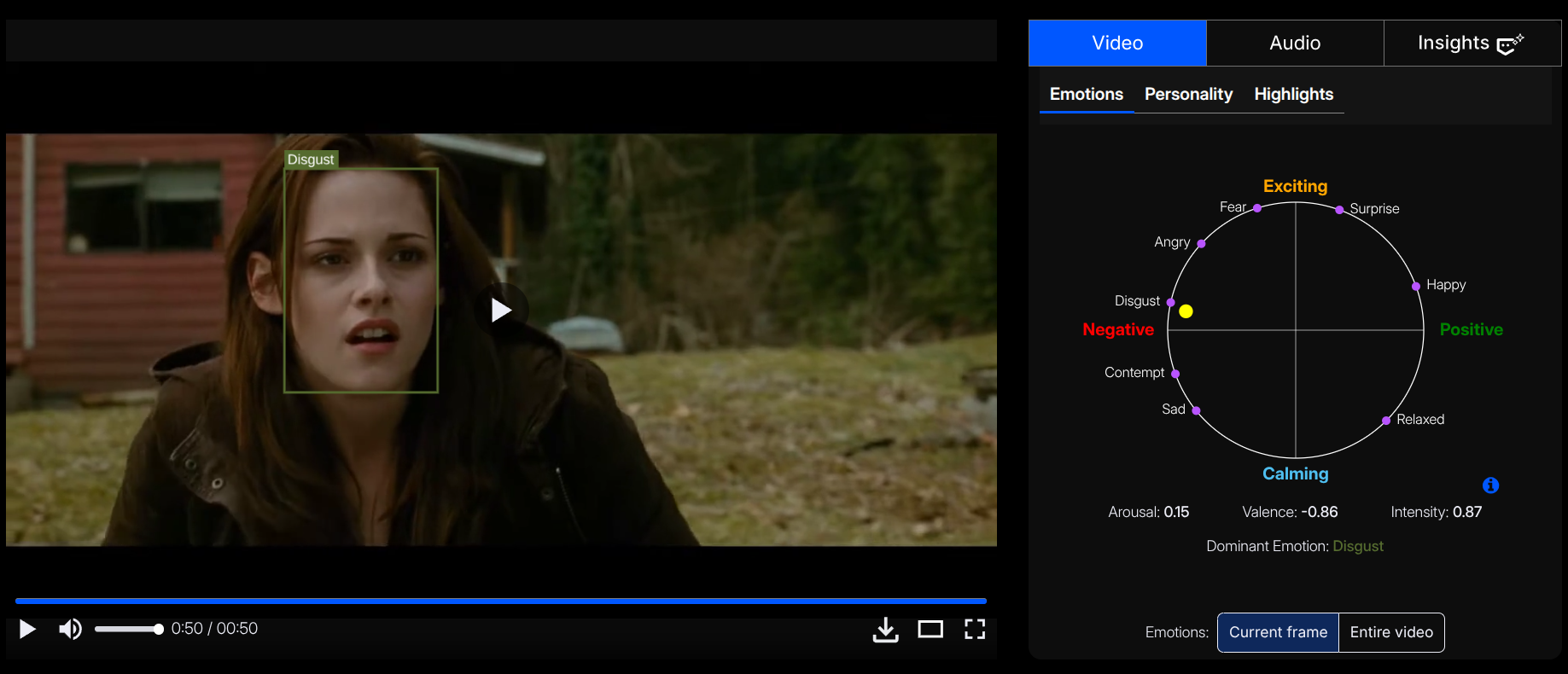
Detects disgust through expressions like a wrinkled nose, raised upper lip, narrowed eyes, and subtle head withdrawal. In the video scene analyzed by Imentiv AI from the movie Twilight: New Moon, you can see Bella's expression of disgust when she learns that Jacob was a werewolf all along after he suddenly transforms.
Audio Emotion Recognition:
Disgust in speech often appears as a sharp or tense tone, a brief exhale or sigh, and a lowered pitch at key words expressing disapproval. Speech may sound clipped, irritated, or dismissive.
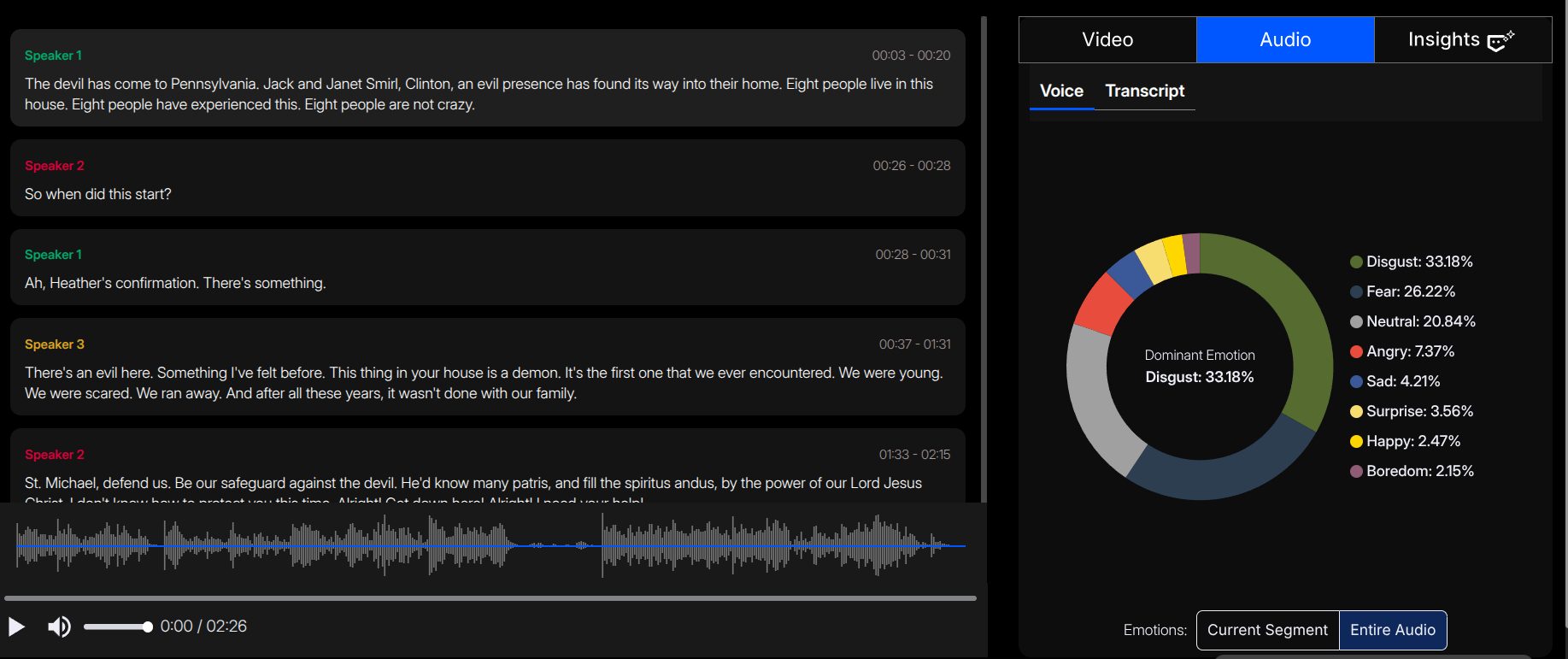
In the Audio analyzed by Imentiv AI, which is from the trailer of the movie Conjuring: The Last Rites, the eeriness of the demon and deaths is picked up as Disgust.
Text Emotion Analysis:
In text, disgust is conveyed through words expressing rejection, moral anger, or avoidance phrases, such as “can’t stand,” “disgusting,” “repulsive,” or descriptions of gritty, immoral situations that evoke a sense of disgust.
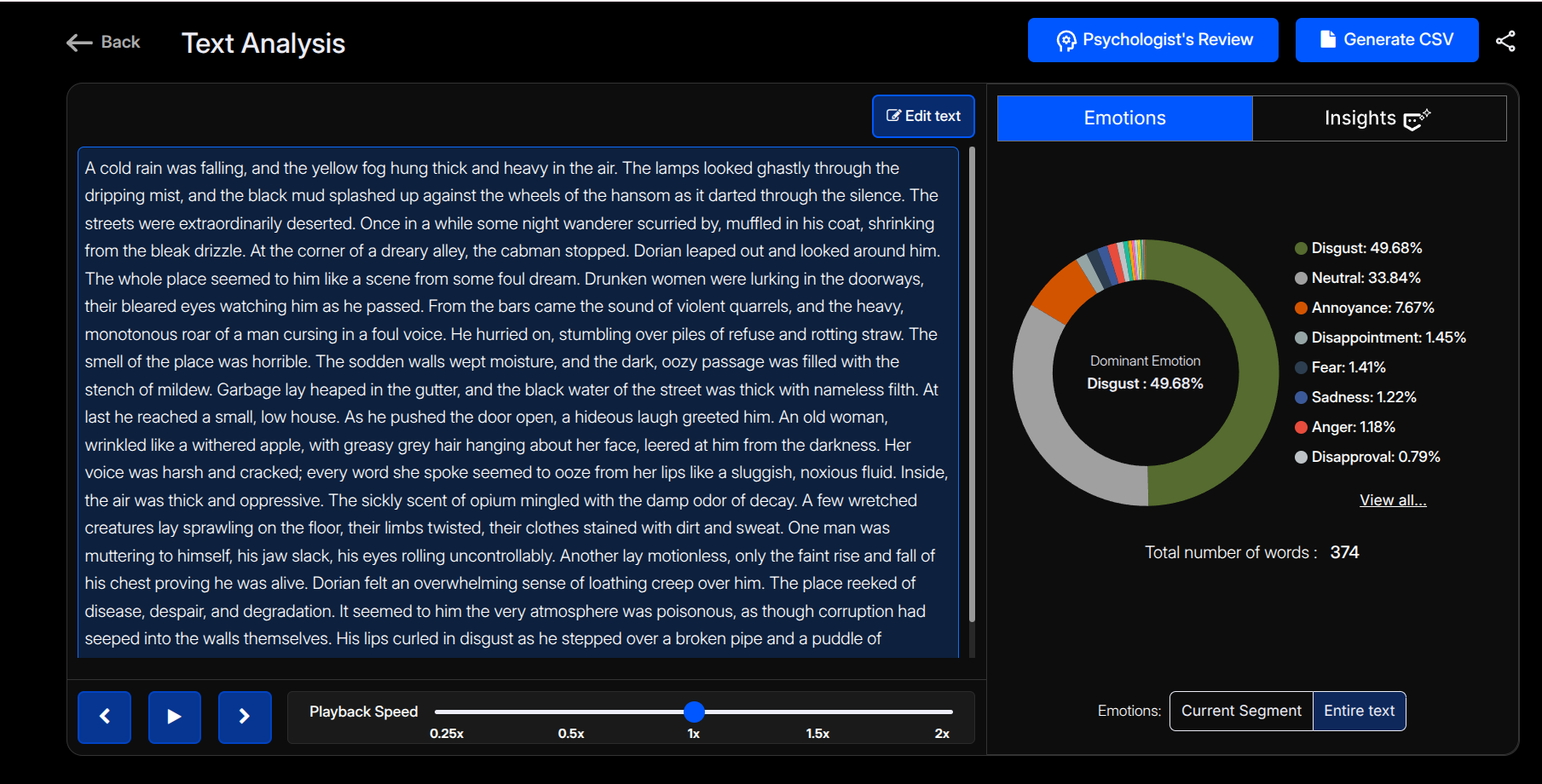
The text Imentiv AI analyzed is from the book ‘The Picture of Dorian Gray’, chapter 16, where Dorian enters a dark, filthy, and unsettling part of the city. Everything around him creates a strong sense of disgust, decay, and danger, and the author builds this emotion using vivid sensory details—what he sees, hears, and smells.
Role of Disgust in Human and Organizational Contexts
Disgust isn’t only about feeling grossed out. It can also show that someone feels something is wrong or unfair. In workplaces, people may feel disgust when they see dishonesty, unfair treatment, or toxic behavior. It’s the mind’s way of saying, “This doesn’t feel right.”
For Emotion AI, detecting disgust is not always straightforward. A small expression—like a wrinkled nose—can mean many things: It could be physical dislike, moral disapproval, or just strong disagreement. So understanding the situation is important.
Imentiv AI looks at facial expressions, voice tone, and text together to understand what the emotion really means. This helps the system tell the difference between “this smells bad” and “this feels wrong,” giving a more accurate and human-like interpretation.
Understand how AI reads subtle disgust cues and moral reactions. Experience it with Imentiv AI.