Borderline Personality Disorder (BPD)
Borderline Personality Disorder (BPD) is a complex mental health condition characterized by intense emotional instability, impulsive behavior, distorted self-image, and unstable interpersonal relationships. Individuals with BPD often experience rapid mood swings, a heightened fear of abandonment, chronic feelings of emptiness, and difficulty managing anger or stress. They may alternate between idealizing and devaluing others, resulting in unstable or chaotic relationship patterns and heightened emotional sensitivity to interpersonal cues.
In psychology, BPD is classified as a Cluster B personality disorder in the Diagnostic and Statistical Manual of Mental Disorders (DSM-5). It is understood to arise from a combination of genetic vulnerability and environmental influences, including early trauma, chronic invalidation, or disrupted attachment relationships. Symptoms typically emerge during adolescence or early adulthood and may include emotional dysregulation, impulsivity, identity disturbance, self-harming behaviors, and patterns of “splitting,” or black-and-white thinking. Evidence-based therapeutic approaches such as Dialectical Behavior Therapy (DBT) and Cognitive Behavioral Therapy (CBT) are commonly used to help individuals build emotional regulation skills, improve distress tolerance, and develop healthier interpersonal functioning.
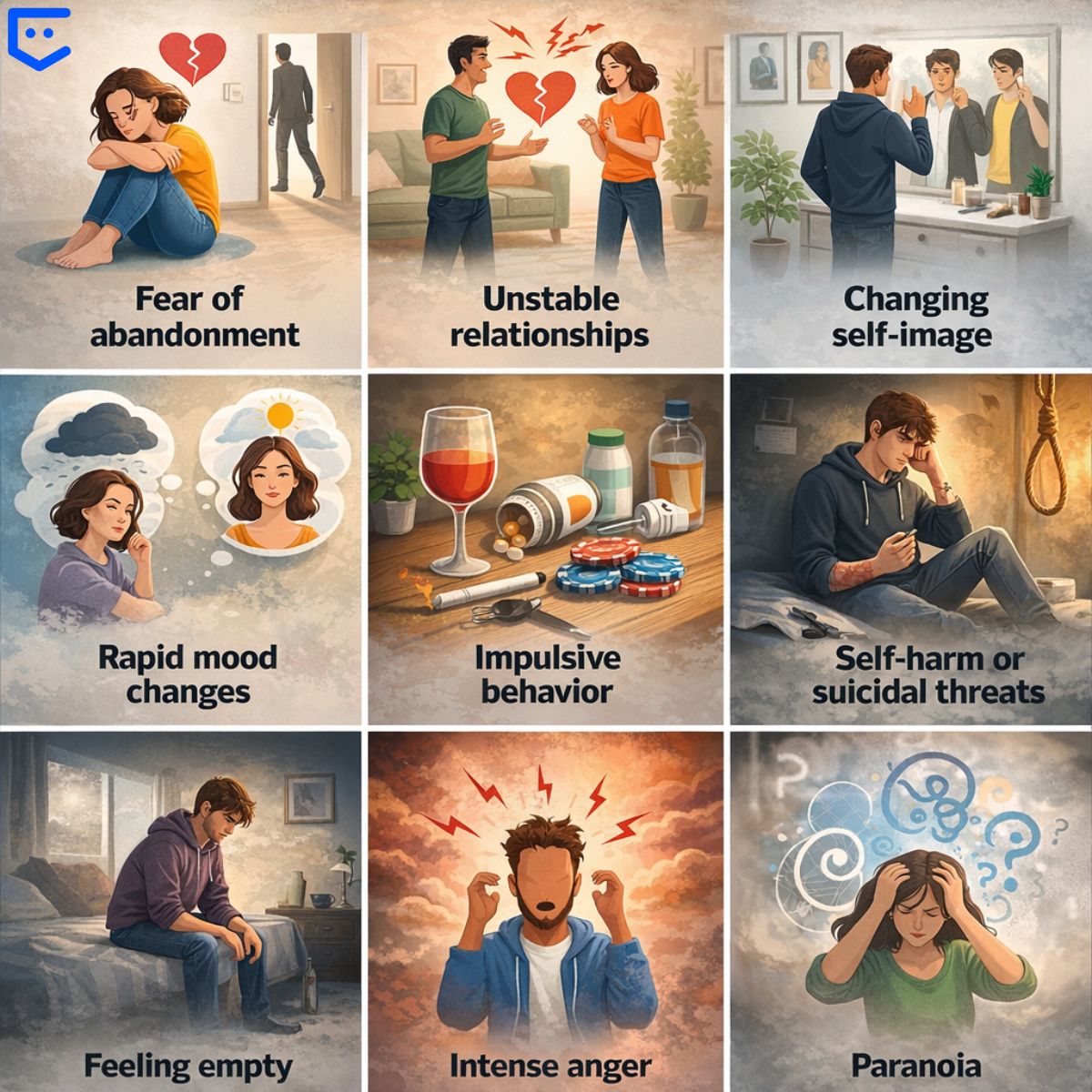
In relation to Emotion AI, BPD presents both a challenge and an opportunity due to the condition’s hallmark emotional intensity and variability. Individuals with BPD may display rapid shifts in emotional expression, heightened reactivity to social signals, and strong emotional responses to perceived rejection or stress, patterns that are difficult to capture through static assessments alone. Emotion AI systems can help surface these patterns by analyzing observable emotional signals across multiple modalities, such as facial expressions, vocal tone, speech dynamics, and text-based communication.
Imentiv AI applies multimodal emotion analysis to identify emotional states and changes over time without diagnosing or labeling mental health conditions. In BPD-related contexts, Imentiv AI can support clinicians, researchers, and mental health platforms by detecting fluctuations in emotional intensity, recurring emotional triggers, and signs of emotional dysregulation across conversations or interactions. For example, during therapy sessions or digital mental health engagements, Imentiv AI can highlight shifts in tone, affect, or emotional valence that may warrant closer human attention or reflection.
When used ethically and under professional oversight, Imentiv AI complements traditional mental health approaches by providing structured emotional insights that enhance awareness rather than replace clinical judgment. By focusing on emotional patterns instead of diagnostic conclusions, Imentiv AI supports early intervention, personalized support strategies, and a more nuanced understanding of emotional behavior in individuals living with BPD, while respecting the complexity and sensitivity of mental health conditions.
Importantly, Imentiv AI is designed to support emotional awareness and insight—not to diagnose, treat, or replace mental health care. In the context of Borderline Personality Disorder (BPD), Imentiv AI provides structured emotional data that can complement the work of qualified professionals, support research, and inform reflective discussions, while respecting the complexity and sensitivity of mental health conditions. By focusing on patterns of emotional expression rather than assigning labels or clinical meaning, Imentiv AI encourages more empathetic, human-centered interpretation of emotional behavior.
BPD is a serious mental health condition that requires appropriate clinical evaluation and care. Individuals experiencing symptoms associated with BPD are strongly encouraged to seek guidance from licensed mental health professionals. Imentiv AI should be used only as a supportive analytical tool within professional, ethical, and clinically informed contexts, not as a substitute for diagnosis, treatment, or therapeutic decision-making.
Explore our blog to understand how AI enables scalable, responsible mental wellness solutions.