Turning Brand Reviews into Emotional Intelligence with Emotion AI
Introduction: Reviews Are Emotional Data, Not Just Feedback
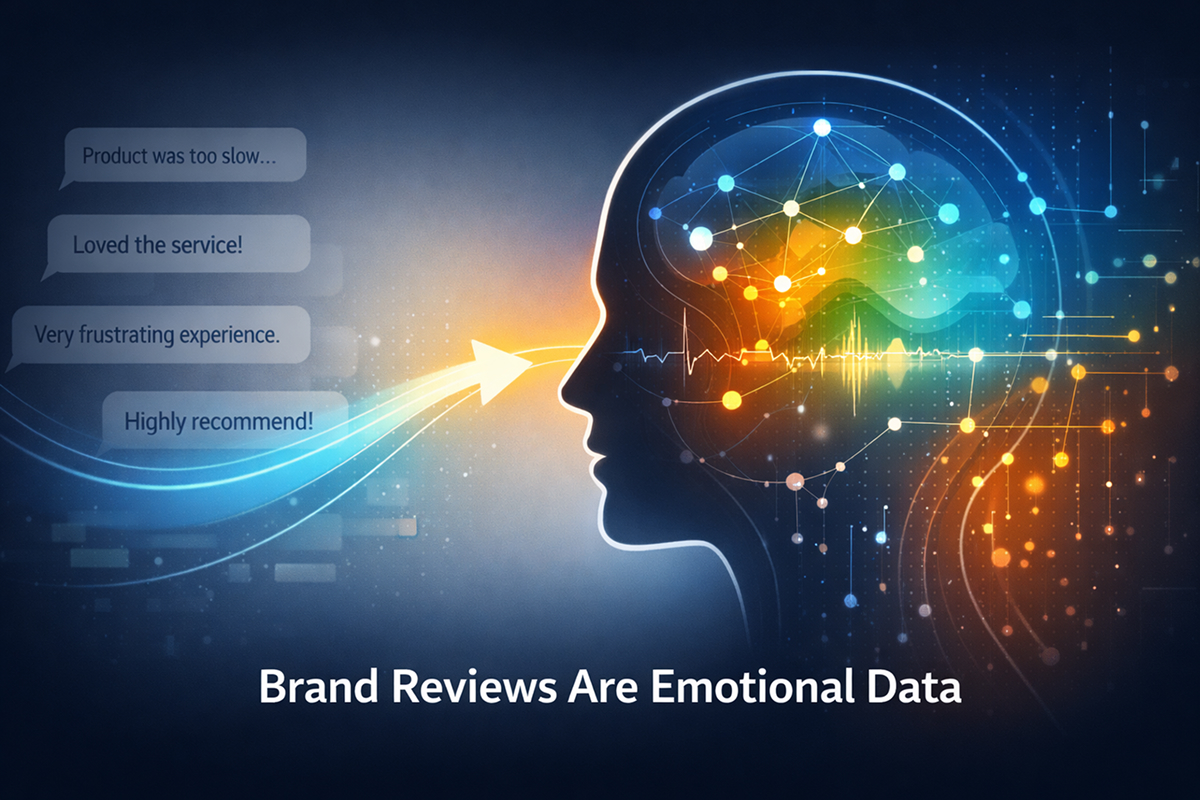
Brand reviews are frequently treated as performance indicators—star ratings, pros and cons, or summary comments that seem to reflect customer satisfaction. However, this interpretation misses a deeper truth: every review is also an emotional narrative. In other words, customers do not merely evaluate products; they express how they feel about their experience. Advanced research in natural language processing confirms that AI can interpret complex emotional states, not just basic positive or negative sentiment, by analyzing unstructured text such as reviews, social media posts, and other customer communications. These technologies identify emotional indicators like anger, happiness, sadness, or frustration embedded in language with growing precision.
Why Traditional Review Analysis Falls Short
Traditional review analysis usually focuses on star ratings, basic sentiment (positive, negative, or neutral), and common keywords. While this approach helps organize feedback at scale, it often misses what customers are actually feeling. A four-star review, for instance, may still express frustration or disappointment—emotions that simple sentiment scores fail to detect. Research shows that modern AI models designed to understand emotions are far better at identifying these subtle signals than traditional sentiment tools.
Without this emotional context, brands risk misinterpreting customer intent, prioritizing the wrong product fixes, overlooking silent dissatisfaction, and missing opportunities to strengthen emotional loyalty among their customer base.
Emotion AI: From Sentiment to Emotional Intelligence
Emotion AI extends beyond basic sentiment classification by identifying specific emotions conveyed in textual and multimedia data. Unlike simple sentiment analysis, which usually classifies text as positive, negative, or neutral, modern emotion AI models can detect a spectrum of emotions with fine granularity. This means distinguishing fear from frustration or excitement from relief—emotional distinctions that matter for understanding customer motivations and expectations.
These emotional differences are important because they explain why customers feel a certain way. By understanding the exact emotions behind feedback, brands gain clearer insight into customer motivations, expectations, and experiences—leading to more informed decisions and stronger emotional connections.
Emotion AI is not limited to written text. When applied to other modalities—such as vocal inflection, facial expression, and video content- it creates a multimodal understanding of customer sentiment that goes far beyond star ratings or keyword counts. These emotional differences are important because they explain why customers feel a certain way. By understanding the exact emotions behind feedback, brands gain clearer insight into customer motivations, expectations, and experiences, leading to more informed decisions and stronger emotional connections.
Turning Brand Reviews into Actionable Emotional Intelligence
When emotion AI analyzes review data at scale, it uncovers patterns of emotional response across the customer journey. Rather than reporting only how satisfied customers are, these systems help brands answer deeper questions such as which emotional drivers fuel loyalty and advocacy, where trust begins to weaken, which product features create emotional friction, and what moments spark delight or relief. By mapping emotional signals to specific touchpoints, teams gain clarity on where to improve and what to amplify, empowering proactive decision-making rather than reactive troubleshooting.
Product Testimonials as Emotional Signals
In contrast to text-only reviews, video testimonials provide a uniquely rich dataset for emotion AI. These recordings capture not just what customers say, but how they say it, including:
- Facial expressions that reflect emotional responses
- Text analysis that reveals language patterns, tone, and intent
- Vocal cues , such as confidence, hesitation, or stress
When AI analyzes these multimedia elements, it can identify emotional authenticity, engagement levels, and trust-building mechanisms that written reviews cannot convey.
However, research on AI-generated content underscores that perceived authenticity matters greatly. Studies indicate that consumers may respond negatively if they believe communications are authored by AI rather than humans—particularly in emotionally sensitive contexts—because authenticity directly influences trust and loyalty. To address this, outputs generated by Imentiv AI are reviewed and contextualized by in-house psychologists, ensuring interpretations remain grounded, responsible, and aligned with human emotional understanding.
Curating Brand Testimonial Videos with Emotion AI
Emotion AI helps brands curate testimonial videos more effectively by assessing emotional engagement before publication. By comparing emotional resonance across different videos, identifying moments where viewer engagement wanes, and selecting segments that signal trust and reassurance rather than exaggerated promotion, companies can ensure that testimonials are not only persuasive but genuinely relatable.
Analyzing a customer product testimonial with Imentiv AI
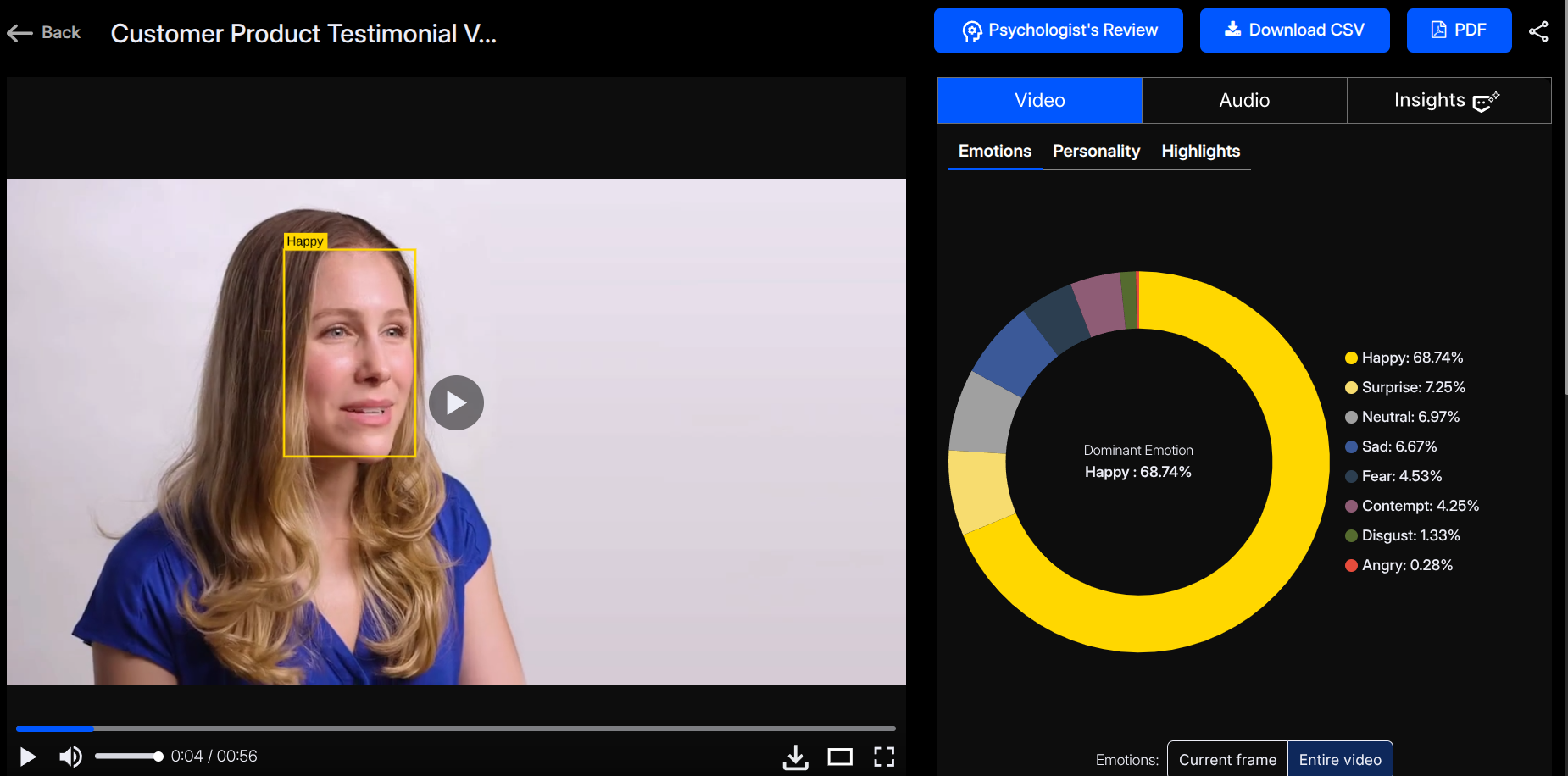
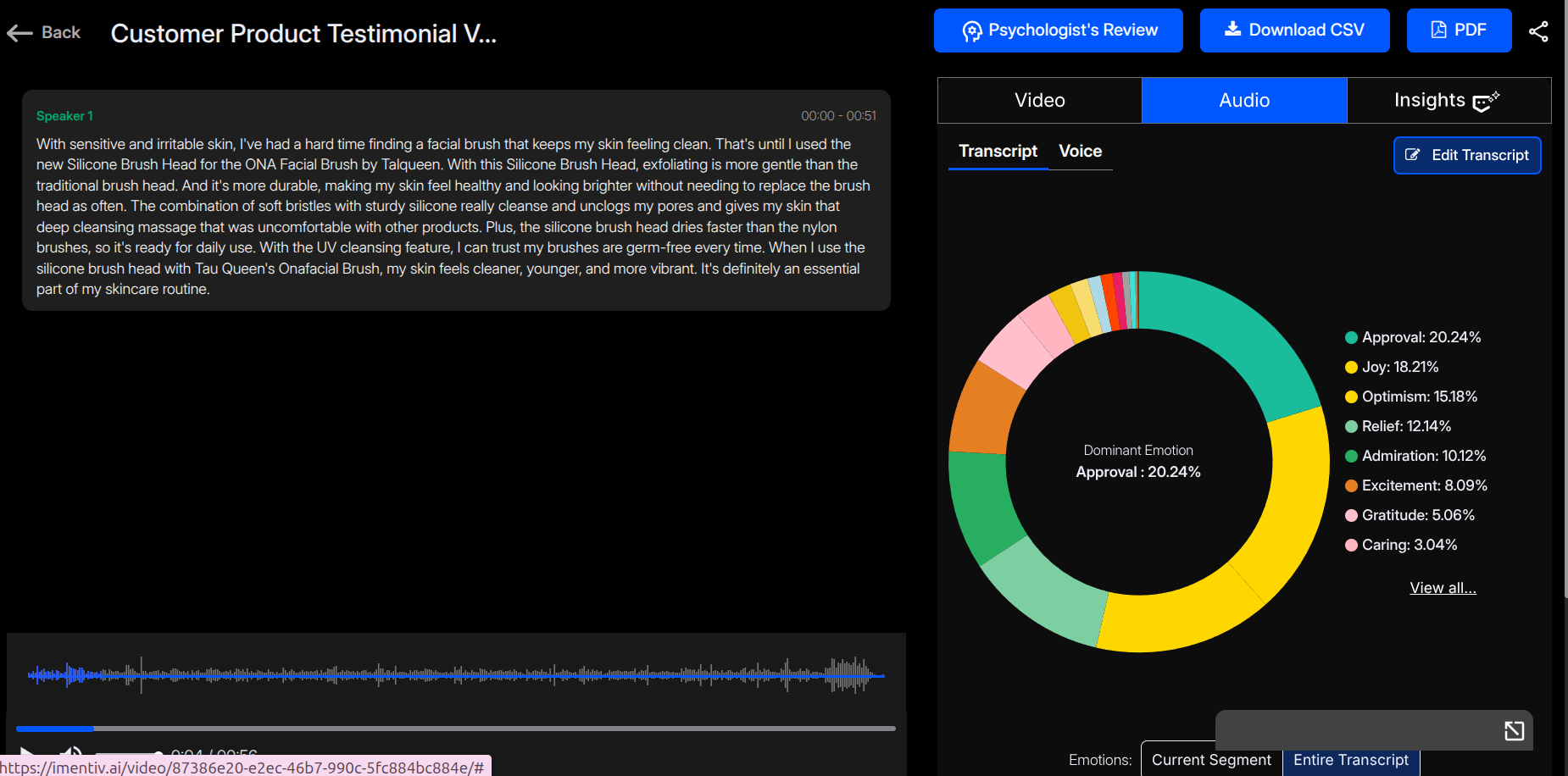
Let’s look at an example. A short mock panel interview video (56 seconds) from YouTube was analyzed through Imentiv AI’s platform. The Emotion AI broke the analysis into video, audio, and transcript layers, each offering emotional insights.
Video Analysis
The facial expression analysis shows that the speaker appears mostly happy throughout the video. In many moments, happiness stays very high, often between 80% and 99%, reflecting a positive and confident presence. There is a short moment in the middle where the expression becomes more serious and slightly sad, but this quickly passes. Rather than signaling discomfort, this shift feels natural and human. Overall, the facial cues suggest genuine positivity with a touch of realism, making the message feel authentic and relatable.
Audio Analysis
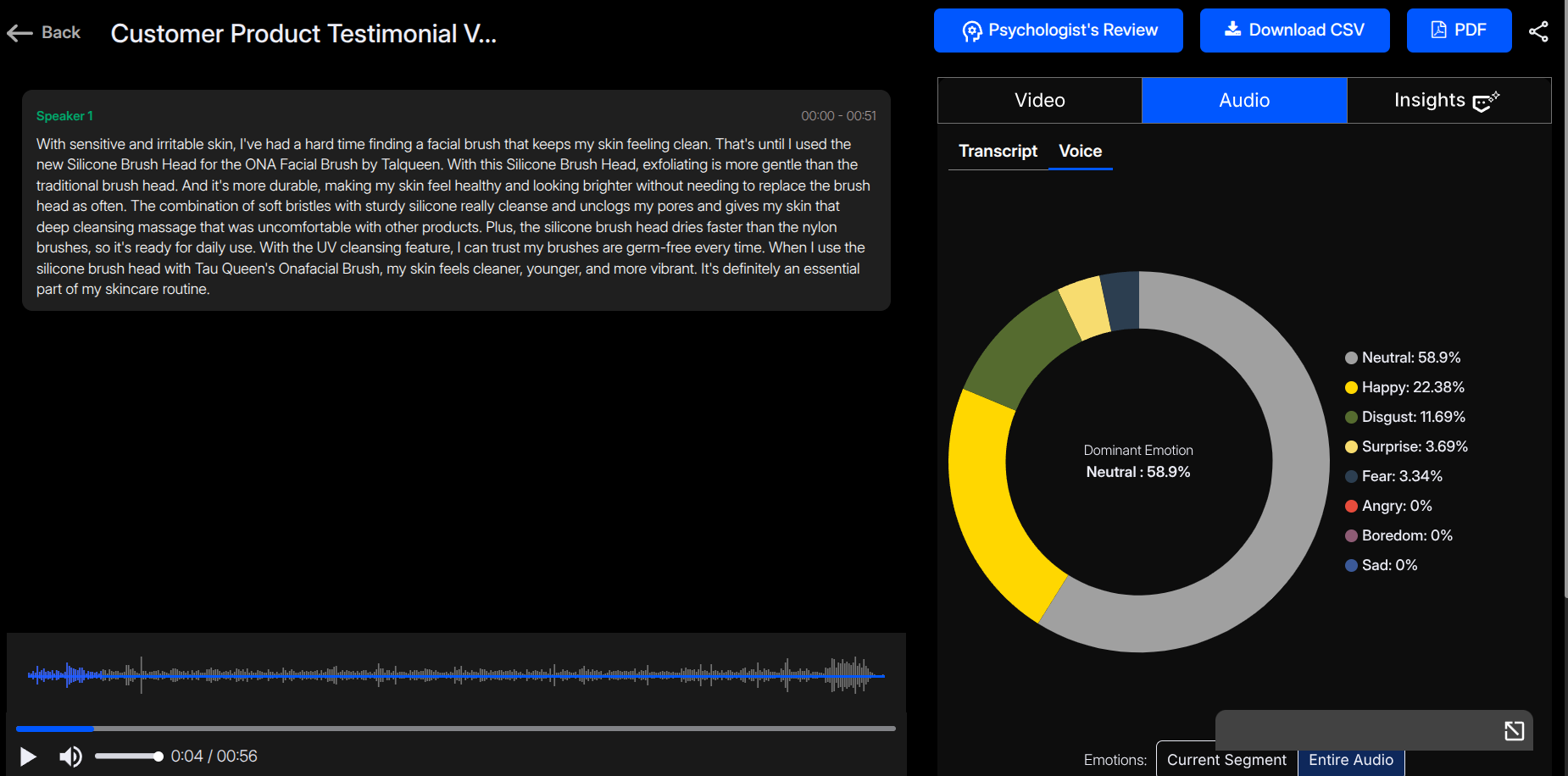
The audio analysis reveals a mostly neutral vocal tone, accounting for 58.9%, with happiness present at 22.4%. Valence remains mildly positive with low-to-moderate arousal, indicating a calm, composed, and professional delivery rather than high emotional intensity. This suggests a composed speaking style, where professionalism and steady confidence take precedence over high-energy emotional expression.
Text Analysis
The transcript analysis focuses on emotional intent and cognitive signals embedded in the spoken content. The language shows clear signs of approval at 20% and joy at 18%, alongside neutral expression at 15% and optimism at 12%. Excitement appears at 8%, while gratitude contributes a smaller yet meaningful presence at 5%. Negative emotions such as anger, disgust, or disapproval are almost entirely absent, with only very small traces of nervousness and remorse detected. This language pattern suggests genuine satisfaction and positive endorsement rather than scripted promotion.
Ethical Use of Emotion AI in Reviews and Testimonials
Emotion AI analyzes emotional signals that are personal, so it must be used responsibly. This means being clear about how analysis works, getting consent, and avoiding hidden profiling or manipulation. Without care, emotional insights can raise privacy concerns or be misused.
Ethical use focuses on understanding and empathy, not influence. Transparency and respect for privacy help build trust and long-term customer relationships.
Imentiv AI is also a tool designed to assist and inform. Its insights offer additional perspective and are best used in combination with human understanding and discretion.
Reviews to Brand Intelligence
When brands move from seeing reviews as simple feedback to recognizing them as emotional data, they uncover a deeper level of competitive intelligence. Emotion AI lets companies create more compassionate experiences, develop messaging that resonates emotionally, build trust and loyalty, and lower reputational risks by spotting emotional red flags early. This change helps organizations shift from reacting to customer complaints to understanding emotions proactively. It connects brand strategy with human experience in a way that resonates more deeply with customers.
Brand reviews and testimonials are not just opinions. They are emotional signals that reflect the real human experience of using a product or interacting with a brand. Emotion AI transforms this raw data into emotional intelligence. It allows organizations to listen beyond words and respond with empathy, accuracy, and ethical responsibility. By incorporating emotion-aware insights into business strategy, brands can build stronger emotional ties with their customers, fostering deeper and more resilient relationships over time.